 The Nexus Archive
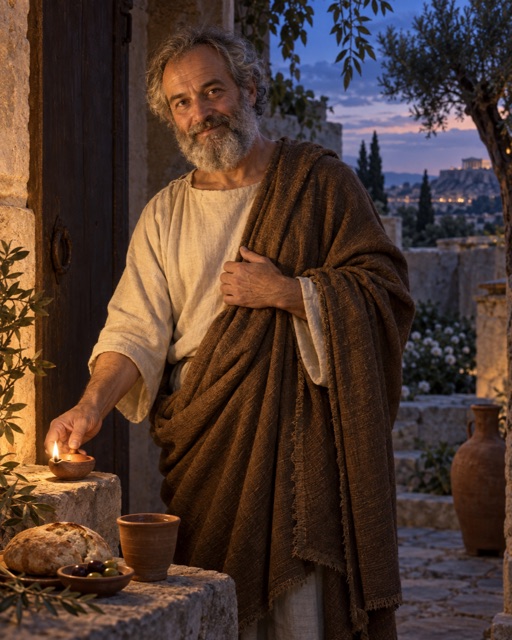
Epicureanism
Epicurus
The Philosopher of a Quiet Life · Hellenistic Greece, 341–270 BC
Epicurus studies nature to loosen fear and asks what people actually need to live well.
- Nature and atoms
- Pleasure without distress
- Friendship
- Fear of death
- Limits of desire
Start with Letter to Menoeceus
Life
Epicurus founded his school, the Garden, at Athens in the late fourth century BC. His teaching joined an account of atoms and nature to a practical ethics of friendship, modest wants, and freedom from needless fear. Most of his books are lost; letters, maxims, fragments, and reports preserved by later writers carry the surviving record.
The question
“What would remain of our fears if we understood nature and examined what we truly need?”
Argued against
Fear of divine punishment, fear of death, limitless desire, and explanations that multiply anxiety.
Why Epicurus matters
Epicurus gave philosophy a daily task: use inquiry into the world to make a human life less frightened and more self-sufficient. His letters and sayings survived through complicated ancient transmission and still challenge easy caricatures of pleasure.
Where to start
Letter to Menoeceus A compact entry into death, desire, friendship, and the kind of pleasure Epicurus defended.
Works
- Letter to Menoeceus Letter · Intermediate A compact letter on the gods, death, desire, pleasure, prudence, and the practice of a happy life.
- Letter to Herodotus Letter · Advanced Epicurus's condensed account of atoms, void, bodies, perception, and the study of nature, transmitted by Diogenes Laertius.
- Letter to Pythocles Letter · Advanced An Epicurean account of celestial and weather phenomena that Bailey regarded as probably abridged by the school rather than an uncomplicated autograph.
- Principal Doctrines Aphorisms · Intermediate Forty numbered doctrines on pleasure, fear, knowledge, justice, security, and friendship in Bailey's 1926 edition.
- Vatican Sayings Aphorisms · Intermediate Eighty-one printed positions, including cross-references, lacunae, and sayings whose ancient attribution is disputed or belongs to other Epicureans.
- Additional Remains Aphorisms · Advanced Bailey's edition-bounded B–D fragments: quotations from lost books, remains of letters, and uncertain-source sayings, with cross-links rather than invented complete works.
- Life of Epicurus Biography · Advanced Diogenes's later biography and school report, including the transmitted Will and last-day letter, kept distinct from Epicurus's own voice.