 The Nexus Archive
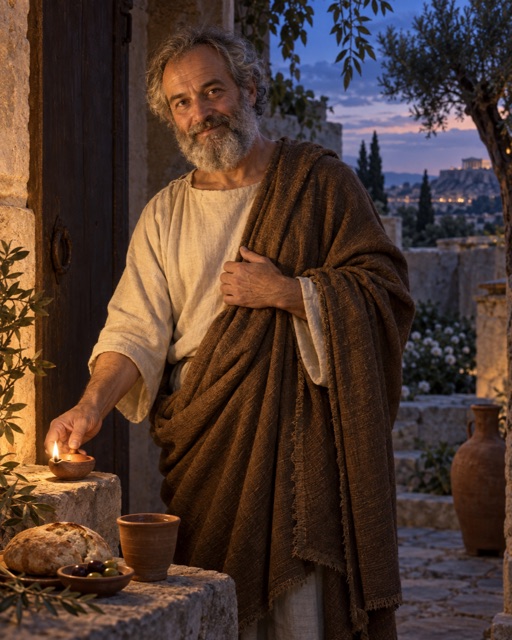
Epicureanism · Letter
Letter to Menoeceus
by Epicurus · The Philosopher of a Quiet Life · Hellenistic Greece, 341–270 BC
A compact letter on the gods, death, desire, pleasure, prudence, and the practice of a happy life.
- Intermediate
- 2 chapter guides
- Public domain
Start reading · Read the Gods, death, and the work of philosophy guide free
Before the text
Editor's Prelude
Epicurus built his school in a garden in Athens at a time when political power in the Greek world had shifted toward large kingdoms. He did not offer a route to office or fame. He asked how people could be happy while living with bodily limits, uncertain fortune, and the knowledge that they will die. The letter brings that question down to choices about fear, desire, and the habits of an ordinary day.
The letter tells the young and the old to practice philosophy now. It then tests two fears: that the gods punish us and that death can harm us after sensation has ended. From there Epicurus sorts desires and explains pleasure through the absence of bodily pain and mental disturbance. He does not recommend an endless chase after luxury. He praises judgment, friendship, and modest needs because choices have consequences that last longer than the immediate feeling.
The test comes in ordinary choices: bread and water can answer hunger, while a luxury pursued without judgment can bring fresh trouble. Good fortune may offer an opportunity, but Epicurus values a well-judged action even when it fails. His final picture is of philosophy practiced night and day, in private and with a companion, until nothing disturbs a person waking or asleep.
The opening pages
Gods, death, and the work of philosophy
LET no one when young delay to study philosophy, nor when he is old grow weary of his study. For no one can come too early or too late to secure the health of his soul. And the man who says that the age for philosophy has either not yet come or has gone by is like the man who says that the age for happiness is not yet come to him, or has passed away. Wherefore both when young and old a man must study philosophy, that as he grows old he may be young in blessings through the grateful recollection of what has been, and that in youth he may be old as well, since he will know no fear of what is to come. We must then meditate on the things that make our happiness, seeing that when that is with us we have all, but when it is absent we do all to win it.
The things which I used unceasingly to commend to you, these do and practice, considering them to be the first principles of the good life. First of all believe that god is a being immortal and blessed, even as the common idea of a god is engraved on men’s minds, and do not assign to him anything alien to his immortality or ill-suited to his blessedness: but believe about him everything that can uphold his blessedness and immortality. For gods there are, since the knowledge of them is by clear vision. But they are not such as the many believe them to be: for indeed they do not consistently represent them as they believe them to be. And the impious man is not he who denies the gods of the many, but he who attaches to the gods the beliefs of the many.
For the statements of the many about the gods are not conceptions derived from sensation, but false suppositions, according to which the greatest misfortunes befall the wicked and the greatest blessings (the good) by the gift of the gods. For men being accustomed always to their own virtues welcome those like themselves, but regard all that is not of their nature as alien.
Become accustomed to the belief that death is nothing to us. For all good and evil consists in sensation, but death is deprivation of sensation. And therefore a right understanding that death is nothing to us makes the mortality of life enjoyable, not because it adds to it an infinite span of time, but because it takes away the craving for immortality.
Chapter guides · 2
Gods, death, and the work of philosophy
No Need to Wait
Epicurus begins practical philosophy with the fears that steal time from life.
What he argues
Young and old alike can practice philosophy. The gods should not be imagined as angry human rulers, and death is not an experience waiting to hurt us after sensation ends.
Why it matters
For Epicurus, understanding death removes a fear that makes living painful. Since death ends all sensation, nothing can hurt the dead person.
Where it ends
Epicurus divides desires into natural and vain, then distinguishes which natural desires are necessary. He closes by naming pleasure the starting point and goal of a blessed life, with pleasure and pain guiding choice and avoidance.
Desire, choice, and a life worth living
Pleasure With Judgment
The letter turns from fear to choices about desire and daily life.
Questions readers ask
- How difficult is Letter to Menoeceus?
- Intermediate.
- Which translation is this?
- The Cyril Bailey translation from the Ancient Greek. The text follows Epicurus: The Extant Remains (1926).
- Can I read Letter to Menoeceus for free?
- Letter to Menoeceus is part of Nexus Premium, so reading it needs an account and a Premium subscription. The opening above and one chapter guide on this page are free to read.
- How many chapter guides are there?
- 2 chapter guides, written by the Nexus editors. One opens in full here; the rest show their opening line.
About Epicurus
Epicurus founded his school, the Garden, at Athens in the late fourth century BC. His teaching joined an account of atoms and nature to a practical ethics of friendship, modest wants, and freedom from needless fear. Most of his books are lost; letters, maxims, fragments, and reports preserved by later writers carry the surviving record.
“What would remain of our fears if we understood nature and examined what we truly need?”
Epicurus gave philosophy a daily task: use inquiry into the world to make a human life less frightened and more self-sufficient. His letters and sayings survived through complicated ancient transmission and still challenge easy caricatures of pleasure.
Source text: public domain. Chapter guides: original Nexus writing. Letter to Menoeceus is part of The Nexus Archive, guided Quests through the great works.