 The Nexus Archive
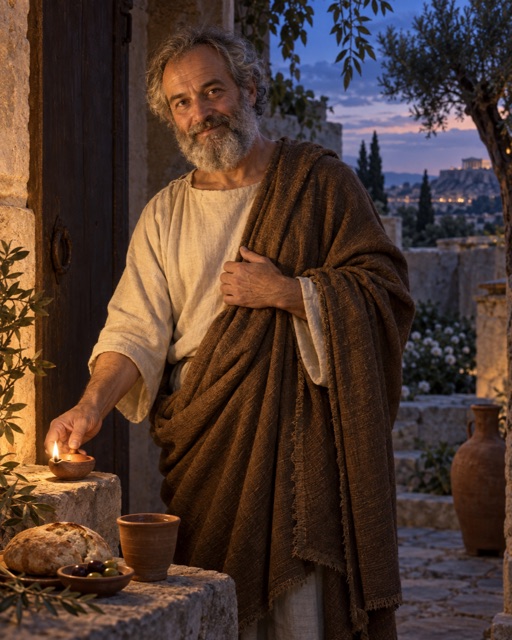
Epicureanism · Aphorisms
Principal Doctrines
by Epicurus and the Epicurean school
Featuring Epicurus
Forty numbered doctrines on pleasure, fear, knowledge, justice, security, and friendship in Bailey's 1926 edition.
- Intermediate
- 3 chapter guides
- Public domain
Start reading · Read the Nature, pleasure, and fear guide free
Before the text
Editor's Prelude
Epicurus wrote far more than the few pages that survive intact. He taught in a garden at Athens, surrounded by a community that continued after his death, and he expected students to carry basic arguments in memory. The forty Principal Doctrines are a concentrated form of that teaching. Their short statements condense arguments about what a person can fear, need and enjoy.
The early doctrines confront fear of gods and death, set limits to pleasure and pain, and defend inquiry into nature. Later ones turn toward security, friendship, justice, and the agreements people make not to harm one another. Their order matters. Claims about a peaceful life rest on claims about what people can know and need. Justice appears as a useful human arrangement, not a command issued outside human life.
Diogenes Laertius preserved the collection within his account of Epicurus. The sayings become most searching where they meet one another: the desire for safety presses against ambition, the limits of pleasure against the wish for more time, and friendship against fear of loss. A single maxim can sound simpler or harsher than the argument formed by its neighbors. The final movement gives companionship a place beside justice, asking what it takes to live with others without continual suspicion.
The opening pages
Nature, pleasure, and fear
1
The blessed and immortal nature knows no trouble itself nor causes trouble to any other, so that it is never constrained by anger or favour. For all such things exist only in the weak.
2
Death is nothing to us: for that which is dissolved is without sensation; and that which lacks sensation is nothing to us.
3
The limit of quantity in pleasures is the removal of all that is painful. Wherever pleasure is present, as long as it is there, there is neither pain of body nor of mind, nor of both at once.
4
Pain does not last continuously in the flesh, but the acutest pain is there for a very short time, and even that which just exceeds the pleasure in the flesh does not continue for many days at once. But chronic illnesses permit a predominance of pleasure over pain in the flesh.
5
It is not possible to live pleasantly without living prudently and honourably and justly, [nor again to live a life of prudence, honour, and justice] without living pleasantly. And the man who does not possess the pleasant life, is not living prudently and honourably and justly, [and the man who does not possess the virtuous life], cannot possibly live pleasantly.
6
To secure protection from men anything is a natural good, by which you may be able to attain this end.
7
Some men wished to become famous and conspicuous, thinking that they would thus win for themselves safety from other men. Wherefore if the life of such men is safe, they have obtained the good which nature craves; but if it is not safe, they do not possess that for which they strove at first by the instinct of nature.
8
No pleasure is a bad thing in itself: but the means which produce some pleasures bring with them disturbances many times greater than the pleasures.
9
If every pleasure could be intensified so that it lasted and influenced the whole organism or the most essential parts of our nature, pleasures would never differ from one another.
10
If the things that produce the pleasures of profligates could dispel the fears of the mind about the phenomena of the sky and death and its pains, and also teach the limits of desires (and of pains), we should never have cause to blame them: for they would be filling themselves full with pleasures from every source and never have pain of body or mind, which is the evil of life.
11
If we were not troubled by our suspicions of the phenomena of the sky and about death, fearing that it concerns us, and also by our failure to grasp the limits of pains and desires, we should have no need of natural science.
12
A man cannot dispel his fear about the most important matters if he does not know what is the nature of the universe but suspects the truth of some mythical story. So that without natural science it is not possible to attain our pleasures unalloyed.
13
There is no profit in securing protection in relation to men, if things above and things beneath the earth and indeed all in the boundless universe remain matters of suspicion.
Chapter guides · 3
Nature, pleasure, and fear
Fear, Pain, and Nature
The opening doctrines place the good life inside a physical account of the world.
Pleasure, justice and fear
The doctrines describe the divine as free from trouble and anger, and death as a state without sensation. They set pleasure’s limit at the removal of pain and join pleasant living to prudence, honor and justice. Pleasure itself is not condemned; some ways of obtaining it cause greater disturbance than the pleasure is worth. Fame is judged by whether it brings the safety people sought in it.
The fear that protection cannot reach
The closing sayings give natural inquiry a practical purpose: dispelling fear about the sky and death, and teaching the limits of pains and desires. A person can gain protection from other people while still fearing what lies above or beneath the earth. The unit ends by declaring that protection unprofitable while the universe remains an object of suspicion.
Limits, friendship, and security
How Much Is Enough?
The middle doctrines compare natural limits with limitless wants.
What develops
Natural wealth has a limit; imagined needs stretch without end. The sayings contrast a quiet life with competition, argue that bodily pleasure varies rather than increases once the pain of need is removed, and explain why a complete life does not require infinite time. Judgment has limits too: sensation supplies evidence, while opinions about it may still await confirmation. Rejecting all sensation would remove the standard by which an error could be recognized.
The turn
Friendship becomes more than a pleasant addition. The unit closes by naming friendship the greatest thing wisdom acquires for the blessedness of a complete life.
Justice and mutual advantage
Justice as an Agreement
The final doctrines ask how people can live without harming and fearing one another.
Questions readers ask
- How difficult is Principal Doctrines?
- Intermediate.
- Which translation is this?
- The Cyril Bailey translation from the Ancient Greek. The text follows Epicurus: The Extant Remains (1926).
- Can I read Principal Doctrines for free?
- Principal Doctrines is part of Nexus Premium, so reading it needs an account and a Premium subscription. The opening above and two chapter guides on this page are free to read.
- How many chapter guides are there?
- 3 chapter guides, written by the Nexus editors. Two open in full here; the rest show their opening line.
About Epicurus
Epicurus founded his school, the Garden, at Athens in the late fourth century BC. His teaching joined an account of atoms and nature to a practical ethics of friendship, modest wants, and freedom from needless fear. Most of his books are lost; letters, maxims, fragments, and reports preserved by later writers carry the surviving record.
“What would remain of our fears if we understood nature and examined what we truly need?”
Epicurus gave philosophy a daily task: use inquiry into the world to make a human life less frightened and more self-sufficient. His letters and sayings survived through complicated ancient transmission and still challenge easy caricatures of pleasure.
Source text: public domain. Chapter guides: original Nexus writing. Principal Doctrines is part of The Nexus Archive, guided Quests through the great works.