 The Nexus Archive
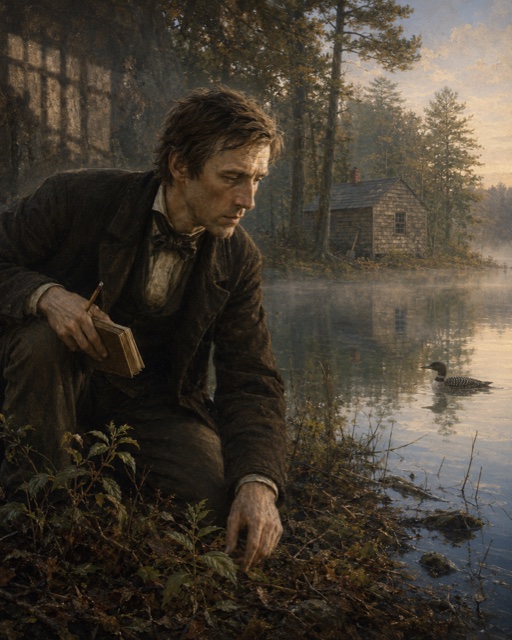
Transcendentalism
Thoreau
The Experimenter at Walden · 19th-century America, 1817-1862
Thoreau tests life against conscience, nature, simplicity, and resistance to unjust government.
- Conscience
- Simplicity
- Nature
- Civil resistance
- Experiment
Life
Henry David Thoreau was an American writer and Transcendentalist whose Walden and Civil Disobedience shaped arguments about nature, simplicity, conscience, and political resistance.
The question
“How little can a person need, and what must conscience refuse?”
Argued against
Unexamined labor, material conformity, unjust government, and passive citizenship.
Why Thoreau matters
Thoreau shaped later traditions of environmental writing, civil disobedience, and moral self-experiment.
Works
- On the Duty of Civil Disobedience Essay · Intermediate Thoreau's complete Civil Disobedience essay from Project Gutenberg #71.
- Walden Essay · Advanced Thoreau's full Walden, preserving Walden only and excluding the separate Civil Disobedience text bundled in the PG packet.
- Walking Essay · Intermediate Thoreau's complete essay on wildness, sauntering, freedom, and the moral pressure of leaving the road.
Quests with Thoreau
- Self-Reliance and Nature A test of inward trust, civil conscience, nature, and the deliberate life. Self-Reliance and Nature Quest