 The Nexus Archive
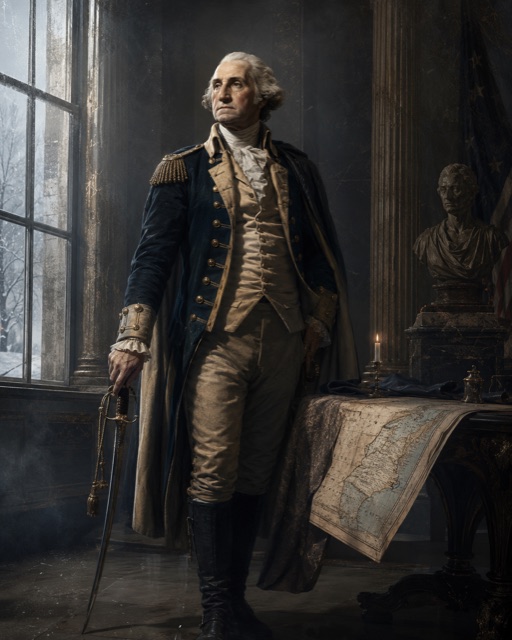
Republican Statesmanship · Address
First Inaugural Address
by George Washington · The Republic's First Example · American Founding, 1732-1799
Washington defines the tone of the presidency before the office has real precedent.
- Beginner
- ~5 min read
- 1 chapter guide
- Public domain
Start reading · Read the First Inaugural Address guide free
Before the text
Editor's Prelude
The Office Begins
On April 30, 1789, George Washington took an oath for an office no one had occupied before. He then entered the Senate chamber at Federal Hall in New York and addressed both houses of Congress. The Constitution prescribed the oath but not the speech; almost every gesture risked becoming precedent.
The military reputation that brought him here could reassure a new republic and unsettle it. An office created by a constitution now had to be inhabited by a particular person, with ambitions, loyalties, age and limitations. Washington’s sense of inadequacy is part of the occasion, not merely a courtesy before official business.
His audience shares that uncertainty. Congress must begin governing communities that have agreed on a framework without settling every fear about its powers. The speech holds the scale of that public trust beside the frailty of the people asked to carry it.
The opening pages
First Inaugural Address
THE CITY OF NEW YORK
THURSDAY, APRIL 30, 1789
Fellow-Citizens of the Senate and of the House of Representatives:
Among the vicissitudes incident to life no event could have filled me with greater anxieties than that of which the notification was transmitted by your order, and received on the 14th day of the present month. On the one hand, I was summoned by my Country, whose voice I can never hear but with veneration and love, from a retreat which I had chosen with the fondest predilection, and, in my flattering hopes, with an immutable decision, as the asylum of my declining years—a retreat which was rendered every day more necessary as well as more dear to me by the addition of habit to inclination, and of frequent interruptions in my health to the gradual waste committed on it by time. On the other hand, the magnitude and difficulty of the trust to which the voice of my country called me, being sufficient to awaken in the wisest and most experienced of her citizens a distrustful scrutiny into his qualifications, could not but overwhelm with despondence one who (inheriting inferior endowments from nature and unpracticed in the duties of civil administration) ought to be peculiarly conscious of his own deficiencies. In this conflict of emotions all I dare aver is that it has been my faithful study to collect my duty from a just appreciation of every circumstance by which it might be affected. All I dare hope is that if, in executing this task, I have been too much swayed by a grateful remembrance of former instances, or by an affectionate sensibility to this transcendent proof of the confidence of my fellow-citizens, and have thence too little consulted my incapacity as well as disinclination for the weighty and untried cares before me, my error will be palliated by the motives which mislead me, and its consequences be judged by my country with some share of the partiality in which they originated.
Such being the impressions under which I have, in obedience to the public summons, repaired to the present station, it would be peculiarly improper to omit in this first official act my fervent supplications to that Almighty Being who rules over the universe, who presides in the councils of nations, and whose providential aids can supply every human defect, that His benediction may consecrate to the liberties and happiness of the people of the United States a Government instituted by themselves for these essential purposes, and may enable every instrument employed in its administration to execute with success the functions allotted to his charge. In tendering this homage to the Great Author of every public and private good, I assure myself that it expresses your sentiments not less than my own, nor those of my fellow-citizens at large less than either. No people can be bound to acknowledge and adore the Invisible Hand which conducts the affairs of men more than those of the United States. Every step by which they have advanced to the character of an independent nation seems to have been distinguished by some token of providential agency; and in the important revolution just accomplished in the system of their united government the tranquil deliberations and voluntary consent of so many distinct communities from which the event has resulted can not be compared with the means by which most governments have been established without some return of pious gratitude, along with an humble anticipation of the future blessings which the past seem to presage. …
Chapter guides · 1
First Inaugural Address
The Presidency Begins with Limits
Washington defines the new office by refusing to make himself its center.
An office accepted with anxiety
Washington moves from personal anxiety to public prayer, then declines to give Congress a detailed legislative program. He leaves the question of amendments to congressional judgment and asks that provision for his own service cover actual public expenses rather than personal compensation.
Restraint before precedent
No tradition yet tells the first president how large a role to claim. Washington answers uncertainty with restraint: executive authority should serve the Constitution, respect Congress, and remain visibly different from personal reward or monarchical display.
Liberty entrusted to people
The ‘sacred fire of liberty’ sentence places the experiment in the hands of the American people. Washington’s humility is not withdrawal; he ties public prosperity to moral conduct and trusts Congress not to be misled by local prejudice or party animosity. Providence and human judgment belong together in his account of what the new government requires. He closes with a prayer: since God let Americans choose their government in peace and near-unanimity, may His blessing show equally in the broad views, calm deliberation and wise measures the new government’s success depends on.
Questions readers ask
- How long does it take to read First Inaugural Address?
- About 5 min in total.
- How difficult is First Inaugural Address?
- Beginner. A short address; about 5 minutes of reading.
- Can I read First Inaugural Address for free?
- Yes. First Inaugural Address is free to read with a Nexus account.
- How many chapter guides are there?
- One chapter guide, written by the Nexus editors; it opens in full here.
About George Washington
George Washington was commander of the Continental Army, presiding officer of the Constitutional Convention, and the first president of the United States. His importance lies not only in winning power, but in limiting it, defining the presidency, and making republican self-government credible.
“What does power look like when it chooses restraint?”
Washington gave the American republic its first model of executive power, military restraint, and peaceful legitimacy. He made the presidency powerful, but not kingly.
Source text: public domain. Chapter guides: original Nexus writing. First Inaugural Address is part of The Nexus Archive, guided Quests through the great works.