 The Nexus Archive
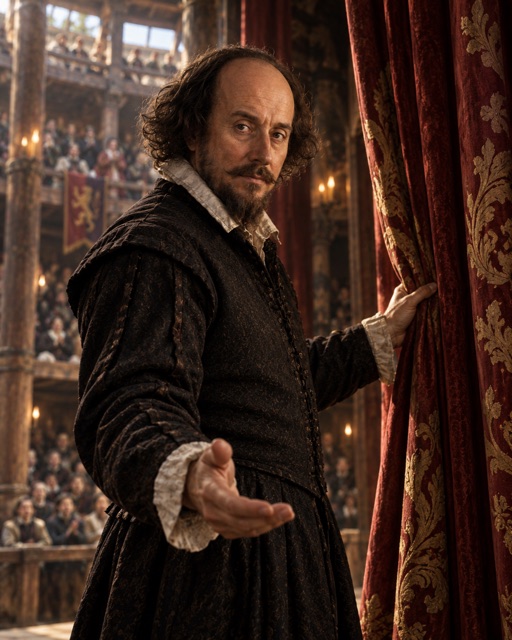
Drama · Play
King Lear
by Shakespeare · The Stage of the Soul · Elizabethan and Jacobean England, 1564-1616
Shakespeare's tragedy of age, pride, family, inheritance, cruelty, exposure, and a kingdom broken at home.
- Advanced
- c. 1606
- ~2 hr 15 min read
- 11 chapter guides
- Public domain
Start reading · Read the Act I, Scene I guide free
Before the text
Editor's Prelude
Power Learns Exposure
An aging king summons his family and court to watch him divide a kingdom. Lear wants to surrender the work of rule while keeping its name, honors, and love. Before the map is shared, each daughter must turn a private bond into public speech.
A second household stands nearby: Gloucester, his sons Edgar and Edmund, and another inheritance shaped by what a father can be made to believe. From palaces to open heath, the play asks what titles are worth when shelter, loyalty, and ordinary human need can no longer be taken for granted.
The opening pages
Act I, Scene I: The Love Test
Enter Kent, Gloucester and Edmund.
KENT.
I thought the King had more affected the Duke of Albany than Cornwall.
GLOUCESTER.
It did always seem so to us; but now, in the division of the kingdom,
it appears not which of the Dukes he values most, for qualities are so
weighed that curiosity in neither can make choice of either’s moiety.
KENT.
Is not this your son, my lord?
GLOUCESTER.
His breeding, sir, hath been at my charge: I have so often
blush’d to acknowledge him that now I am braz’d to’t.
KENT.
I cannot conceive you.
GLOUCESTER.
Sir, this young fellow’s mother could; whereupon she grew
round-wombed, and had indeed, sir, a son for her cradle ere she
had a husband for her bed. Do you smell a fault?
KENT.
I cannot wish the fault undone, the issue of it being so proper.
GLOUCESTER.
But I have a son, sir, by order of law, some year elder than
this, who yet is no dearer in my account: though this knave came
something saucily to the world before he was sent for, yet was
his mother fair; there was good sport at his making, and the
whoreson must be acknowledged. Do you know this noble gentleman,
Edmund?
EDMUND.
No, my lord.
GLOUCESTER.
My Lord of Kent: remember him hereafter as my honourable friend.
EDMUND.
My services to your lordship.
KENT.
I must love you, and sue to know you better.
EDMUND.
Sir, I shall study deserving.
GLOUCESTER.
He hath been out nine years, and away he shall again. The King
is coming.
[Sennet within.]
Enter Lear, Cornwall, Albany, Goneril, Regan, Cordelia and Attendants.
LEAR.
Attend the lords of France and Burgundy,
Gloucester.
GLOUCESTER.
I shall, my lord.
[Exeunt Gloucester and Edmund.]
LEAR.
Meantime we shall express our darker purpose.
Give me the map there. Know that we have divided
In three our kingdom: and ’tis our fast intent
To shake all cares and business from our age;
Conferring them on younger strengths, while we
Unburden’d crawl toward death. Our son of Cornwall,
And you, our no less loving son of Albany,
We have this hour a constant will to publish
Our daughters’ several dowers, that future strife
May be prevented now. The princes, France and Burgundy,
Great rivals in our youngest daughter’s love,
Long in our court have made their amorous sojourn,
And here are to be answer’d. Tell me, my daughters,—
Since now we will divest us both of rule,
Interest of territory, cares of state,—
Which of you shall we say doth love us most?
That we our largest bounty may extend
Where nature doth with merit challenge.—Goneril,
Our eldest born, speak first.
Chapter guides · 11
Act I, Scene I
A Kingdom Priced In Speech
Lear gives land for public declarations, banishes contradiction, and leaves the honest answer without a dowry.
The ceremony that divides
Lear announces that Albany and Cornwall will rule separate portions while he keeps the name and ceremonial honors of kingship with a monthly train of one hundred knights. Goneril and Regan win territory through extravagant declarations; Cordelia's 'Nothing' brings disinheritance when she will not make love larger than duty and truth.
The voices Lear rejects
Kent repeatedly tells Lear that power is bowing to flattery and receives banishment. Burgundy will not marry Cordelia without the promised wealth; France recognizes her as richer in honesty and accepts her. Afterward Cordelia warns her sisters, who privately agree that their father's infirm judgment requires immediate management.
Act I, Scene II
A Forged Letter Finds A Credulous Father
Edmund converts the stigma of illegitimacy into a plot that makes Gloucester suspect the son who trusts him.
The injury Edmund names
Alone, Edmund rejects custom's preference for the legitimate Edgar and appeals to nature as his goddess. He has written a letter proposing that sons take power from aging fathers, then pretends reluctance when Gloucester discovers it so that secrecy itself makes the forgery persuasive.
Two performances, one result
Gloucester treats eclipses and recent family disorder as confirmation, orders Edgar found, and entrusts Edmund with investigating. Edmund then warns Edgar that their father is enraged and advises him to hide in Edmund's lodging and go armed if he ventures out. Alone again, he celebrates his father's credulity and his brother's trusting honesty, declaring that any means serving his advance are acceptable.
Act I, Scene IV
The Gift Of Rule Changes The Household
Goneril tests the authority Lear believed he could retain, while Kent and the Fool tell truths under safer disguises.
Act II, Scene IV
Every Door Narrows
The Gloucester plot produces a fugitive and the royal sisters reduce Lear's remaining household from numbers to nothing.
Act III, Scene II
The Storm Measures A Mortal Body
Lear challenges the elements, but cold, exhaustion, and the Fool's need begin changing what he can notice.
Act III, Scene IV
Exposure Opens A View Beyond Rank
Gloucester risks helping Lear while the king meets Edgar's disguise as an image of unaccommodated humanity.
Act III, Scene VII
Sight Is Lost As Knowledge Arrives
A mock court tries absent daughters while Gloucester's actual judges punish the mercy that exposed Edmund.
Act IV, Scene I
The Rejected Son Becomes His Father's Guide
Blind Gloucester asks for the road to Dover while Edgar protects him without yet surrendering his disguise.
Act IV, Scene VI
At Dover, Despair Is Answered By Disguise
Political loyalties converge as Edgar invents a fall for Gloucester and discovers a letter plotting Albany's death.
Act IV, Scene VII
Recognition Needs No Ceremony
Lear wakes expecting punishment and finds Cordelia's love unchanged by everything his judgment destroyed.
Act V, Scene III
Love Survives The Battle, Not The Sentence
The families' plots are exposed in public, yet Edmund's attempt to reverse one private order arrives too late.
Questions readers ask
- How long does it take to read King Lear?
- About 2 hr 15 min in total.
- How difficult is King Lear?
- Advanced. A mid-length play; about 2 hours of reading.
- How many chapter guides are there?
- 11 chapter guides, written by the Nexus editors. Two open in full here; the rest show their opening line.
About Shakespeare
William Shakespeare was the central playwright of the English stage, writing tragedies, comedies, histories, and poems that became part of the world's shared dramatic language. His plays survive because they make private thought and public action move together.
“What happens when the inner life becomes impossible to hide?”
Shakespeare gives Nexus drama at maximum human range: kings, fools, lovers, ghosts, soldiers, daughters, murderers, and minds arguing with themselves.
Source text: public domain. Chapter guides: original Nexus writing. King Lear is part of The Nexus Archive, guided Quests through the great works.