 The Nexus Archive
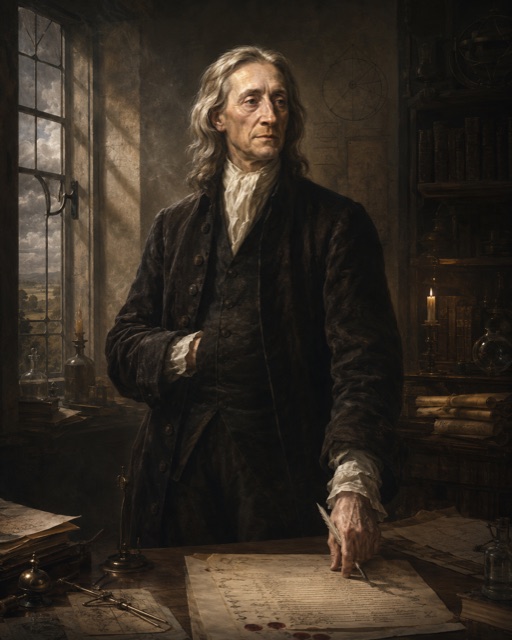
Liberal Political Philosophy · Treatise
Second Treatise of Government
by John Locke · The Philosopher of Consent · Enlightenment, 1632-1704
Locke's central argument for rights, consent, property, resistance, and limited government.
- Advanced
- ~4 hr 15 min read
- 14 chapter guides
- Public domain
Start reading · Read the Of the State of War guide free
Before the text
Editor's Prelude
When Government Breaks Its Trust
Prepared by the Nexus Editors
John Locke wrote under the pressure of a late Stuart England arguing over succession, religious power, and the reach of kings. Political danger drove him into exile in the Dutch Republic; when he returned after the Glorious Revolution, the Two Treatises of Government appeared anonymously in 1689. Its shared Preface celebrates William as a restorer and makes a sharper claim beneath the celebration: lawful government begins in the consent of the people, not in a ruler's inherited ownership of them.
The Second Treatise builds that claim step by step. Locke begins with human beings naturally free and equal, explains how labour can create property, and asks why anyone would leave that freedom for political society. His answer is not that people surrender themselves to a master. They establish a common authority to protect lives, liberties, and estates, then place legislative power in trust for that purpose.
That word trust is the work's hinge. Conquest, prerogative, tyranny, and resistance are all measured against it. Locke's state of nature is a moral argument before it is a story about remote origins, and his use of property often reaches beyond possessions to the civil interests government exists to secure. The final chapters reverse the usual question: not simply when subjects disobey, but when rulers dissolve the authority they were given.
The opening pages
Book II: Political Power
Sect. 1. It having been shewn in the foregoing discourse,
(1). That Adam had not, either by natural right of fatherhood, or by positive donation from God, any such authority over his children, or dominion over the world, as is pretended:
(2). That if he had, his heirs, yet, had no right to it:
(3). That if his heirs had, there being no law of nature nor positive law of God that determines which is the right heir in all cases that may arise, the right of succession, and consequently of bearing rule, could not have been certainly determined:
(4). That if even that had been determined, yet the knowledge of which is the eldest line of Adam’s posterity, being so long since utterly lost, that in the races of mankind and families of the world, there remains not to one above another, the least pretence to be the eldest house, and to have the right of inheritance:
All these premises having, as I think, been clearly made out, it is impossible that the rulers now on earth should make any benefit, or derive any the least shadow of authority from that, which is held to be the fountain of all power, Adam’s private dominion and paternal jurisdiction; so that he that will not give just occasion to think that all government in the world is the product only of force and violence, and that men live together by no other rules but that of beasts, where the strongest carries it, and so lay a foundation for perpetual disorder and mischief, tumult, sedition and rebellion, (things that the followers of that hypothesis so loudly cry out against) must of necessity find out another rise of government, another original of political power, and another way of designing and knowing the persons that have it, than what Sir Robert Filmer hath taught us.
Sect. 2. To this purpose, I think it may not be amiss, to set down what I take to be political power; that the power of a MAGISTRATE over a subject may be distinguished from that of a FATHER over his children, a MASTER over his servant, a HUSBAND over his wife, and a LORD over his slave. All which distinct powers happening sometimes together in the same man, if he be considered under these different relations, it may help us to distinguish these powers one from another, and shew the difference betwixt a ruler of a common-wealth, a father of a family, and a captain of a galley.
Chapter guides · 14
Of the State of War
Nature Is Not War
Locke has separated natural freedom from licence and the state of nature from the state of war.
What changed
Human beings begin equal under a law of nature that forbids harming another in life, liberty, health, or possessions. Because no common judge exists, each person may enforce that law. War begins only when someone uses force or declares a settled design against another's freedom.
Why it matters
This gives Locke both liberty and moral restraint before government. Political society will not create every right from nothing; it will supply an impartial authority where private judgment is unreliable.
The ending
A common authority gives people an earthly appeal instead of leaving a dispute to war. At the close, Jephtha appeals to God and goes to battle because no such judge exists. Locke leaves the decision to make that appeal to the threatened person's conscience, with responsibility to God for the decision.
Property
Labour Changes The Common World
Locke has moved from common ownership to private property, then from natural limits to money and unequal holdings.
What changed
A person owns his labour, so mixing labour with common resources can make them his. At first appropriation is limited by spoilage and by leaving enough and as good for others. Money changes the situation because durable value can be stored by consent.
Why it matters
Property is not grounded simply in grabbing or royal permission. It grows from preservation, labour, use, and consent. The money argument also explains how inequality can expand without an explicit contract for every parcel of land.
The ending
The chapter closes by returning to the original measure of appropriation: labour gives the title, and use sets the limit. Right and convenience went together: no one had reason to labour for more than he could use, so there was little room to quarrel over title or encroach on others.
Paternal Power
Parental Care Is Not Political Dominion
Locke has dismantled the attempt to derive royal authority from a father's rule over children.
Civil Society and Absolute Monarchy
A Commonwealth Requires An Appeal
Locke has built political society by transferring the private power to enforce natural law to a common authority.
Tacit Consent and Political Obligation
Consent Can Be Express Or Tacit
Locke has defended political beginnings by consent and answered the objection that history usually shows governments already in place.
Property, Taxation, and Delegation
Supreme Power Is Still A Trust
Locke has made the legislature supreme while placing four firm boundaries around what it may do.
When the Executive Resists the Legislative
The Executive Serves The Legislative Order
Locke has separated the powers of government and explained why the executive must remain active even when the legislature is not assembled.
Who Judges Prerogative?
Prerogative Lives On Public Trust
Locke has defended discretionary executive action while denying that discretion becomes a private right of the ruler.
Paternal, Political, and Despotical Power
Three Powers, Three Different Sources
Locke has gathered paternal, political, and despotical power into one comparison so they cannot be confused.
Conquest Cannot Create Consent
Victory Does Not Manufacture Right
Locke has followed conquest through combatants, innocent subjects, property, descendants, and later political obligation.
Resistance to Unlawful Force
Resistance Answers Unlawful Force
Locke has defined tyranny as using entrusted power for private will and then asked when such force may be opposed.
Dissolution
Government Can Dissolve Itself
Locke has traced changes to the legislature, failures to execute the laws, and breaches of political trust.
Barclay's Limits on Kings
The Argument Turns Against The Rebel
Locke has answered the fear that popular judgment will produce constant revolution and has pressed even a defender of monarchy into admitting cases of resistance.
Who Shall Judge?
Political Power Returns When Trust Ends
Locke closes by locating judgment and explaining when delegated power can return to the community.
Questions readers ask
- How long does it take to read Second Treatise of Government?
- About 4 hr 15 min in total.
- How difficult is Second Treatise of Government?
- Advanced. A long treatise; about 4 hours of reading.
- Can I read Second Treatise of Government for free?
- Second Treatise of Government is part of Nexus Premium, so reading it needs an account and a Premium subscription. The opening above and two chapter guides on this page are free to read.
- How many chapter guides are there?
- 14 chapter guides, written by the Nexus editors. Two open in full here; the rest show their opening line.
About John Locke
John Locke was an English philosopher whose writings on knowledge, government, toleration, and rights helped shape liberal political thought and the American founding.
“What makes political power legitimate?”
Locke is one of the central sources for modern arguments about rights, liberty, property, and constitutional government.
Source text: public domain. Chapter guides: original Nexus writing. Second Treatise of Government is part of The Nexus Archive, guided Quests through the great works.