 The Nexus Archive
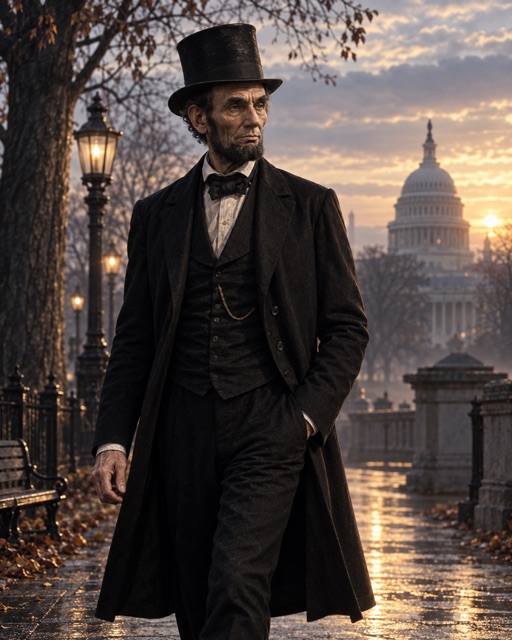
American Republicanism · Address
First Inaugural Address
by Abraham Lincoln · The Union's Moral Witness · Civil War America, 1809-1865
Lincoln's argument for Union before the Civil War fully breaks open.
- Intermediate
- ~15 min read
- 1 chapter guide
- Public domain
Start reading · Read the Union, Secession, and Civil War guide free
Before the text
Editor's Prelude
The Last Argument Before The Guns
On March 4, 1861, Abraham Lincoln took the presidential oath while the Union he promised to serve was being torn apart. His listeners faced a question more immediate than the shape of a new administration: whether an election could still settle who governed a country whose losing side was claiming the right to leave.
Lincoln’s defense of that Union includes guarantees for slavery where it already exists. He accepts the constitutional obligation to return fugitives from slavery, even as he calls for safeguards against the seizure of free people. The freedom of an election and the unfreedom protected by the constitutional settlement occupy the same argument.
The address moves among the practical things that make a government real—property, customs duties, offices, the mail—and the loyalties that might keep its people together. Legal reasoning has to carry an emotional burden: neighbors who reject one another politically will still inhabit the same country.
The opening pages
Union, Secession, and Civil War
MONDAY, MARCH 4, 1861
Fellow-Citizens of the United States:
In compliance with a custom as old as the Government itself, I appear before you to address you briefly and to take in your presence the oath prescribed by the Constitution of the United States to be taken by the President "before he enters on the execution of his office."
I do not consider it necessary at present for me to discuss those matters of administration about which there is no special anxiety or excitement.
Apprehension seems to exist among the people of the Southern States that by the accession of a Republican Administration their property and their peace and personal security are to be endangered. There has never been any reasonable cause for such apprehension. Indeed, the most ample evidence to the contrary has all the while existed and been open to their inspection. It is found in nearly all the published speeches of him who now addresses you. I do but quote from one of those speeches when I declare that--
I have no purpose, directly or indirectly, to interfere with the institution of slavery in the States where it exists. I believe I have no lawful right to do so, and I have no inclination to do so.
Those who nominated and elected me did so with full knowledge that I had made this and many similar declarations and had never recanted them; and more than this, they placed in the platform for my acceptance, and as a law to themselves and to me, the clear and emphatic resolution which I now read:
Resolved, That the maintenance inviolate of the rights of the States, and especially the right of each State to order and control its own domestic institutions according to its own judgment exclusively, is essential to that balance of power on which the perfection and endurance of our political fabric depend; and we denounce the lawless invasion by armed force of the soil of any State or Territory, no matter what pretext, as among the gravest of crimes.
I now reiterate these sentiments, and in doing so I only press upon the public attention the most conclusive evidence of which the case is susceptible that the property, peace, and security of no section are to be in any wise endangered by the now incoming Administration. I add, too, that all the protection which, consistently with the Constitution and the laws, can be given will be cheerfully given to all the States when lawfully demanded, for whatever cause--as cheerfully to one section as to another.
Chapter guides · 1
Union, Secession, and Civil War
The Union Is Still A Command
Lincoln joins concessions on slavery to an unyielding claim that secession is void and federal law still reaches every state.
The reassurance protects slavery
Lincoln begins by denying any plan or constitutional power to interfere with slavery where it already exists. He accepts the return of people claimed under the fugitive-slave clause and says he would not oppose making federal noninterference with slavery explicit and irrevocable. These are not side remarks. They show how far he is willing to go to calm the seceding states—and how much the constitutional settlement he is defending still protects slavery.
The constitutional line hardens
The concession stops at secession. Lincoln argues that the Union is legally perpetual, that no state can leave by itself, and that secession ordinances are void. He promises to hold federal property, collect duties, keep the mails moving where possible, and enforce existing law. His distinction is precise: he rejects invasion and promises no bloodshed unless federal authority is resisted, but he will not negotiate the government's disappearance.
The appeal cannot erase the choice
Lincoln then turns from legal argument to political consequence. Majority rule must operate within constitutional limits; courts deserve respect without becoming the people's permanent rulers; and separation cannot solve disputes between regions that must remain neighbors. The last appeal to memory and friendship is sincere, but it follows a hard assignment of responsibility: the government will not attack, and the decision for civil war rests with those who resist it.
Questions readers ask
- How long does it take to read First Inaugural Address?
- About 15 min in total.
- How difficult is First Inaugural Address?
- Intermediate. A short address; about 15 minutes of reading.
- Which edition is this?
- The original English text, first published in 1861. The text follows First Inaugural Address of Abraham Lincoln (1861).
- Can I read First Inaugural Address for free?
- First Inaugural Address is part of Nexus Premium, so reading it needs an account and a Premium subscription. The opening above and one chapter guide on this page are free to read.
- How many chapter guides are there?
- One chapter guide, written by the Nexus editors; it opens in full here.
About Abraham Lincoln
Abraham Lincoln was the sixteenth president of the United States and led the country through the Civil War. His speeches and state papers transformed the meaning of the Union by joining constitutional duty, emancipation, sacrifice, and the unfinished promise of equality.
“Can a republic founded on liberty survive its own contradiction?”
Lincoln reinterpreted the American experiment under extreme pressure. His words turned the Civil War from a struggle over Union alone into a test of whether democratic government and human equality could survive.
Source text: public domain. Chapter guides: original Nexus writing. First Inaugural Address is part of The Nexus Archive, guided Quests through the great works.