 The Nexus Archive
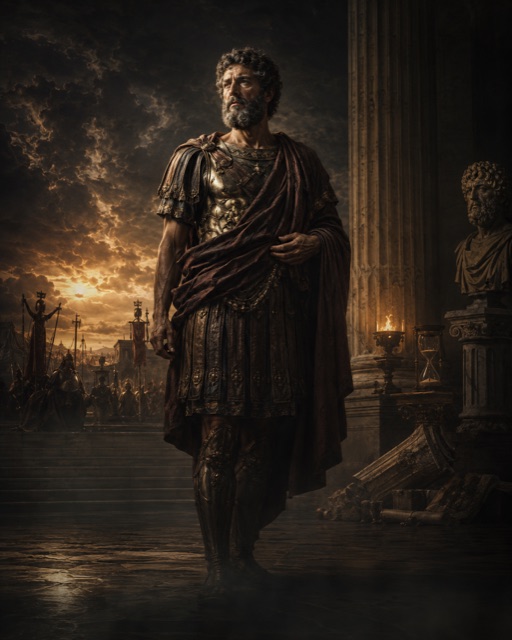
Stoicism
Marcus Aurelius
The Philosopher Emperor · Roman Empire, 121-180
Marcus Aurelius turns imperial power inward and writes as a man trying to govern himself before governing the world.
- Self-command
- Duty
- Mortality
- Judgment
- Inner freedom
Life
Marcus Aurelius was Roman emperor from 161 to 180 and one of the central figures of Stoicism. His private notes, later known as Meditations, reveal a ruler training himself in discipline, mortality, duty, and self-command while carrying the burden of empire.
The question
“How should a person rule himself when he cannot control the world?”
Argued against
Vanity, resentment, fear of death, luxury, and emotional slavery to events.
Why Marcus Aurelius matters
Marcus makes philosophy feel like a daily practice under pressure. He shows that power does not exempt a man from discipline, suffering, or the need to master his own mind.
Where to start
Meditations Short, direct, and one of the cleanest entry points into Stoic discipline.
Works
- Meditations Aphorisms · Intermediate Private Stoic notes on discipline, mortality, duty, judgment, and self-command.
Quests with Marcus Aurelius
- The Inner Citadel A training ground for the power that remains yours when fortune refuses to obey. Stoicism Quest