 The Nexus Archive
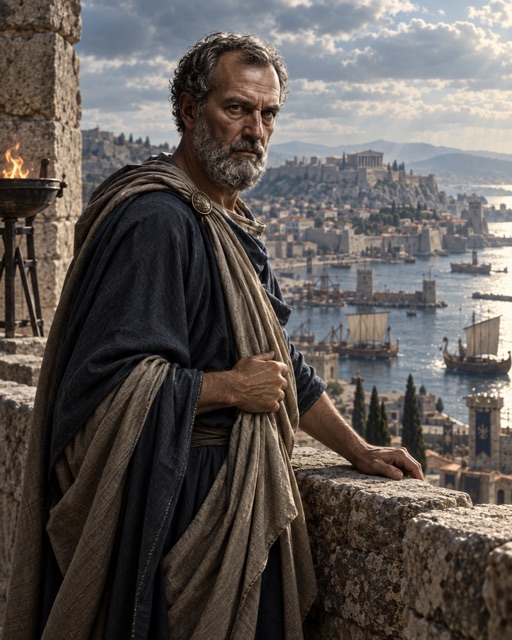
Historical Realism · History
History of the Peloponnesian War
by Thucydides · The Realist of War · Classical Greece, c. 460-c. 400 BC
A severe account of war, plague, empire, fear, civic breakdown, and political realism.
- Brutal
- c. 431-404 BCE
- ~15 hr 15 min read
- 32 chapter guides
- Public domain
Start reading · Read the Book I guide free
Before the text
Editor's Prelude
The War That Tests Every Claim
Thucydides begins before the fighting because he wants to explain why this war became possible. An Athenian general who was exiled after failing to save Amphipolis, he spent years observing both sides and turning a conflict still underway into a history of evidence, speeches, decisions, and consequences. His subject is not only who won a campaign, but how fear, interest, honor, chance, and political language move whole cities.
The scale keeps changing. Naval maneuvers and sieges sit beside plague symptoms, assembly debates, factional murders, diplomatic bargains, and private calculations. The speeches are especially important: Thucydides tells us that exact recollection was difficult, so he presents what the occasion called for while keeping as close as possible to the substance. The speeches set out what their speakers think will work, and the events test their judgment.
Thucydides says he lived through the entire war, and his judgments include knowledge of its outcome. The surviving narrative stops in 411 BCE, with commanders still planning and cities still changing allegiance. Its unfinished course leaves the struggle open, while its accounts of courage, cruelty, and miscalculation keep asking what people can understand about the forces they help set in motion.
The opening pages
Book I: Thucydides Sets the Standard
BOOK I
CHAPTER I
The State of Greece from the earliest Times to the Commencement of the Peloponnesian War
Thucydides, an Athenian, wrote the history of the war between the Peloponnesians and the Athenians, beginning at the moment that it broke out, and believing that it would be a great war and more worthy of relation than any that had preceded it. This belief was not without its grounds. The preparations of both the combatants were in every department in the last state of perfection; and he could see the rest of the Hellenic race taking sides in the quarrel; those who delayed doing so at once having it in contemplation. Indeed this was the greatest movement yet known in history, not only of the Hellenes, but of a large part of the barbarian world—I had almost said of mankind. For though the events of remote antiquity, and even those that more immediately preceded the war, could not from lapse of time be clearly ascertained, yet the evidences which an inquiry carried as far back as was practicable leads me to trust, all point to the conclusion that there was nothing on a great scale, either in war or in other matters.
For instance, it is evident that the country now called Hellas had in ancient times no settled population; on the contrary, migrations were of frequent occurrence, the several tribes readily abandoning their homes under the pressure of superior numbers. Without commerce, without freedom of communication either by land or sea, cultivating no more of their territory than the exigencies of life required, destitute of capital, never planting their land (for they could not tell when an invader might not come and take it all away, and when he did come they had no walls to stop him), thinking that the necessities of daily sustenance could be supplied at one place as well as another, they cared little for shifting their habitation, and consequently neither built large cities nor attained to any other form of greatness. The richest soils were always most subject to this change of masters; such as the district now called Thessaly, Boeotia, most of the Peloponnese, Arcadia excepted, and the most fertile parts of the rest of Hellas. The goodness of the land favoured the aggrandizement of particular individuals, and thus created faction which proved a fertile source of ruin. It also invited invasion. Accordingly Attica, from the poverty of its soil enjoying from a very remote period freedom from faction, never changed its inhabitants. And here is no inconsiderable exemplification of my assertion that the migrations were the cause of there being no correspondent growth in other parts. The most powerful victims of war or faction from the rest of Hellas took refuge with the Athenians as a safe retreat; and at an early period, becoming naturalized, swelled the already large population of the city to such a height that Attica became at last too small to hold them, and they had to send out colonies to Ionia.
Chapter guides · 32
Book I: Thucydides Sets the Standard
Ships, wealth, and the early Greek world
Thucydides measures early power through what communities could build and sustain.
Reconstructing the distant past
Thucydides names himself, announces the war while it is beginning, and argues that its scale can be judged from preparations and the number of peoples drawn in. He then moves backward, using settlements, wealth, ships, walls, and Homer as evidence for the weakness of early Greece.
What sea power makes possible
Agamemnon’s command at Troy rests on wealth and ships. Thucydides also warns that ruined buildings can mislead: the remains of Sparta would understate its power, while those of Athens would exaggerate it. Later fleets help Greek rulers gain money and control islands. The account ends with Persian expansion checking the sea power of the Ionian Greeks.
Book I: Corcyra Argues for Alliance
A defensive alliance leads to fighting
Athens tries to help Corcyra while preserving its treaty with Corinth’s allies.
The choice and its consequences
Corinth urges Athens to respect its dispute with its colony Corcyra. After two assemblies, Athens agrees to defend Corcyra without joining a general war against Corinth. At Sybota, Athenian ships nevertheless fight when the Corcyraeans face defeat. More Athenian ships arrive, and the Corinthians withdraw. They regard Athens’s part in the fighting as a breach of the existing peace.
Why it matters
Both speeches use justice, but both are calculations about a coming war. Athens chooses a defensive alliance designed to avoid formally breaking the peace, then fights Corinth at Sybota anyway. Legal categories cannot contain the strategic effect.
Book I: Sparta Chooses War
Sparta declares the treaty broken
A cautious king and an impatient magistrate offer different answers to Athens’s growing power.
Book I: Empire Takes Shape
Athens loses ground and tightens its empire
Victories, reverses, and rebellions reshape Athenian control after the Persian wars.
Book I: Diplomacy Fails
Refuge, exile, and the final demands
Stories of two fallen leaders precede Pericles’s answer to Spartan pressure.
Book II: War Begins at Plataea
A night attack at Plataea opens the war
A failed seizure of one town is followed by preparations for a wider invasion.
Book II: Pericles' Funeral Oration
Pericles honors the dead through the city
The funeral speech joins Athens’s public ideals to the losses borne by its families.
Book II: The Plague Enters Athens
Plague and war turn Athens against Pericles
Disease unsettles the city while military operations continue.
Book II: Pericles Defends His Policy
Pericles’s defense and the war’s continuing cost
Athens keeps its leader’s policy, but the fighting brings further deaths and expense.
Book II: Sitalces Moves in Thrace
Sitalces’s vast army returns without its goal
Numbers cannot overcome supply problems, winter, and divided interests.
Book III: Mytilene Surrenders
Mytilene surrenders; Athens reconsiders
A relief fleet arrives too late, and an order to destroy a city prompts second thoughts.
Book III: Plataea Appeals to Sparta
Plataea asks Sparta to remember
The defeated townspeople appeal to old services, sacred promises, and the graves of Spartan soldiers.
Book III: Thucydides on Civil War
Civil war changes the meaning of loyalty
Thucydides follows the damage of faction from language and family ties into continued fighting.
Book III: Ambracia Collapses
Ambracia suffers two crushing defeats
Demosthenes wins battles, but his allies choose limits for the peace.
Book IV: The Spartans Surrender
The trapped soldiers surrender at Sphacteria
Missile attacks and a route around the defenses break a force expected to fight to the death.
Book IV: Corcyra Ends and Sicily Negotiates
Revenge at Corcyra and pressure on Sparta
Victories lead to further killings, while Sicilian cities gather to discuss peace.
Book IV: Amphipolis Turns
Northern gains and a troubled armistice
Brasidas expands his influence while Athens and Sparta try to pause the war.
Book V: Cleon and Brasidas Clash
Cleon and Brasidas die at Amphipolis
A sudden attack destroys an Athenian force and changes the conditions for peace.
Book V: The Peace of Nicias
Peace on paper, disputed promises in practice
Athens and Sparta make two agreements while several allies refuse the settlement.
Book V: The Battle of Mantinea
The armies form at Mantinea
A disputed truce and renewed campaigning bring Sparta and the Argive alliance face to face.
Book V: The Melian Dialogue
Athens demands submission from Melos
The islanders seek neutral friendship; Athens insists on tribute and obedience.
Book VI: Nicias Names the Cost
A warning enlarges the expedition
Nicias’s demand for overwhelming resources makes Athens more eager to sail.
Book VI: Alcibiades Turns to Sparta
Camarina weighs its neighbors; Alcibiades offers advice
Athens and Syracuse compete for support while the exiled general approaches Sparta.
Book VI: Syracuse Is Invested
Syracuse comes close to surrender
Athenian siege works advance while Spartan help begins its journey.
Book VII: Syracuse Wins at Sea
Syracuse wins through a change of tactics
Reinforcements approach while stronger prows and a quick meal help defeat the Athenian fleet.
Book VII: The Last Sea Battle
The fleet loses its way out
A failed sea battle is followed by a delayed retreat on land.
Book VII: The Retreat and Surrender
The retreat ends in surrender and captivity
Separated forces fall to exhaustion, thirst, and attacks they cannot escape.
Book VIII: Persia Enters the War
Sparta’s promises meet Persia’s claims
A delayed rescue and a disputed treaty reveal divisions within the alliance.
Book VIII: The Four Hundred Take Power
The Four Hundred take control of Athens
Fear silences opposition before a new council displaces the old one.
Book VIII: Alcibiades Returns to Samos
Alcibiades returns through the fleet
The exiled general gains command at Samos and prevents an attack on Athens.
Book VIII: The Four Hundred Fall
Euboea’s loss brings down the Four Hundred
An enemy fleet passes Athens and catches its defenders unprepared at Eretria.
Book VIII: Cynossema and the Unfinished War
Victory at Cynossema restores hope
Athens wins a naval battle, while the surviving history breaks off amid continuing plans.
Questions readers ask
- How long does it take to read History of the Peloponnesian War?
- About 15 hr 15 min in total.
- How difficult is History of the Peloponnesian War?
- Brutal. A long history; about 15 hours of reading.
- Which translation is this?
- The Richard Crawley translation from the Greek. The text follows History of the Peloponnesian War, Richard Crawley translation (1874).
- How many chapter guides are there?
- 32 chapter guides, written by the Nexus editors. Two open in full here; the rest show their opening line.
About Thucydides
Thucydides was an Athenian historian and general whose History of the Peloponnesian War became one of the central works of political realism. His account examines empire, fear, plague, rhetoric, strategy, faction, and the collapse of restraint.
“What do cities become when fear and power outrun justice?”
Thucydides gives Nexus one of the strongest bridges between history and political thought.
Source text: public domain. Chapter guides: original Nexus writing. History of the Peloponnesian War is part of The Nexus Archive, guided Quests through the great works.