 The Nexus Archive
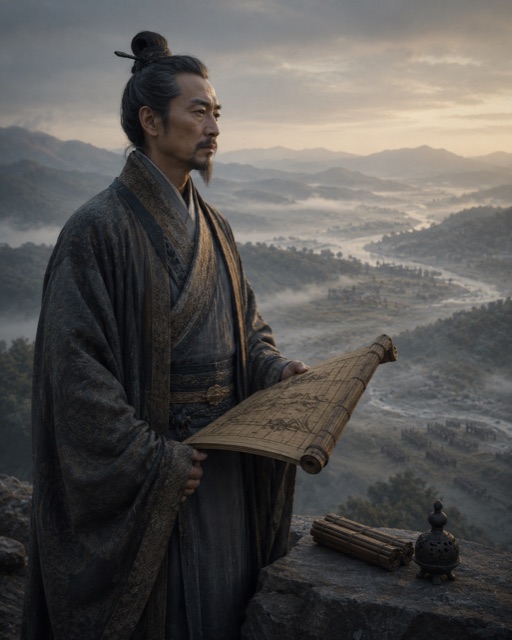
Military Strategy · Treatise
The Art of War
by Sun Tzu · The Strategist of Deception · Ancient China, c. 5th century BC
A compact classic on strategy, deception, command, terrain, intelligence, and victory without waste.
- Intermediate
- c. 5th c. BCE
- ~50 min read
- 6 chapter guides
- Public domain
Start reading · Read the Chapters I–II guide free
Before the text
Editor's Prelude
The Discipline Before Victory
Tradition attributes The Art of War to Sun Tzu, a strategist associated with the ancient Chinese state of Wu. The thirteen chapters address rulers and commanders in a world of rival states, shifting alliances, chariot armies, and populations whose labor and supplies sustain a campaign. Military success is inseparable from the survival of the state that pays for it.
Lionel Giles's 1910 translation presents the counsel in numbered passages. ‘Heaven’ includes weather and seasons; ‘Earth’ includes distance, terrain, and the dangers of movement. His ‘Moral Law’ concerns the people's accord with their ruler. These terms give political loyalty, material resources, and physical conditions a place beside courage and weapons. The commander must judge the whole situation before committing men to battle.
The book prizes victory that preserves strength and breaks resistance with the least costly fighting. Its restraint serves conquest, and its discipline can be ruthless: humane treatment of soldiers coexists with deception, strict punishment, and the deliberate use of danger to bind an army together. Calculation, supply, formations, and intelligence belong to the same responsibility. A ruler's anger or a general's desire for glory can consume lives and ruin a kingdom that victory was supposed to secure.
The opening pages
Chapters I–II: Calculation and Cost
I. LAYING PLANS
1. Sun Tzŭ said: The art of war is of vital importance to the State.
2. It is a matter of life and death, a road either to safety or to ruin. Hence it is a subject of inquiry which can on no account be neglected.
3. The art of war, then, is governed by five constant factors, to be taken into account in one’s deliberations, when seeking to determine the conditions obtaining in the field.
4. These are: (1) The Moral Law; (2) Heaven; (3) Earth; (4) The Commander; (5) Method and discipline.
5, 6. The Moral Law causes the people to be in complete accord with their ruler, so that they will follow him regardless of their lives, undismayed by any danger.
7. Heaven signifies night and day, cold and heat, times and seasons.
8. Earth comprises distances, great and small; danger and security; open ground and narrow passes; the chances of life and death.
9. The Commander stands for the virtues of wisdom, sincerity, benevolence, courage and strictness.
10. By Method and discipline are to be understood the marshalling of the army in its proper subdivisions, the gradations of rank among the officers, the maintenance of roads by which supplies may reach the army, and the control of military expenditure.
11. These five heads should be familiar to every general: he who knows them will be victorious; he who knows them not will fail.
12. Therefore, in your deliberations, when seeking to determine the military conditions, let them be made the basis of a comparison, in this wise:—
13. (1) Which of the two sovereigns is imbued with the Moral law? (2) Which of the two generals has most ability? (3) With whom lie the advantages derived from Heaven and Earth? (4) On which side is discipline most rigorously enforced? (5) Which army is the stronger? (6) On which side are officers and men more highly trained? (7) In which army is there the greater constancy both in reward and punishment?
14. By means of these seven considerations I can forecast victory or defeat.
15. The general that hearkens to my counsel and acts upon it, will conquer: let such a one be retained in command! The general that hearkens not to my counsel nor acts upon it, will suffer defeat:—let such a one be dismissed!
16. While heeding the profit of my counsel, avail yourself also of any helpful circumstances over and beyond the ordinary rules.
Read it in a Quest
A quieter discipline of strategy, restraint, attention, and liberation from craving.
Chapter guides · 6
Chapters I–II
Strategy Starts with Measurement
The opening two chapters put comparison, deception, and the public cost of war in one argument.
Conditions before combat
A commander must weigh the odds of victory and the cost of a campaign. The five factors cover political accord, weather, terrain, the commander, and military organization. The seven comparisons turn them into questions about opposing forces. Calculation also permits adaptation to circumstances. Deception works on the enemy's picture of those conditions, making strength seem weak or proximity distant while concealing the intended move.
A campaign consumes its own strength
Chapter II counts expenditure at home and at the front. Delay dulls weapons, drains morale and treasure, and exposes the weakened state to other rulers. Transport costs impoverish the population; nearby armies drive prices upward and provoke heavier exactions. A general's mistake can therefore spread far beyond the soldiers who fight.
Resources taken from the enemy
Foraging reduces the burden of transporting provisions. Captured chariots are incorporated into the army, their captors rewarded, and captured soldiers treated kindly and retained. This care has a strategic purpose: conquest augments the victor's strength. The commander's responsibility for the people's fate makes an efficient victory preferable to a prolonged campaign.
Chapters III–IV
Win Before the Clash
Chapters III–IV rank victories by what they preserve and separate security from the chance to attack.
Intact conquest
The best victory wins control without destroying the enemy’s country or army. Breaking resistance without battle is the highest achievement. Disrupting plans and preventing the enemy's forces from joining outrank a field battle; besieging cities comes last. The months of preparation and the casualties of an impatient assault explain that ranking. The aim remains mastery of the enemy's country and forces, preferably with both intact.
Judgment belongs in the field
A ruler can hobble an army with orders it cannot carry out, civilian methods of administration, or appointments that ignore military circumstances. The general needs the capacity to judge when to fight and how to use unequal forces. Common purpose matters, but so does freedom from a sovereign's uninformed interference.
Security is not an opening
Chapter IV distinguishes protection against defeat, which lies within one's own arrangements, from an opportunity to defeat the enemy, which the enemy supplies. The skilled commander waits without missing that opportunity. The ideal victory seems easy and earns little public credit, because measurement and preparation have settled the imbalance before the armies clash.
Chapters V–VI
Shape the Field
Chapters V–VI explain how coordination and concealed intentions make strength concentrate at a weak point.
Chapters VII–IX
Conditions Decide the Move
Chapters VII–IX test adaptation against supplies, marching strength, discipline, and deceptive signs.
Chapters X–XI
Ground Changes Judgment
Chapters X–XI connect terrain and invasion depth with the general's responsibility—and control over his own troops.
Chapters XII–XIII
The Cost of Ignorance
Chapters XII–XIII end with irreversible loss and the human sources of military knowledge.
Questions readers ask
- How long does it take to read The Art of War?
- About 50 min in total.
- How difficult is The Art of War?
- Intermediate. A short treatise; about 50 minutes of reading.
- Which translation is this?
- The Lionel Giles translation from the Classical Chinese. The text follows Sun Tzŭ on the Art of War: The Oldest Military Treatise in the World (basic translation text) (1910).
- Can I read The Art of War for free?
- The Art of War is part of Nexus Premium, so reading it needs an account and a Premium subscription. The opening above and two chapter guides on this page are free to read.
- How many chapter guides are there?
- 6 chapter guides, written by the Nexus editors. Two open in full here; the rest show their opening line.
About Sun Tzu
Sun Tzu is the traditional author of The Art of War, one of the most influential strategy texts ever written. The historical figure is partly obscured by legend, but the work that bears his name shaped military thought, politics, business strategy, and the language of conflict for centuries.
“How do you win before force becomes necessary?”
Sun Tzu gives Nexus a non-Western classic of practical judgment. He makes strategy feel like disciplined perception: know the ground, know yourself, know the enemy, and do not confuse violence with mastery.
Source text: public domain. Chapter guides: original Nexus writing. The Art of War is part of The Nexus Archive, guided Quests through the great works.