 The Nexus Archive
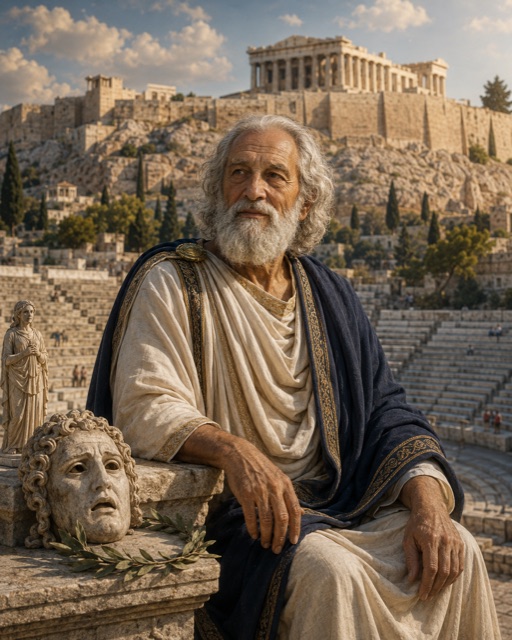
Greek Tragedy · Play
Antigone
by Sophocles · The Judge of Fate · Classical Athens, 496-406 BCE
A compact tragedy of burial, state power, divine law, family loyalty, and a ruler who learns too late.
- Intermediate
- 441 BCE
- ~45 min read
- 3 chapter guides
- Public domain
Start reading · Read the Burial, Decree, and Defiance guide free
Before the text
Editor's Prelude
The Law Beneath the Law
Antigone begins after Thebes has survived a war within its ruling family. Oedipus’ two sons have killed each other fighting on opposite sides: Eteocles defended the city, while the exiled Polyneices returned with an Argive army to claim it. Their uncle Creon now holds the throne. The victorious city must decide how to treat the dead as well as how to govern the living.
Antigone and Ismene are the dead men’s sisters. For them, the distinction between defender and invader cuts across a bond neither brother’s actions can erase. Burial is more than a family observance in this world: it concerns the dead person’s place among the powers below and the obligations of those left behind. Creon’s decree forbids burial or mourning for Polyneices and threatens death for disobedience.
Sophocles brought this legendary Theban household before an Athenian audience in the fifth century BCE. Its dispute takes place among people connected by kinship as well as rank. Creon speaks as ruler and uncle; the sisters confront him from within the family he governs. The chorus consists of Theban elders who have served earlier kings, and their responses expose the difficulty of advising a ruler whose word carries the force of law.
The opening pages
Burial, Decree, and Defiance
ANTIGONE
ANTIGONE and ISMENE before the Palace gates.
ANTIGONE.
Ismene, sister of my blood and heart,
See’st thou how Zeus would in our lives fulfill
The weird of Oedipus, a world of woes!
For what of pain, affliction, outrage, shame,
Is lacking in our fortunes, thine and mine?
And now this proclamation of today
Made by our Captain-General to the State,
What can its purport be? Didst hear and heed,
Or art thou deaf when friends are banned as foes?
ISMENE.
To me, Antigone, no word of friends
Has come, or glad or grievous, since we twain
Were reft of our two brethren in one day
By double fratricide; and since i’ the night
Our Argive leaguers fled, no later news
Has reached me, to inspirit or deject.
ANTIGONE.
I know ’twas so, and therefore summoned thee
Beyond the gates to breathe it in thine ear.
ISMENE.
What is it? Some dark secret stirs thy breast.
ANTIGONE.
What but the thought of our two brothers dead,
The one by Creon graced with funeral rites,
The other disappointed? Eteocles
He hath consigned to earth (as fame reports)
With obsequies that use and wont ordain,
So gracing him among the dead below.
But Polyneices, a dishonored corse,
(So by report the royal edict runs)
No man may bury him or make lament—
Must leave him tombless and unwept, a feast
For kites to scent afar and swoop upon.
Such is the edict (if report speak true)
Of Creon, our most noble Creon, aimed
At thee and me, aye me too; and anon
He will be here to promulgate, for such
As have not heard, his mandate; ’tis in sooth
No passing humor, for the edict says
Whoe’er transgresses shall be stoned to death.
So stands it with us; now ’tis thine to show
If thou art worthy of thy blood or base.
ISMENE.
But how, my rash, fond sister, in such case
Can I do anything to make or mar?
ANTIGONE.
Say, wilt thou aid me and abet? Decide.
ISMENE.
In what bold venture? What is in thy thought?
ANTIGONE.
Lend me a hand to bear the corpse away.
ISMENE.
What, bury him despite the interdict?
ANTIGONE.
My brother, and, though thou deny him, thine
No man shall say that I betrayed a brother.
ISMENE.
Wilt thou persist, though Creon has forbid?
ANTIGONE.
What right has he to keep me from my own?
Read it in a Quest
A descent into houses where law, blood, and vengeance turn private grief public.
Chapter guides · 3
Burial, Decree, and Defiance
The Decree Meets the Dead
The same burial becomes an act of fidelity for Antigone and a challenge to rule for Creon.
The sisters divide over the cost
Antigone asks Ismene to help bury Polyneices. Ismene recalls the family’s losses and the danger of two women resisting a ruler; she asks the dead to pardon obedience forced upon her. Antigone refuses that distinction between obligation and power. When Ismene later offers to share her guilt, Antigone rejects a partnership that did not include the deed. Their disagreement persists even when both face Creon.
An order tested by an unexplained act
Creon presents the city as the vessel on which every private friendship depends. He honours its defender and denies rites to its attacker. When a guard reports that someone has covered Polyneices with dust, the lack of evidence does not restrain the king’s judgment: he suspects bribery and threatens the guards. The guard’s anxious efforts to separate himself from the crime show what it costs to bring unwelcome news.
A confession without submission
Caught renewing the burial rites, Antigone admits what she did and that she knew the decree. She denies that a mortal ruler can cancel unwritten divine obligations. Creon treats her open defence as a second offence and imagines acquittal as defeat by a woman. The chorus’s earlier praise of human resourcefulness has already made its limits explicit: ingenuity can serve good or evil, and it supplies no escape from death. The closing chorus sees the family’s inherited curse striking again and warns that people can mistake evil for good as ruin approaches.
Haemon, Lament, and Warning
The House Argues Back
Creon hears advice as disobedience until the seer’s warning makes him reverse his orders.
A son asks his father to listen
Haemon begins by acknowledging his father’s guidance, then reports the public sympathy that fear keeps from Creon’s ears. He urges flexibility through images of trees surviving a flood and a sailor slackening his sheet. Creon answers by equating loyalty to the city with obedience to its ruler. Their dispute ends in anger, with Haemon refusing to witness Antigone’s death. After the chorus intervenes, Creon spares Ismene and orders Antigone enclosed alive in a cave.
The life that burial will take away
Antigone’s farewell dwells on the marriage and children she will never have. She compares her fate with Niobe’s, while the chorus alternates consolation with blame for her defiance. Her insistence on Polyneices’ irreplaceability gives a particular reason for this act: with both parents dead, she can never have another brother. Even as she hopes for welcome among her dead kin, she asks what divine law she has broken. After she leaves, the chorus supplies further legendary examples of confinement and suffering.
The warning reaches the state
Teiresias describes failed sacrifice and birds fouled by feeding on the exposed corpse. In his account, Creon has polluted the city and reversed the proper places of living and dead. Creon again alleges profit-seeking, but the seer answers with a warning of loss within his own house. The elders’ trust in Teiresias finally moves him. Creon calls for axes and goes out, declaring that he will free the woman he confined. The chorus ends by calling on Dionysus to save Thebes.
Messenger and Catastrophe
Wisdom Comes Too Late
The reversal of Creon’s orders cannot undo the deaths that follow them.
Questions readers ask
- How long does it take to read Antigone?
- About 45 min in total.
- How difficult is Antigone?
- Intermediate. A short play; about 45 minutes of reading.
- Can I read Antigone for free?
- Antigone is part of Nexus Premium, so reading it needs an account and a Premium subscription, and completing an earlier Quest's Mastery. The opening above and two chapter guides on this page are free to read.
- How many chapter guides are there?
- 3 chapter guides, written by the Nexus editors. Two open in full here; the rest show their opening line.
About Sophocles
Sophocles was one of classical Athens' great tragedians. His surviving plays include Oedipus the King, Oedipus at Colonus, and Antigone, works that shaped dramatic structure, moral conflict, and the language of tragic recognition.
“What law must a person obey when every choice destroys something sacred?”
Sophocles gives Nexus tragedy at full force: compressed action, terrible knowledge, public conflict, and characters who discover too late what their choices mean.
Source text: public domain. Chapter guides: original Nexus writing. Antigone is part of The Nexus Archive, guided Quests through the great works.