 The Nexus Archive
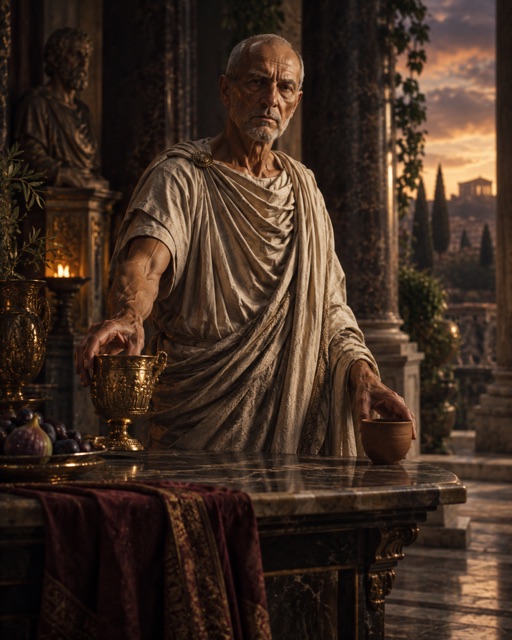
Stoicism · Essay
On the Shortness of Life
by Seneca · The Tutor of Tyranny · Roman Empire, c. 4 BC-AD 65
Seneca's urgent argument that life is long enough if not wasted.
- Intermediate
- c. 49 CE
- ~50 min read
- 8 chapter guides
- Public domain
Start reading · Read the Life Is Long Enough guide free
Before the text
Editor's Prelude
The Life You Keep For Yourself
Paulinus has useful work to do, and Seneca wants him to leave it. The Roman official’s responsibility for the grain supply makes this an uncomfortable appeal: other people really do depend on him. On the Shortness of Life asks when service, ambition, and the habit of being needed consume the person who performs them.
Seneca answers the familiar complaint that life is too short by questioning how much of it anyone possesses. His examples move among courts, patrons’ doors, banquets, and private rooms. Wealth and leisure offer no automatic escape; a man can be occupied even when he has apparently nothing to do.
The severity belongs to an argument about freedom. Time spent cannot be purchased back, and preparing endlessly to live can become a way of never beginning. Seneca’s address to one capable, burdened man gives these large claims their personal force: the life at issue is finite, particular, and already passing.
The opening pages
Life Is Long Enough
ADDRESSED TO PAULINUS.
I. The greater part of mankind, my Paulinus, complains of the unkindness of Nature, because we are born only for a short space of time, and that this allotted period of life runs away so swiftly, nay so hurriedly, that with but few exceptions men’s life comes to an end just as they are preparing to enjoy it: nor is it only the common herd and the ignorant vulgar who mourn over this universal misfortune, as they consider it to be: this reflection has wrung complaints even from great men.
Hence comes that well-known saying of physicians, that art is long but life is short: hence arose that quarrel, so unbefitting a sage, which Aristotle picked with Nature, because she had indulged animals with such length of days that some of them lived for ten or fifteen centuries, while man, although born for many and such great exploits, had the term of his existence cut so much shorter.
We do not have a very short time assigned to us, but we lose a great deal of it: life is long enough to carry out the most important projects: we have an ample portion, if we do but arrange the whole of it aright: but when it all runs to waste through luxury and carelessness, when it is not devoted to any good purpose, then at the last we are forced to feel that it is all over, although we never noticed how it glided away. Thus it is: we do not receive a short life, but we make it a short one, and we are not poor in days, but wasteful of them.
When great and kinglike riches fall into the hands of a bad master, they are dispersed straightway, but even a moderate fortune, when bestowed upon a wise guardian, increases by use: and in like manner our life has great opportunities for one who knows how to dispose of it to the best advantage.
II. Why do we complain of Nature? she has dealt kindly with us. Life is long enough, if you know how to use it.
One man is possessed by an avarice which nothing can satisfy, another by a laborious diligence in doing what is totally useless: another is sodden by wine: another is benumbed by sloth: one man is exhausted by an ambition which makes him court the good will of others: another, through his eagerness as a merchant, is led to visit every land and every sea by the hope of gain: some are plagued by the love of soldiering, and are always either endangering other men’s lives or in trembling for their own: some wear away their lives in that voluntary slavery, the unrequited service of great men:
Chapter guides · 8
Life Is Long Enough
Enough Time, Poorly Held
Seneca begins by rejecting the excuse that life itself is too short.
Nature is put on trial
Seneca turns a common complaint upside down. People blame nature for giving them too little time, but he says the real problem is waste. Life is long enough when it is handled with care.
Possession of a life
Seneca asks whether a person possesses the life he has been given. He compares time with a fortune: even a moderate inheritance can grow under careful stewardship, while riches in bad hands disappear. The comparison shifts responsibility from Nature’s allotment to the way it is used.
Success can also consume
Seneca’s examples include both people ruined by appetite and people admired for wealth, eloquence, and public service. A crowded schedule can signify dependence rather than ownership. The man angry that a patron refuses him an audience has not made time to hear himself.
What Time Has Been Taken
The Stolen Account
Seneca asks the reader to audit a whole life as if time were property.
Time treated as property
Seneca imagines an old person adding up the years lost to creditors, patrons, quarrels, ambition, illness, and distraction. Then he turns to famous Roman examples to show that rank does not protect anyone from wasted life.
Rank does not secure freedom
The point is not that public life is always bad. It is that a person can look successful from the outside while barely belonging to himself at all.
Augustus and Cicero want release
Seneca presents Augustus longing for rest from rule and Cicero calling himself almost a prisoner at his villa. He contrasts that dependence on political fortune with the freedom he attributes to the wise person. These portraits make eminence an unreliable measure of how much of a life its owner possesses.
Learning How To Live
Learning How To Live
Seneca says people train for many arts, but neglect the one art that matters most.
Postponement and Memory
Later Is The Trap
Seneca attacks the fantasy that real life can safely begin tomorrow.
Busy Leisure
Business Disguised As Leisure
Seneca says some leisure is only another form of captivity.
The Company of Wisdom
The Long Life Of The Mind
Seneca argues that philosophy gives a person more than one lifetime.
The Peaceful Haven
The Better Harbor
Seneca turns from general accusation to a direct appeal to Paulinus.
The Final Accounting
The Account Comes Due
Seneca ends by judging careers that consume the life they were supposed to crown.
Questions readers ask
- How long does it take to read On the Shortness of Life?
- About 50 min in total.
- How difficult is On the Shortness of Life?
- Intermediate. A short essay; about 50 minutes of reading.
- Can I read On the Shortness of Life for free?
- On the Shortness of Life is part of Nexus Premium, so reading it needs an account and a Premium subscription. The opening above and two chapter guides on this page are free to read.
- How many chapter guides are there?
- 8 chapter guides, written by the Nexus editors. Two open in full here; the rest show their opening line.
About Seneca
Seneca was a Roman Stoic philosopher, dramatist, statesman, and adviser to Nero. His essays and letters explore anger, mercy, time, death, friendship, wealth, and the moral hazards of living near power.
“What is your life worth if you waste your time and cannot govern your passions?”
Seneca makes ancient philosophy psychologically immediate. His writings are short, forceful, and useful for readers trying to live with more discipline.
Source text: public domain. Chapter guides: original Nexus writing. On the Shortness of Life is part of The Nexus Archive, guided Quests through the great works.