 The Nexus Archive
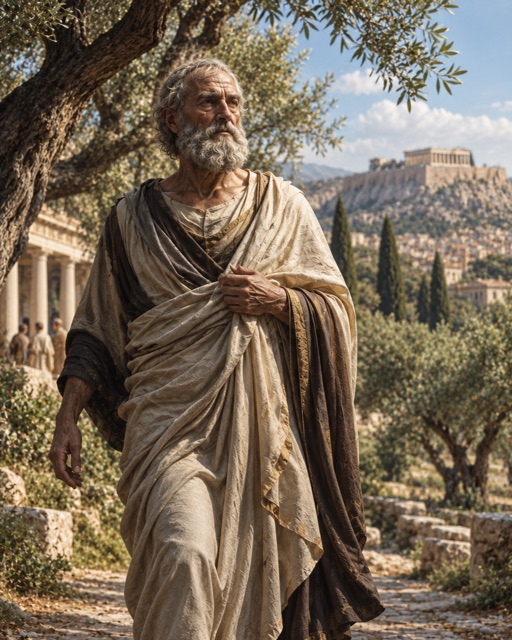
Platonism · Dialogue
Symposium
by Plato · The Architect of Ideals · Classical Greece, c. 428-348 BC
- Intermediate
- ~1 hr 45 min read
- 14 chapter guides
- Public domain
Start reading · Read the The Story Reaches Apollodorus guide free
Before the text
Editor's Prelude
A Night of Speeches
Plato sets this conversation in Athens, at the house of the tragic poet Agathon after his first dramatic victory. Socrates, the comic poet Aristophanes, the physician Eryximachus and other guests gather for a celebration. Several have drunk heavily the day before. Their decision to ease the drinking and offer speeches gives a familiar social occasion an unusual purpose: each must say what makes Love worthy of praise.
A symposium was a gathering for drinking and conversation after a meal. Here the company shares couches, wine, jokes and rivalries as well as arguments. Courtship is bound up with differences of age and status, with expectations about the conduct of lovers and beloveds, and with competing claims about education. The speakers do not all mean the same thing by love, or agree about which attachments deserve honour. Their accounts carry the assumptions and interests of particular people.
The evening is already in the past when the dialogue opens. Apollodorus tells a story he learned from Aristodemus, who attended the feast, and says he checked some details with Socrates. This distance matters: admiration keeps the conversation alive, but memory is selective. Plato gives the question of love a human setting in which people want to be valued, to be believed and to make something lasting of their attachments.
The opening pages
The Story Reaches Apollodorus
PERSONS OF THE DIALOGUE: Apollodorus, who repeats to his companion the dialogue which he had heard from Aristodemus, and had already once narrated to Glaucon. Phaedrus, Pausanias, Eryximachus, Aristophanes, Agathon, Socrates, Alcibiades, A Troop of Revellers.
SCENE: The House of Agathon.
Concerning the things about which you ask to be informed I believe that I am not ill-prepared with an answer. For the day before yesterday I was coming from my own home at Phalerum to the city, and one of my acquaintance, who had caught a sight of me from behind, calling out playfully in the distance, said: Apollodorus, O thou Phalerian man, halt! So I did as I was bid; and then he said, I was looking for you, Apollodorus, only just now, that I might ask you about the speeches in praise of love, which were delivered by Socrates, Alcibiades, and others, at Agathon's supper. Phoenix, the son of Philip, told another person who told me of them; his narrative was very indistinct, but he said that you knew, and I wish that you would give me an account of them. Who, if not you, should be the reporter of the words of your friend? And first tell me, he said, were you present at this meeting?
Your informant, Glaucon, I said, must have been very indistinct indeed, if you imagine that the occasion was recent; or that I could have been of the party.
Why, yes, he replied, I thought so.
Impossible: I said. Are you ignorant that for many years Agathon has not resided at Athens; and not three have elapsed since I became acquainted with Socrates, and have made it my daily business to know all that he says and does. There was a time when I was running about the world, fancying myself to be well employed, but I was really a most wretched being, no better than you are now. I thought that I ought to do anything rather than be a philosopher.
Well, he said, jesting apart, tell me when the meeting occurred.
In our boyhood, I replied, when Agathon won the prize with his first tragedy, on the day after that on which he and his chorus offered the sacrifice of victory.
Then it must have been a long while ago, he said; and who told you--did Socrates?
No indeed, I replied, but the same person who told Phoenix;--he was a little fellow, who never wore any shoes, Aristodemus, of the deme of Cydathenaeum. He had been at Agathon's feast; and I think that in those days there was no one who was a more devoted admirer of Socrates. Moreover, I have asked Socrates about the truth of some parts of his narrative, and he confirmed them. Then, said Glaucon, let us have the tale over again; is not the road to Athens just made for conversation? And so we walked, and talked of the discourses on love; and therefore, as I said at first, I am not ill-prepared to comply with your request, and will have another rehearsal of them if you like. For to speak or to hear others speak of philosophy always gives me the greatest pleasure, to say nothing of the profit. But when I hear another strain, especially that of you rich men and traders, such conversation displeases me; and I pity you who are my companions, because you think that you are doing something when in reality you are doing nothing. And I dare say that you pity me in return, whom you regard as an unhappy creature, and very probably you are right. …
Chapter guides · 14
The Story Reaches Apollodorus
A Story Already Retold
Apollodorus passes on a remembered evening whose first witness was Aristodemus.
The witness behind the narrator
Apollodorus was not at Agathon's feast. He learned the story from Aristodemus, checked parts with Socrates, and has already told it to someone else. The dialogue arrives through interested witnesses rather than a neutral transcript.
Why Apollodorus keeps the story
Apollodorus has recently devoted himself to Socrates and finds pleasure in philosophical conversation. He contrasts that life sharply with the pursuits of his present companion. The account comes from a committed admirer who has already rehearsed it, not from someone discovering the events as he speaks.
An unexpected companion
The remembered evening begins when Aristodemus meets Socrates unusually bathed and shod for Agathon’s dinner. Socrates invites him along although the host has not invited him. Their playful appeal to Homer makes the approach to the feast a conversation about who may accompany whom.
The Feast Chooses Its Theme
The Party Makes a Rule
The guests choose voluntary drinking and successive speeches in praise of Love.
Socrates arrives in his own time
Aristodemus enters while Socrates remains absorbed in thought in a neighbouring portico. When Socrates finally joins the meal, Agathon invites him close as though wisdom might pass by touch. Socrates answers with the image of water flowing between cups, teasing the hope that knowledge can be transferred so easily.
A physician proposes the evening’s terms
Several guests are still suffering from the previous celebration. Eryximachus supports drinking only as much as each wishes and dismisses the flute-girl from their company. He takes up Phaedrus’s complaint that poets neglect Love and proposes speeches in turn, beginning with Phaedrus.
A selection within the recollection
Apollodorus says that Aristodemus could not remember everything and that he himself will repeat what he thinks worth remembering. The orderly sequence of speeches is therefore presented through acknowledged acts of recollection and selection.
Phaedrus
Love Before the Beloved’s Eyes
Phaedrus praises Love as an ancient god whose power makes people ashamed of cowardice and willing to die.
Pausanias
Which Love Deserves Praise?
Pausanias distinguishes desire for a passing body from an attachment directed toward lasting character.
Eryximachus
A Physician Finds Love in Nature
Eryximachus extends the distinction between good and bad Love from human attachments to bodies, music and seasons.
Aristophanes
The Desire to Be Whole
Aristophanes invents divided human beings to explain why lovers seek a union they cannot fully describe.
Agathon
Agathon Praises the God Himself
The host argues that Love is young, beautiful and virtuous, then credits him with inspiring the arts.
Socrates Tests the Praise
What Must a Lover Lack?
Socrates turns praise into an examination of the relation between desire and its object.
Diotima: Love Between
Between Possession and Want
Socrates recounts Diotima’s teaching that Love belongs between mortal and divine, ignorance and wisdom.
Diotima: Mortal Longing
What Mortals Try to Keep
Diotima connects love of the good with the wish to possess it always, and therefore with generation and remembrance.
Diotima: The Ascent to Beauty
From Particular Beauty to Beauty Itself
Diotima describes an education of desire that culminates in what she calls absolute beauty.
Alcibiades Breaks In
A New Guest Changes the Occasion
Alcibiades arrives drunk to crown Agathon, discovers Socrates beside him and agrees to make Socrates the subject of praise.
Alcibiades Praises Socrates
The Man Inside the Silenus
Alcibiades praises Socrates through stories of shame, disappointed desire and endurance in war.
Dawn at the Banquet
What Is Remembered at Dawn
The feast breaks up, and Aristodemus recalls only the outline of a final conversation about tragedy and comedy.
Questions readers ask
- How long does it take to read Symposium?
- About 1 hr 45 min in total.
- How difficult is Symposium?
- Intermediate. A mid-length dialogue; about 2 hours of reading.
- Which translation is this?
- The Benjamin Jowett translation from the Greek. The text follows Symposium, Benjamin Jowett translation.
- Can I read Symposium for free?
- Symposium is part of Nexus Premium, so reading it needs an account and a Premium subscription. The opening above and two chapter guides on this page are free to read.
- How many chapter guides are there?
- 14 chapter guides, written by the Nexus editors. Two open in full here; the rest show their opening line.
About Plato
Born into an Athenian family during political upheaval, Plato became a student of Socrates and later founded the Academy. His dialogues transformed his teacher's public questioning into a vast investigation of justice, knowledge, education, politics, and reality.
“What is justice?”
Plato gives Western thought one of its central temptations: the belief that politics, education, beauty, and the soul can be judged by a reality higher than opinion.
Source text: public domain. Chapter guides: original Nexus writing. Symposium is part of The Nexus Archive, guided Quests through the great works.