 The Nexus Archive
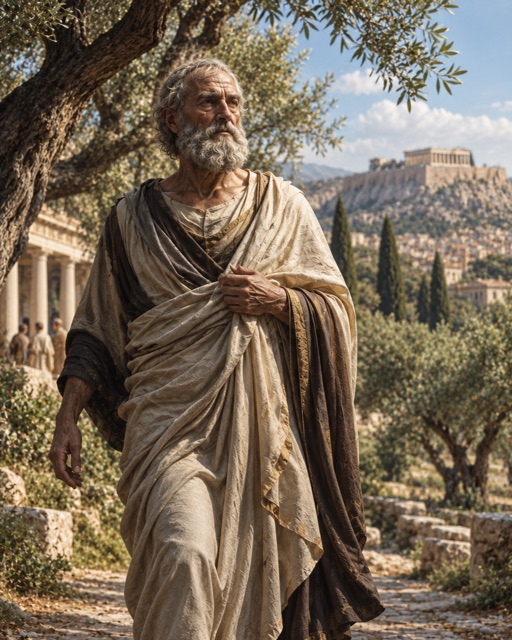
Platonism · Dialogue
Republic
by Plato · The Architect of Ideals · Classical Greece, c. 428-348 BC
A sweeping dialogue on justice, education, politics, and the soul.
- Advanced
- c. 375 BCE
- ~8 hr 45 min read
- 46 chapter guides
- Public domain
Start reading · Read the Book I guide free
Before the text
Editor's Prelude
The City Built in Speech
Republic begins after a festival, as Socrates is walking back from the Piraeus, but the dialogue carries the pressure of a wounded city. Athens had lost the Peloponnesian War, endured the rule of the Thirty, and later condemned Socrates to death. Plato answers that public wreckage by staging a conversation that refuses to let justice remain a slogan. The question starts with debts, friends, enemies, and reputation, then grows until it demands an education, a regime, and a soul.
This is a dialogue, not a lecture. Socrates argues with old age, inheritance, ambition, cleverness, and moral fatigue. Thrasymachus makes power speak without shame. Glaucon and Adeimantus make injustice look tempting. Socrates answers by building a city in speech and then asking whether the same order, disorder, and tyranny can live inside one person.
The famous images arrive because the argument has earned them. The divided line, the sun, the Cave, the descent of regimes, and the Myth of Er are not ornaments around a political theory. They are Plato's way of making the stakes of education visible.
The argument moves from public dispute to inward judgment. Plato can be severe, strange, and impossible. The book asks whether justice is worth choosing when injustice seems profitable, and whether a soul can learn to love truth more than familiar appearances.
The opening pages
Book I: Cephalus and the Opening Question
PERSONS OF THE DIALOGUE.
Socrates, who is the narrator. Cephalus. Glaucon. Thrasymachus. Adeimantus. Cleitophon. Polemarchus.
And others who are mute auditors.
The scene is laid in the house of Cephalus at the Piraeus; and the whole dialogue is narrated by Socrates the day after it actually took place to Timaeus, Hermocrates, Critias, and a nameless person, who are introduced in the Timaeus.
Ed. Steph. 327 I went down yesterday to the Piraeus with Glaucon the son of Ariston, that I might offer up my prayers to the goddess; and also because I wanted to see in what manner they would celebrate the festival, which was a new thing. I was delighted with the procession of the inhabitants; but that of the Thracians was equally, if not more, beautiful. When we had finished our prayers and viewed the spectacle, we turned in the direction of the city; and at that instant Polemarchus the son of Cephalus chanced to catch sight of us from a distance as we were starting on our way home, and told his servant to run and bid us wait for him. The servant took hold of me by the cloak behind, and said: Polemarchus desires you to wait.
I turned round, and asked him where his master was.
There he is, said the youth, coming after you, if you will only wait.
Certainly we will, said Glaucon; and in a few minutes Polemarchus appeared, and with him Adeimantus, Glaucon's brother, Niceratus the son of Nicias, and several others who had been at the procession.
Polemarchus said to me: I perceive, Socrates, that you and your companion are already on your way to the city.
You are not far wrong, I said.
But do you see, he rejoined, how many we are?
Of course.
And are you stronger than all these? for if not, you will have to remain where you are.
May there not be the alternative, I said, that we may persuade you to let us go?
But can you persuade us, if we refuse to listen to you? he said.
Certainly not, replied Glaucon.
Then we are not going to listen; of that you may be assured.
Adeimantus added: Has no one told you of the torch-race on horseback in honour of the goddess which will take place in the evening?
With horses! I replied: That is a novelty. Will horsemen carry torches and pass them one to another during the race?
Read it in a Quest
The birthplace of disciplined questioning, where virtue and justice become life's central tests.
A direct encounter with power when justice, fear, and rule lose their illusions.
Chapter guides · 46
Book I: Cephalus and the Opening Question
Justice Starts As A Social Question
The dialogue opens in a house, not a classroom.
What just happened
Socrates is drawn into Cephalus' house after the festival. The first answer to justice comes from age, wealth, and ordinary respectability: tell the truth, pay debts, and face death with a clean conscience.
Why it matters
Plato begins with a familiar moral world before he breaks it open. Justice first looks like decent conduct, but Socrates quickly shows that even decent rules need judgment.
Book I: Polemarchus and Helping Friends
Loyalty Is Not Enough
Polemarchus gives justice a sharper, more tribal shape.
What just happened
Polemarchus says justice means benefiting friends and harming enemies. Socrates presses the definition until it becomes unstable: people can mistake enemies for friends, and making anyone worse cannot be the work of justice.
Why it matters
This section clears away a tempting answer. Loyalty feels noble, but if justice simply follows our side against their side, it can become another name for harm.
Book I: Thrasymachus Enters
Power Makes Its Claim
Thrasymachus attacks the whole moral conversation.
Book I: Ruling and Advantage
Rule Is Not Mere Appetite
Socrates separates ruling from private advantage.
Book I: Justice and the Soul
Justice Becomes Inner Order
Book I ends by turning from winning to living well.
Book II: Glaucon Renews the Challenge
The Case Against Justice Returns
Glaucon asks whether anyone would be just if injustice were safe.
Book II: Adeimantus Adds the Public Case
Respectability Deepens The Problem
Adeimantus shows how ordinary praise can weaken justice.
Book II: Building the City in Speech
A City Makes Justice Visible
Socrates begins enlarging the question until justice can be seen.
Book II: Guardians and Their Training
The Guardians Must Be Formed
The city now needs defenders whose souls can be trusted.
Book II: Stories about the Gods
Stories Shape The Soul
Book II ends with strict rules for sacred and heroic stories.
Book III: Poetry and Courage
Stories Train Courage
Plato starts Book III by asking which stories make guardians brave and steady.
Book III: Style and Imitation
Imitation Is Not Harmless
Socrates worries that acting like many kinds of people can shape the soul.
Book III: Music, Rhythm, and Character
Rhythm Reaches The Soul
Music matters because it trains taste before argument can do its work.
Book III: Gymnastic, Medicine, and Judgment
Training Body And Temper
Socrates turns from music to health, discipline, and balance.
Book III: Choosing the Rulers
The City Chooses Its Guardians
Book III ends by selecting rulers and giving the city its founding story.
Book IV: Happiness and the Whole City
The City Is Not Built For One Class
Adeimantus asks whether the guardians are being made miserable.
Book IV: The Four Virtues
The Virtues Appear In The City
Wisdom, courage, temperance, and justice begin to take shape.
Book IV: Temperance and the Soul
Justice Moves From City To Soul
Socrates finds justice in the city and begins testing whether the same order exists in a person.
Book IV: Justice in the Soul
Justice Is Ordered Life
Book IV gives the first full answer to the dialogue's central question.
Book V: Women Guardians
The First Wave
Book V begins with the question Socrates tried to avoid.
Book V: Families in Common
Family Becomes Political
Socrates extends the guardian design into marriage and children.
Book V: Unity of the City
One City, One Feeling
The argument for shared families becomes an argument about unity.
Book V: Rules of War
War Has Limits
Socrates limits violence among Greeks, then returns to whether the city in speech can exist.
Book V: The Philosopher Must Rule
The Philosopher Must Rule
Book V reaches the claim that makes the Republic famous.
Book VI: The True Philosopher
The Philosopher Loves What Is Real
Book VI begins by defining the true philosophical nature.
Book VI: The Ship and the City
The Ship And The City
Socrates explains why real philosophers look useless to badly ordered cities.
Book VI: Why Great Natures Are Corrupted
The Best Natures Are In Danger
The strongest souls can become the most harmful when badly trained.
Book VI: The City and the Good
The Good Is The Highest Study
The argument rises from political reform toward the source of truth.
Book VI: Sun and Divided Line
The Sun And The Line
Socrates uses images to show levels of seeing and knowing.
Book VII: The Cave
The Cave
The most famous image in the Republic shows education as a painful turn toward reality.
Book VII: The Return to the Cave
Return Is Part Of Education
The philosopher does not ascend only for private escape.
Book VII: Mathematics and the Turn of the Soul
Mathematics Turns The Soul
Arithmetic and geometry become training for truth.
Book VII: Astronomy, Harmony, and True Study
Astronomy, Harmony, and True Study
Socrates warns against studying visible patterns in the wrong way.
Book VII: Dialectic and the Rulers' Education
Dialectic Completes The Ascent
Book VII ends by arranging the long education of future rulers.
Book VIII: The City Begins to Decline
The City Begins To Fall
Plato starts the descent from the best city.
Book VIII: Timocracy and Oligarchy
Timocracy And Oligarchy
Honor gives way to property as the city keeps descending.
Book VIII: Democracy and Freedom
Freedom Becomes Disordered
Democracy appears generous, colorful, and unstable.
Book VIII: Tyranny Is Born
Tyranny Grows From Excess
Book VIII follows democracy into its sharpest reversal.
Book IX: The Tyrannical Soul
Desire Takes The Throne
The tyrant is first a condition of the soul.
Book IX: The Tyrant's Misery
The Tyrant Is Least Free
Socrates argues that the tyrant lives in fear and need.
Book IX: Three Tests of Happiness
The Ordered Soul Is Happiest
Book IX gives several tests of the just life.
Book IX: The Inner City
The City Within
The political argument returns to the shape of one soul.
Book X: Poetry Returns for Judgment
Poetry Returns For Judgment
The final book reopens the question of imitation.
Book X: Imitation and the Soul
Images Can Train The Wrong Part
Socrates asks what imitation does inside the viewer.
Book X: The Soul Is Immortal
The Soul Outlasts The Body
Socrates argues that the soul is not destroyed by bodily death.
Book X: Rewards and the Myth of Er
The Soul Must Choose
The Republic ends with reward, judgment, and the choice of a life.
Questions readers ask
- How long does it take to read Republic?
- About 8 hr 45 min in total.
- How difficult is Republic?
- Advanced. A long dialogue; about 9 hours of reading.
- Can I read Republic for free?
- Republic is part of Nexus Premium, so reading it needs an account and a Premium subscription. The opening above and two chapter guides on this page are free to read.
- How many chapter guides are there?
- 46 chapter guides, written by the Nexus editors. Two open in full here; the rest show their opening line.
About Plato
Born into an Athenian family during political upheaval, Plato became a student of Socrates and later founded the Academy. His dialogues transformed his teacher's public questioning into a vast investigation of justice, knowledge, education, politics, and reality.
“What is justice?”
Plato gives Western thought one of its central temptations: the belief that politics, education, beauty, and the soul can be judged by a reality higher than opinion.
Source text: public domain. Chapter guides: original Nexus writing. Republic is part of The Nexus Archive, guided Quests through the great works.