 The Nexus Archive
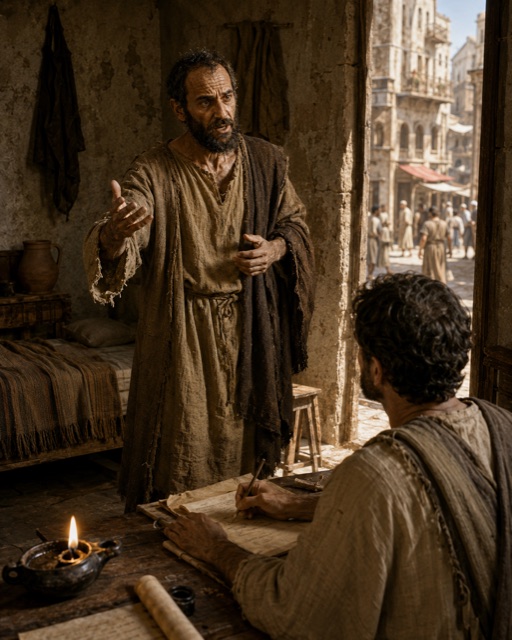
Christianity · Theology
Second Epistle to the Corinthians
by Paul the Apostle (traditional attribution)
Featuring Paul
Paul defends a ministry whose authority appears through weakness, endurance, reconciliation, and costly generosity.
- Advanced
- ~30 min read
- 2 chapter guides
- Public domain
Start reading · Read the 2 Corinthians 4 guide free
Before the text
Editor's Prelude
Authority in the Shape of Weakness
How can an absent teacher recover trust without making his wounded pride the center of the relationship? Paul writes to the Corinthians amid strained loyalties, disputed intentions and the prospect of another visit. His affection and his demands can occupy the same sentence.
Paul’s central paradox is that apostolic authority appears not as invulnerability but through affliction, endurance, generosity, and dependence on divine power.
That conviction does not make the letter serene. Gratitude can give way to accusation, and a plea for confidence can become a fierce challenge. The preserved correspondence leaves parts of the conflict unnamed; certainty about every opponent or earlier letter would make the story tidier than the evidence allows. What remains at stake is the life of a community whose members must decide whom to trust and what a claim to serve them is worth.
The opening pages
2 Corinthians 1
1 Paul, an apostle of Christ Jesus by the will of God, and Timothy our brother, To the church of God in Corinth, together with all the saints throughout Achaia:
2 Grace and peace to you from God our Father and the Lord Jesus Christ.
3 Blessed be the God and Father of our Lord Jesus Christ, the Father of compassion and the God of all comfort,
4 who comforts us in all our troubles, so that we can comfort those in any trouble with the comfort we ourselves have received from God.
5 For just as the sufferings of Christ overflow to us, so also through Christ our comfort overflows.
6 If we are afflicted, it is for your comfort and salvation; if we are comforted, it is for your comfort, which accomplishes in you patient endurance of the same sufferings we experience.
7 And our hope for you is sure, because we know that just as you share in our sufferings, so also you will share in our comfort.
8 We do not want you to be unaware, brothers, of the hardships we encountered in the province of Asia. We were under a burden far beyond our ability to endure, so that we despaired even of life.
9 Indeed, we felt we were under the sentence of death, in order that we would not trust in ourselves, but in God, who raises the dead.
10 He has delivered us from such a deadly peril, and He will deliver us. In Him we have placed our hope that He will yet again deliver us,
11 as you help us by your prayers. Then many will give thanks on our behalf for the favor shown us in answer to their prayers.
12 For this is our boast: Our conscience testifies that we have conducted ourselves in the world, and especially in relation to you, in the holiness and sincerity that are from God—not in worldly wisdom, but in the grace of God.
13 For we do not write you anything that is beyond your ability to read and understand. And I hope that you will understand us completely,
14 as you have already understood us in part, that you may boast of us just as we will boast of you in the day of our Lord Jesus.
15 Confident of this, I planned to visit you first, so that you might receive a double blessing.
Chapter guides · 2
2 Corinthians 4
Trust carried in fragile vessels
Paul answers doubts about his reliability by explaining restraint, forgiveness and the kind of power his ministry claims.
A changed journey and a painful letter
Paul’s abandoned travel plan has exposed him to a charge of saying yes and no at once. He says he delayed another visit to spare the Corinthians pain, not to exercise mastery over their faith. A letter written in anguish was meant to make his love known. Now he urges forgiveness for an unnamed offender whose punishment has been sufficient, lest grief overwhelm him.
A living letter
The Corinthians themselves, Paul argues, are his letter of recommendation, written by the Spirit. He contrasts the fading glory of Moses’ covenant with the enduring glory of the Spirit’s ministry. In his account, a veil covers the hearts of those who read Moses, and turning to the Lord removes it. Paul says the freedom he proclaims comes from the Spirit, who transforms those with unveiled faces into the Lord’s image.
Power without invulnerability
Paul refuses deceit and self-promotion while admitting the ministry’s exposure to suffering. His image of treasure in earthen vessels separates the power he attributes to God from the fragility of its bearers. Affliction does not prove abandonment: he connects endurance to Jesus’ death and the hope of resurrection. He ends with a contrast between an outward self that wastes away and an inward self renewed each day. For Paul, present affliction is producing an incomparable eternal glory, so his hope rests on the unseen and eternal rather than the visible and temporary.
2 Corinthians 9
Reconciliation made tangible
Titus’s report restores confidence; the promised gift tests how that confidence becomes action.
Questions readers ask
- How long does it take to read Second Epistle to the Corinthians?
- About 30 min in total.
- How difficult is Second Epistle to the Corinthians?
- Advanced. A short work of theology; about 30 minutes of reading.
- Which translation is this?
- The Berean Bible Translation Committee (default); King James Version translators (alternate) translation from the Koine Greek. The text follows Berean Standard Bible, 2023 public-domain dedication, with the King James Version alternate as printed by Oxford University Press (Henry Frowde, Pica 16mo, n.d.).
- Can I read Second Epistle to the Corinthians for free?
- Second Epistle to the Corinthians is part of Nexus Premium, so reading it needs an account and a Premium subscription. The opening above and one chapter guide on this page are free to read.
- How many chapter guides are there?
- 2 chapter guides, written by the Nexus editors. One opens in full here; the rest show their opening line.
About Paul
Paul of Tarsus was an early Christian apostle whose letters became central to Christian theology and practice. Once a persecutor of the church, he became its most famous missionary to Gentile communities, writing epistles that shaped Christian ideas of grace, faith, law, love, suffering, resurrection, and the body of believers.
“What happens when grace becomes the center of a whole life?”
Paul's letters are among the most consequential texts in Christian history. They shaped theology, worship, ethics, politics, reform movements, and debates over freedom, law, conscience, and the meaning of salvation.
Source text: public domain. Chapter guides: original Nexus writing. Second Epistle to the Corinthians is part of The Nexus Archive, guided Quests through the great works.