 The Nexus Archive
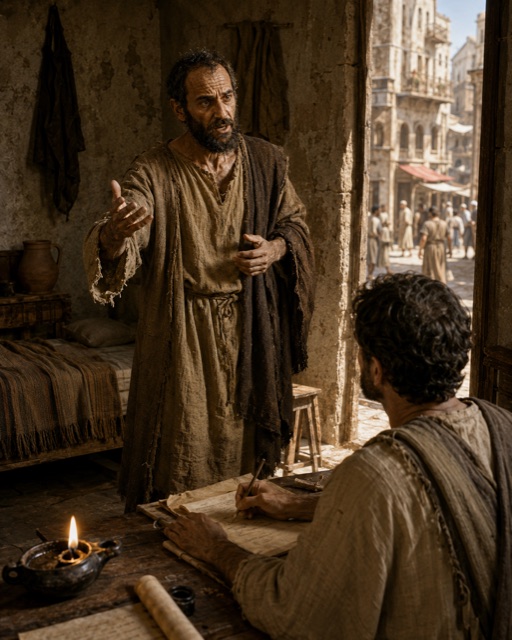
Christianity · Formative text
Epistle to the Romans
by Paul the Apostle
Featuring Paul
Paul's major letter on sin, law, faith, grace, Spirit, mercy, conscience, and life in the body of believers.
- Advanced
- c. 57 CE
- ~40 min read
- 8 chapter guides
- Public domain
Start reading · Read the Romans 2 guide free
Before the text
Editor's Prelude
A Letter Built to Cross a Divide
Paul wants a welcome from people he has long wished to visit. His letter addresses believers in Rome whose shared allegiance must hold across Jewish and Gentile histories. The problem of belonging is intimate as well as doctrinal: what permits someone to stand with others without claiming superiority over them?
The voice repeatedly stages questions and objections. Paul can press an accusation and then turn it on the person ready to agree with him. Scripture enters as a living field of argument, with promises whose meaning matters to communities that have not inherited the same practices.
This is also correspondence carried by people, with travel and material help at stake. Its ambition is larger than an introduction to an absent apostle: it asks whether an account of mercy can sustain a common life among people who still disagree. The movement between conviction, objection and appeal is part of that work.
The opening pages
Romans 1
1:1Paul, a servant of Christ Jesus, called to be an apostle, and set apart for the gospel of God—
1:2the gospel He promised beforehand through His prophets in the Holy Scriptures,
1:3regarding His Son, who was a descendant of David according to the flesh,
1:4and who through the Spirit of holiness was declared with power to be the Son of God by His resurrection from the dead: Jesus Christ our Lord.
1:5Through Him and on behalf of His name, we received grace and apostleship to call all those among the Gentiles to the obedience that comes from faith.
1:6And you also are among those who are called to belong to Jesus Christ.
1:7To all in Rome who are loved by God and called to be saints: Grace and peace to you from God our Father and the Lord Jesus Christ.
1:8First, I thank my God through Jesus Christ for all of you, because your faith is being proclaimed all over the world.
1:9God, whom I serve with my spirit in preaching the gospel of His Son, is my witness how constantly I remember you
1:10in my prayers at all times, asking that now at last by God’s will I may succeed in coming to you.
1:11For I long to see you so that I may impart to you some spiritual gift to strengthen you,
1:12that is, that you and I may be mutually encouraged by each other’s faith.
1:13I do not want you to be unaware, brothers, how often I planned to come to you (but have been prevented from visiting until now), in order that I might have a harvest among you, just as I have had among the other Gentiles.
1:14I am obligated both to Greeks and non-Greeks, both to the wise and the foolish.
1:15That is why I am so eager to preach the gospel also to you who are in Rome.
1:16I am not ashamed of the gospel, because it is the power of God for salvation to everyone who believes, first to the Jew, then to the Greek.
1:17For the gospel reveals the righteousness of God that comes by faith from start to finish, just as it is written: “The righteous will live by faith.”
1:18The wrath of God is being revealed from heaven against all the godlessness and wickedness of men who suppress the truth by their wickedness.
1:19For what may be known about God is plain to them, because God has made it plain to them.
Read it in a Quest
A passage into mercy, commandment, sacrifice, hope, and the shape of Christian life.
Chapter guides · 8
Romans 2
The Accuser Enters the Dock
Paul's indictment turns toward the person who agrees with it and imagines that judgment belongs only to others.
The turn is deliberate
Romans 1 ends with a severe catalogue of human corruption. Chapter 2 immediately addresses “you” who judge. Paul is closing the distance between the obvious wrongdoer and the morally confident reader: recognizing another person's sin does not place the judge outside God's impartial judgment.
Possession is not performance
The argument now distinguishes hearing the law from doing it and outward circumcision from the obedience it signifies. Paul is not attacking Jewish identity as such; he is dismantling the use of privilege as an exemption from the standard one applies to others.
The judge is also answerable
The appeal to conscience extends the question beyond possession of a written law. Paul describes thoughts that accuse or defend and a judgment reaching hidden acts. The outward sign cannot do the work of obedience, and the praise he finally names comes from God rather than from other people.
Romans 4
Faith Enters The Argument
Paul moves from human guilt to righteousness received by faith.
Abraham before circumcision
Paul acknowledges the advantage of receiving God’s words while denying that it exempts anyone from sin. He then turns to Abraham: righteousness is credited before circumcision, so the promise can embrace uncircumcised believers as well as those who share Abraham’s faith within circumcision.
A gift and an obligation
Romans is not moving randomly from one religious topic to another. Paul is removing every easy ground for superiority, then arguing that God's righteousness is disclosed as a gift that confirms rather than erases the promise made to Abraham.
The order of the promise
Abraham trusts God’s promise of descendants despite his own age and Sarah’s inability to bear a child. Paul extends the reckoning of righteousness to those who believe in the God who raised Jesus from the dead. The chapter ends with Jesus delivered to death for their trespasses and raised for their justification.
Romans 6
Grace Creates a New Allegiance
Peace with God and the contrast between Adam and Christ lead into baptism, death, and a life no longer ruled by sin.
Romans 8
The Argument Turns Toward Life
After sin, law, and death, Paul reaches life in the Spirit and hope under suffering.
Romans 11
Mercy Widens The Story
Paul turns to Israel, Gentiles, promise, stumbling, and mercy.
Romans 12
Mercy Takes Bodily Form
The letter's great “therefore” turns worship into shared life, disciplined judgment, costly love, and enemy care.
Romans 14
Grace Becomes A Common Life
The argument turns into worship, humility, love, authority, and conscience.
Romans 16
Doctrine Enters A Community
Romans ends by turning theology toward mercy, conscience, public life, and real people.
Questions readers ask
- How long does it take to read Epistle to the Romans?
- About 40 min in total.
- How difficult is Epistle to the Romans?
- Advanced. A short text; about 40 minutes of reading.
- Which translation is this?
- The Berean Bible Translation Committee (default); King James Version translators (alternate) translation from the Koine Greek. The text follows Berean Standard Bible, with King James Version alternate (2023).
- Can I read Epistle to the Romans for free?
- Epistle to the Romans is part of Nexus Premium, so reading it needs an account and a Premium subscription. The opening above and two chapter guides on this page are free to read.
- How many chapter guides are there?
- 8 chapter guides, written by the Nexus editors. Two open in full here; the rest show their opening line.
About Paul
Paul of Tarsus was an early Christian apostle whose letters became central to Christian theology and practice. Once a persecutor of the church, he became its most famous missionary to Gentile communities, writing epistles that shaped Christian ideas of grace, faith, law, love, suffering, resurrection, and the body of believers.
“What happens when grace becomes the center of a whole life?”
Paul's letters are among the most consequential texts in Christian history. They shaped theology, worship, ethics, politics, reform movements, and debates over freedom, law, conscience, and the meaning of salvation.
Source text: public domain. Chapter guides: original Nexus writing. Epistle to the Romans is part of The Nexus Archive, guided Quests through the great works.