 The Nexus Archive
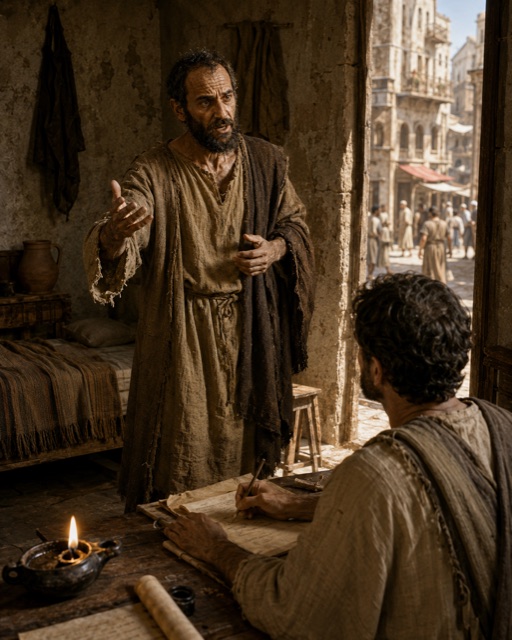
Christianity · Theology
Epistle to the Philippians
by Paul the Apostle (traditional attribution)
Featuring Paul
A prison letter joins joy, humility, suffering, partnership, and a life patterned on Christ.
- Intermediate
- ~10 min read
- 2 chapter guides
- Public domain
Start reading · Read the Philippians 2 guide free
Before the text
Editor's Prelude
Joy from Confinement
A letter can keep a friendship alive when its writer cannot promise to return. Paul addresses the Philippians from confinement, dependent on news and help carried by other people. His affection reaches across that distance, but so do his anxieties about the community’s life together.
Its language of joy does not deny danger. Paul joins Christ’s self-emptying, his own suffering, and the community’s conflicts into a shared pattern of humility and endurance.
The letter’s great claims about Christ belong beside the practical demands of friendship: whose interests matter, how help is received, and what people owe one another when circumstances change. Its confidence does not rest on comfort or security. The prison’s precise location is not named in the letter, and the warmth of its address never makes Paul’s future certain.
The opening pages
Philippians 1
1 Paul and Timothy, servants of Christ Jesus, To all the saints in Christ Jesus at Philippi, together with the overseers and deacons:
2 Grace and peace to you from God our Father and the Lord Jesus Christ.
3 I thank my God every time I remember you.
4 In every prayer for all of you, I always pray with joy,
5 because of your partnership in the gospel from the first day until now,
6 being confident of this, that He who began a good work in you will carry it on to completion until the day of Christ Jesus.
7 It is right for me to feel this way about all of you, since I have you in my heart. For in my chains and in my defense and confirmation of the gospel, you are all partners in grace with me.
8 God is my witness how I long for all of you with the affection of Christ Jesus.
9 And this is my prayer: that your love may abound more and more in knowledge and depth of insight,
10 so that you may be able to test and prove what is best and may be pure and blameless for the day of Christ,
11 filled with the fruit of righteousness that comes through Jesus Christ, to the glory and praise of God.
12 Now I want you to know, brothers, that my circumstances have actually served to advance the gospel.
13 As a result, it has become clear throughout the whole palace guard and to everyone else that I am in chains for Christ.
14 And most of the brothers, confident in the Lord by my chains, now dare more greatly to speak the word without fear.
15 It is true that some preach Christ out of envy and rivalry, but others out of goodwill.
16 The latter do so in love, knowing that I am appointed for the defense of the gospel.
17 The former, however, preach Christ out of selfish ambition, not sincerely, supposing that they can add to the distress of my chains.
18 What then is the issue? Just this: that in every way, whether by false motives or true, Christ is preached. And in this I rejoice. Yes, and I will continue to rejoice,
19 because I know that through your prayers and the provision of the Spirit of Jesus Christ, my distress will turn out for my deliverance.
Chapter guides · 2
Philippians 2
Partnership under pressure
Paul’s confinement makes shared service, rather than rivalry, the measure of the community’s life.
A prisoner still concerned with others
Paul and Timothy address a community Paul holds close while he is imprisoned. He reports that his confinement has helped make Christ known, even where rival preachers act from envy. His uncertainty about life and death does not erase his attachment to the Philippians: remaining alive would mean further service to them.
The shape of humility
The appeal against rivalry takes its force from Christ’s self-emptying, obedience and exaltation. Paul joins this account to the community’s conduct: concern for others, work without grumbling, and faithfulness amid opposition. God’s action within them gives their own labor its urgency. Humility is a shared practice, not merely a feeling of modesty.
Two journeys with different purposes
Timothy’s visit is still a hope, dependent on how Paul’s situation develops. Epaphroditus, whom the Philippians sent to help Paul, is being sent back after an illness that nearly killed him. He has been distressed by their concern for him. Paul asks that such service be honored; the account of Christ’s humility has reached the risks and affections of named people.
Philippians 4
The Gift and the Goal
Paul sets former advantages beside his hope in Christ, then returns to the community’s disagreements, care and gift.
Questions readers ask
- How long does it take to read Epistle to the Philippians?
- About 10 min in total.
- How difficult is Epistle to the Philippians?
- Intermediate. A short work of theology; about 10 minutes of reading.
- Which translation is this?
- The Berean Bible Translation Committee (default); King James Version translators (alternate) translation from the Koine Greek. The text follows Berean Standard Bible, 2023 public-domain dedication, with the King James Version alternate as printed by Oxford University Press (Henry Frowde, Pica 16mo, n.d.).
- Can I read Epistle to the Philippians for free?
- Epistle to the Philippians is part of Nexus Premium, so reading it needs an account and a Premium subscription. The opening above and one chapter guide on this page are free to read.
- How many chapter guides are there?
- 2 chapter guides, written by the Nexus editors. One opens in full here; the rest show their opening line.
About Paul
Paul of Tarsus was an early Christian apostle whose letters became central to Christian theology and practice. Once a persecutor of the church, he became its most famous missionary to Gentile communities, writing epistles that shaped Christian ideas of grace, faith, law, love, suffering, resurrection, and the body of believers.
“What happens when grace becomes the center of a whole life?”
Paul's letters are among the most consequential texts in Christian history. They shaped theology, worship, ethics, politics, reform movements, and debates over freedom, law, conscience, and the meaning of salvation.
Source text: public domain. Chapter guides: original Nexus writing. Epistle to the Philippians is part of The Nexus Archive, guided Quests through the great works.