 The Nexus Archive
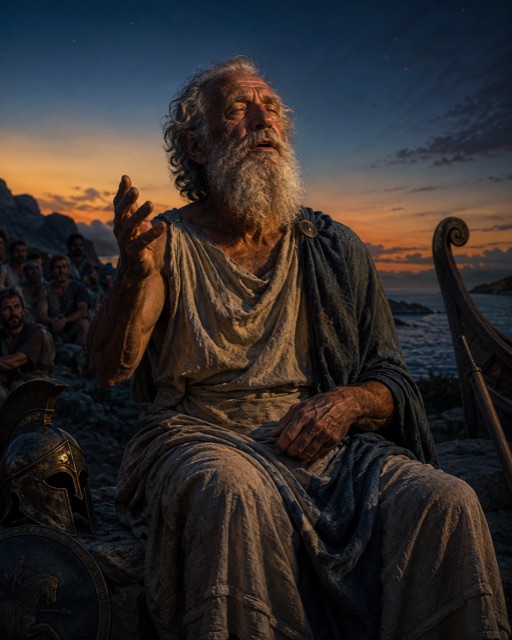
Greek Epic · Epic
The Odyssey
by Homer · The Singer of Heroes · Archaic Greece, c. 8th c. BCE
The epic of wandering, disguise, longing, temptation, homecoming, and the dangerous intelligence of Odysseus.
- Advanced
- c. 8th c. BCE
- ~9 hr 45 min read
- 58 chapter guides
- Public domain
Start reading · Read the Book I guide free
Before the text
Editor's Prelude
The Long Road Home
The Odyssey begins after the war story has already become legend. Troy has fallen, the heroes have scattered, and Ulysses is still far from home. On Ithaca, his wife Penelope and their son Telemachus live among men who want his place. No one there knows whether he is alive. His absence leaves a household exposed and a son unsure how to defend it.
The story moves between Ithaca, divine councils, and the traveller’s account of his wandering. Hosts and guests meet over meals; gods intervene in human quarrels; familiar voices may belong to people in disguise. Samuel Butler tells the epic in prose. He calls Odysseus Ulysses, Athena Minerva, Zeus Jove, and Poseidon Neptune.
The poem is built around return, but return keeps changing shape. For Ulysses, getting home calls for disguise, timing, speech, memory, and the hard discipline of waiting. A stranger must depend on the people who feed him, question him, or shut their doors. Stories can reveal a person’s past or conceal it. The deepest drama is whether someone long absent can become known again.
The opening pages
Book I: Council and Stranger
THE GODS IN COUNCIL—MINERVA’S VISIT TO ITHACA—THE CHALLENGE FROM TELEMACHUS TO THE SUITORS.
Tell me, O Muse, of that ingenious hero who travelled far and wide after he had sacked the famous town of Troy. Many cities did he visit, and many were the nations with whose manners and customs he was acquainted; moreover he suffered much by sea while trying to save his own life and bring his men safely home; but do what he might he could not save his men, for they perished through their own sheer folly in eating the cattle of the Sun-god Hyperion; so the god prevented them from ever reaching home. Tell me, too, about all these things, oh daughter of Jove, from whatsoever source you may know them.
So now all who escaped death in battle or by shipwreck had got safely home except Ulysses, and he, though he was longing to return to his wife and country, was detained by the goddess Calypso, who had got him into a large cave and wanted to marry him. But as years went by, there came a time when the gods settled that he should go back to Ithaca; even then, however, when he was among his own people, his troubles were not yet over; nevertheless all the gods had now begun to pity him except Neptune, who still persecuted him without ceasing and would not let him get home.
Now Neptune had gone off to the Ethiopians, who are at the world’s end, and lie in two halves, the one looking West and the other East. He had gone there to accept a hecatomb of sheep and oxen, and was enjoying himself at his festival; but the other gods met in the house of Olympian Jove, and the sire of gods and men spoke first. At that moment he was thinking of Aegisthus, who had been killed by Agamemnon’s son Orestes; so he said to the other gods:
“See now, how men lay blame upon us gods for what is after all nothing but their own folly. Look at Aegisthus; he must needs make love to Agamemnon’s wife unrighteously and then kill Agamemnon, though he knew it would be the death of him; for I sent Mercury to warn him not to do either of these things, inasmuch as Orestes would be sure to take his revenge when he grew up and wanted to return home. Mercury told him this in all good will but he would not listen, and now he has paid for everything in full.”
Read it in a Quest
An ancient theater of rage, return, divine pressure, and the cost of honor.
Chapter guides · 58
Book I: Council and Stranger
Minerva Gives Telemachus Courage
While Ulysses remains far from home, Minerva helps his son begin to resist the suitors.
The gods discuss Ulysses
Jove says that people can bring disaster on themselves despite divine warnings. Minerva asks him to help Ulysses, who is held on Calypso’s island. Jove explains Neptune’s anger over his blinded son Polyphemus. Minerva proposes sending Mercury to Calypso while she visits Ithaca.
Mentes at the threshold
Disguised as Mentes, Minerva finds the suitors consuming Ulysses' cattle while Telemachus alone welcomes the stranger. She names his household's danger, directs him toward an assembly and news from Nestor and Menelaus, and leaves him certain that a god has put courage into him.
Book I: Telemachus Finds His Voice
Telemachus Claims the Room
A song of failed homecomings brings Penelope downstairs and gives her son his first public test.
The song and the household
Penelope asks Phemius to stop singing the Achaeans' sorrowful return. Telemachus tells her that Jove, not the bard, sends fortune and that speech in the hall belongs to him; she withdraws in wonder while the suitors turn their desire back toward her.
An assembly announced
Telemachus orders the suitors to meet him publicly and threatens divine reckoning if they keep feasting at his expense. Antinous and Eurymachus probe the source of his new boldness, but Telemachus protects the stranger's divine identity and ends the night holding Minerva's plan.
Book II: Assembly at Ithaca
Ithaca Hears the Charge
Telemachus makes the ruined household a public matter, and the island answers with excuses, prophecy, and silence.
Book II: Telemachus Sails by Night
A Ship Leaves Under Cover
When the assembly refuses help, Minerva turns Telemachus' declared journey into a secret departure.
Book III: Nestor Remembers Troy
Nestor's Divided Homecomings
At Pylos, Telemachus receives flawless hospitality but no simple history of the fleet that left Troy.
Book III: Sacrifice and the Road to Sparta
Honor Before the Road
Pylos recognizes a goddess's favor and sends Telemachus onward as a guest, not a petitioner left alone.
Book IV: Helen and Menelaus Remember
Sparta Remembers Through Tears
Menelaus' radiant palace cannot keep the losses of Troy outside its wedding feast.
Book IV: Proteus and News of Odysseus
Proteus Names the Living Captive
Menelaus' own delayed return yields the first firm report Telemachus has received about his father.
Book IV: Ambush Against Telemachus
The Voyage Becomes an Ambush
While Telemachus hears that his father lives, the suitors decide the son must not return.
Book V: Calypso Must Let Him Go
Calypso Is Ordered to Release Him
The gods' decision reaches Ogygia, where immortality cannot answer Ulysses' desire for a mortal home.
Book V: Shipwreck and Landfall
A Raft Broken at the Shore
Release from Calypso becomes a trial of seamanship, divine hostility, and the judgment to abandon even a carefully made craft.
Book VI
Nausicaa Keeps Her Ground
The first Phaeacian encounter depends on a princess's courage and a shipwrecked man's restraint.
Book VII
A Stranger at Arete's Knees
Fog and tact carry Ulysses into the palace, but the clothes on his body still demand an explanation.
Book VIII: Phaeacian Games
A Stranger Answers an Insult
Song first exposes Ulysses' grief; a young athlete then exposes the pride beneath his silence.
Book VIII: Demodocus Sings
Song, Gifts, and an Apology
The Phaeacians welcome Ulysses with entertainment and gifts, and Euryalus makes amends for his insult.
Book VIII: Odysseus Is Asked to Tell
Alcinous Asks for the Name
The song of Troy makes Ulysses weep, and Alcinous asks who he is.
Book IX: Cicons, Lotus-Eaters, and the Cave
The Name, the Raids, and the Lotus
Ulysses begins his story with Ithaca, then shows how appetite and forgetting repeatedly pull men away from return.
Book IX: Nobody Blinds the Cyclops
Guest-Right Inside the Stone
Ulysses enters the cave seeking a host's gift and has to turn wine, wood, and grammar against a man who eats guests.
Book IX: The Name That Brings a Curse
The Name That Reaches Neptune
The escape beneath the rams succeeds before Ulysses turns distance into a stage for his own fame.
Book X: Aeolus and the Laestrygonians
The Bag Opens; the Harbor Closes
Two failed landfalls show how quickly a homeward course can be lost through mistrust and misjudgment.
Book X: Circe's Island
Circe's Table and Its Price
Mercury helps Ulysses resist Circe’s magic, but his companions are still trapped.
Book X: The Road to the Dead
Circe Charts the Road to the Dead
Circe frees the men, but their journey home must first pass through the country of the dead.
Book XI: Teiresias and Anticleia
Three Voices at the Blood
At the trench, unfinished burial, prophecy, and a mother's death make knowledge inseparable from loss.
Book XI: The Women of Old
The Dead Tell Their Family Stories
The women Ulysses meets carry stories of love, kinship, and loss.
Book XI: Heroes and Punishments
The Warriors Keep Their Wounds
The underworld preserves the quarrels, loyalties, and punishments that death has not made simple.
Book XII: Circe's Warnings
Circe Names Every Narrow Passage
After burying Elpenor, Ulysses hears how dangerous the remaining voyage will be.
Book XII: Sirens, Scylla, and Charybdis
Song on One Side, Six Mouths on the Other
The warnings become bodily tests: desire is bound to the mast, while terror strikes where Ulysses was told not to fight.
Book XII: The Cattle of the Sun
The Forbidden Herd
Hunger, bad weather, and a fatal argument turn a clear prohibition into the crew's last meal.
Book XIII: The Ship Returns to Ithaca
The Sleeping Passenger Reaches Ithaca
Phaeacian skill completes the voyage so gently that Ulysses does not witness his own landing.
Book XIII: Athena Reveals the Island
Minerva Reveals Ithaca
Mist turns home into a foreign shore until disguise, recognition, and a shared plan can begin.
Book XIV: The Swineherd's Welcome
Eumaeus Welcomes the Unknown Master
A swineherd protects a ragged stranger while speaking loyalty to the man seated before him in disguise.
Book XIV: A Beggar's Tale by the Fire
A Cretan Story Tests the Firelight
Ulysses' invented life mixes suffering with exact social pressure, then turns an old war trick into a request for warmth.
Book XV: Telemachus Leaves Sparta
Telemachus Reads the Road Home
Minerva’s warning sends Telemachus home with gifts and a fugitive passenger.
Book XV: Eumaeus Tells His Story
Eumaeus Remembers His Lost Home
The swineherd's history reveals how piracy, desire, and sale placed a king's son inside another household.
Book XVI: Telemachus Reaches the Hut
Father and Son Share a Hut Unknowingly
Eumaeus recognizes Telemachus at once, while the man he calls stranger watches the reunion from inside disguise.
Book XVI: Father and Son
Recognition Becomes Strategy
Minerva allows one reunion, then father and son must count enemies and build secrecy around it.
Book XVI: The Suitors Learn He Lives
The Failed Ambush Returns to Harbor
Telemachus' survival divides the suitors between another murder plot and fear of what the gods may oppose.
Book XVII: Telemachus Returns to Penelope
News Arrives Before the Father
Telemachus returns to Penelope with what Menelaus learned, while the seer beside him makes a bolder present-tense claim.
Book XVII: Argos Sees His Master
Argos Spends His Last Strength
On the road and at the threshold, the disguised king encounters contempt and recognition in immediate succession.
Book XVII: The Beggar in the Hall
The Beggar Measures the Banquet
Antinous answers a hungry guest with violence, while Ulysses and Telemachus hold back their anger.
Book XVII: Penelope Calls for the Stranger
Penelope Requests the Stranger
News of the blow draws the mistress of the house toward a witness who refuses to speak before the hall has darkened.
Book XVIII: Irus and Amphinomus
A Beggar's Fight and a Suitor's Warning
Ulysses displays controlled strength before offering Amphinomus a chance to understand the danger around him.
Book XVIII: Penelope Before the Suitors
Penelope Makes Courtship Pay
Appearing before the suitors, she converts their pressure into gifts while preserving the language of her absent marriage.
Book XVIII: Insolence at Night
The Night Exposes the Household
Servants and suitors answer the beggar's presence with insults, while Telemachus begins to command the feast.
Book XIX: The Armour Is Hidden
The Weapons Leave the Hall
A practical deception clears the room for the interview Penelope has requested.
Book XIX: Penelope Questions the Stranger
A False Name Carries True Tokens
Penelope tests a Cretan story until clothing and memory make the disguised husband almost recognizable.
Book XIX: The Scar
The Scar Breaks the Disguise
Euryclea recognizes the child she nursed by the wound his body has carried from youth.
Book XIX: The Dream and the Bow
Geese, Gates, and the Bow
Penelope places dream and contest beside each other without knowing which interpretation will open the house.
Book XX
Four Omens Inside One Morning
Thunder, a laborer's prayer, a predatory bird, and a prophet's vision all speak before the bow appears.
Book XXI: Penelope Brings the Bow
The Bow Judges the Hall
Penelope's contest turns an object stored with grief into a measure that no suitor can satisfy.
Book XXI: Odysseus Strings It
The Scar, the Locks, the String
Ulysses gains two allies, receives the bow, and proves his strength.
Book XXII: Odysseus Reveals Himself
Antinous Falls with the Cup
One arrow ends the feast; the name behind it turns confusion into a judgment the suitors cannot purchase away.
Book XXII: The Suitors Fall
The Suitors Fall
With Minerva’s help, Ulysses and his allies defeat the remaining suitors.
Book XXII: The House Is Purified
Punishment and the Cleansing of the House
After the suitors die, Ulysses turns to the servants and the bloodstained house.
Book XXIII
Penelope Tests What Cannot Be Moved
Neither a nurse's report nor the sight of a changed face is enough; the marriage has its own evidence.
Book XXIV: The Suitors in Hades
The Dead Retell the Contest
In Hades the suitors' account of their end becomes another comparison between faithful and destructive returns from Troy.
Book XXIV: Laertes Recognizes His Son
Laertes Recognizes Orchard and Scar
Ulysses tests his grieving father until dust on the old man's head makes continued disguise impossible.
Book XXIV: Peace Is Forced on Ithaca
A Covenant Stops the Last Battle
The suitors' kin demand another reckoning until gods and mortals force vengeance to end.
Questions readers ask
- How long does it take to read The Odyssey?
- About 9 hr 45 min in total.
- How difficult is The Odyssey?
- Advanced. A long epic; about 10 hours of reading.
- Can I read The Odyssey for free?
- The Odyssey is part of Nexus Premium, so reading it needs an account and a Premium subscription, and completing an earlier Quest's Mastery. The opening above and two chapter guides on this page are free to read.
- How many chapter guides are there?
- 58 chapter guides, written by the Nexus editors. Two open in full here; the rest show their opening line.
About Homer
Homer is the traditional ancient name attached to The Iliad and The Odyssey. The historical poet remains uncertain, but the epics became the foundation of Greek education, heroic imagination, and Western literary memory.
“What does glory cost the people who pursue it?”
Homer gives Nexus the archive before philosophy: the great dramatic field where honor, rage, cunning, home, and mortality first take monumental shape.
Source text: public domain. Chapter guides: original Nexus writing. The Odyssey is part of The Nexus Archive, guided Quests through the great works.