 The Nexus Archive
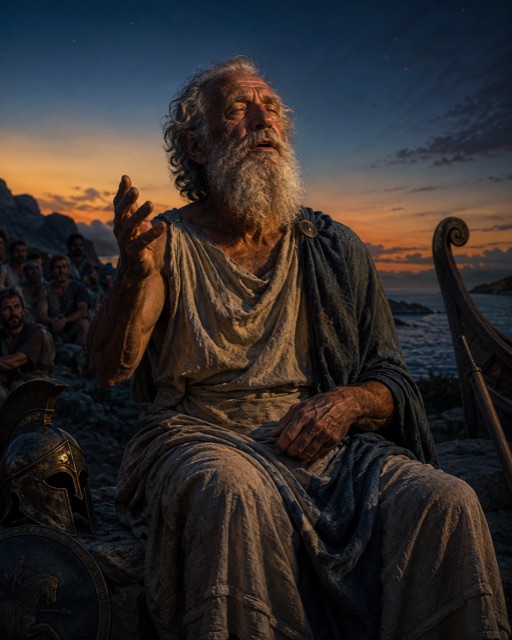
Greek Epic · Epic
The Iliad
by Homer · The Singer of Heroes · Archaic Greece, c. 8th c. BCE
The great Greek epic of Achilles, rage, honor, grief, war, and the human cost of glory.
- Advanced
- c. 8th c. BCE
- ~12 hr 45 min read
- 85 chapter guides
- Public domain
Start reading · Read the Book I guide free
Before the text
Editor's Prelude
Honor and the Cost of War
Years of siege have hardened the Greek camp outside Troy. A quarrel over honor tears the army open from within. Achilles is its outstanding fighter, while Agamemnon commands the larger force. Neither kind of power settles what one owes the other. Captive women are called prizes, and a warrior’s public standing depends on what he receives. The lives caught inside that exchange have sorrows of their own.
This is an epic of warriors, gods, speeches, duels, horses, and armor. Its deepest pressure is human: what glory costs, what pride destroys, and what remains when even the greatest fighter cannot master loss. Around Achilles stand comrades, enemies, parents, and children. Long speeches give their choices room to unfold. Comparisons with farming, hunting, weather, and household work keep the wider world close to battle.
Samuel Butler tells the poem in prose and uses Roman names for many gods: Jove is Zeus, Juno is Hera, Minerva is Athena, and Neptune is Poseidon. The gods are close, sometimes comic and sometimes terrifying. They can rescue a favorite or turn a weapon aside. The people who seek their help still face wounds, separation, and death.
The opening pages
Book I: Plague and Quarrel
The quarrel between Agamemnon and Achilles—Achilles withdraws from the war, and sends his mother Thetis to ask Jove to help the Trojans—Scene between Jove and Juno on Olympus.
Sing, O goddess, the anger of Achilles son of Peleus, that brought countless ills upon the Achaeans. Many a brave soul did it send hurrying down to Hades, and many a hero did it yield a prey to dogs and vultures, for so were the counsels of Jove fulfilled from the day on which the son of Atreus, king of men, and great Achilles, first fell out with one another.
And which of the gods was it that set them on to quarrel? It was the son of Jove and Leto; for he was angry with the king and sent a pestilence upon the host to plague the people, because the son of Atreus had dishonoured Chryses his priest. Now Chryses had come to the ships of the Achaeans to free his daughter, and had brought with him a great ransom: moreover he bore in his hand the sceptre of Apollo wreathed with a suppliant’s wreath, and he besought the Achaeans, but most of all the two sons of Atreus, who were their chiefs.
“Sons of Atreus,” he cried, “and all other Achaeans, may the gods who dwell in Olympus grant you to sack the city of Priam, and to reach your homes in safety; but free my daughter, and accept a ransom for her, in reverence to Apollo, son of Jove.”
On this the rest of the Achaeans with one voice were for respecting the priest and taking the ransom that he offered; but not so Agamemnon, who spoke fiercely to him and sent him roughly away. “Old man,” said he, “let me not find you tarrying about our ships, nor yet coming hereafter. Your sceptre of the god and your wreath shall profit you nothing. I will not free her. She shall grow old in my house at Argos far from her own home, busying herself with her loom and visiting my couch; so go, and do not provoke me or it shall be the worse for you.”
The old man feared him and obeyed. Not a word he spoke, but went by the shore of the sounding sea and prayed apart to King Apollo whom lovely Leto had borne. “Hear me,” he cried, “O god of the silver bow, that protectest Chryse and holy Cilla and rulest Tenedos with thy might, hear me oh thou of Sminthe. If I have ever decked your temple with garlands, or burned your thigh-bones in fat of bulls or goats, grant my prayer, and let your arrows avenge these my tears upon the Danaans.”
Read it in a Quest
An ancient theater of rage, return, divine pressure, and the cost of honor.
Chapter guides · 85
Book I: Plague and Quarrel
Plague and Quarrel
The Greek army is endangered by a struggle over honor within its own ranks.
What happens
Apollo sends a plague after Agamemnon refuses to return a priest’s captive daughter. Achilles calls an assembly, where the cause is revealed. Agamemnon agrees to release her but demands another prize, threatening to take Briseis from Achilles. Minerva stops Achilles from drawing his sword. He instead swears that the Greeks will one day need him badly.
Book I: Briseis Taken
Briseis Taken
Agamemnon’s seizure of Briseis turns a public quarrel into a plea for Greek defeat.
What happens
Nestor fails to reconcile the two leaders. While Ulysses takes the priest’s daughter home, Agamemnon sends heralds for Briseis. Achilles lets them take her and calls to his mother, the goddess Thetis. He asks her to persuade Jove to help the Trojans, so the Greeks will learn what his loss of honor costs them.
Book I: Thetis Before Zeus
Thetis Before Jove
The quarrel in the Greek camp reaches the gods, whose own household is divided.
Book II: The False Dream and Assembly
The False Dream and Assembly
Agamemnon loses control of the army when he tests its willingness to keep fighting.
Book II: Thersites, Oaths, and Mustering
Thersites, Oaths, and Mustering
The army’s return to battle depends on persuasion, discipline, and the hope of a promised victory.
Book II: The Catalogues of Armies
The Catalogues of Armies
The catalogue gives the war a map of communities, leaders, and unequal forces.
Book III: Paris Challenges Menelaus
Paris Challenges Menelaus
A proposed duel offers a way to settle the war through the two men most directly involved.
Book III: Helen on the Wall
Helen on the Wall
Helen’s view from the wall brings personal memory into the armies’ public display.
Book III: Oaths, Duel, and Escape
Oaths, Duel, and Escape
The duel produces a clear Greek claim to victory, but the gods prevent its expected ending.
Book IV: The Oath Is Broken
The Oath Is Broken
The sworn settlement is broken by an attack encouraged by the gods.
Book IV: Agamemnon Among the Ranks
Agamemnon Among the Ranks
Agamemnon tries to ready the army through praise and blame, sometimes judging his men unfairly.
Book IV: Battle Opens Again
Battle Opens Again
The renewed battle turns the armies’ quarrel into the deaths of particular men.
Book V: Diomed Takes the Field
Diomed Takes the Field
Diomed’s growing strength comes with a limit: he must know which gods he may challenge.
Book V: Aeneas, Venus, and the Gods
Aeneas, Venus, and the Gods
Diomed’s attack reaches beyond human opponents when Venus tries to save her son.
Book V: Hector and Sarpedon Rally Troy
Hector and Sarpedon Rally Troy
Trojan resistance gathers around leaders whose lives and obligations extend far beyond Troy.
Book V: Athena Drives Against Mars
Minerva Drives Against Mars
Minerva changes Diomed’s orders and helps him attack the god of war himself.
Book VI: Hector Turns Toward Troy
Hector Turns Toward Troy
The Greeks’ success includes a refusal of mercy, while Hector is sent to seek divine help.
Book VI: Glaucus and Diomed
Glaucus and Diomed
This is a rare moment when inherited bonds interrupt violence. The two men choose friendship over a duel.
Book VI: Hector Inside the City
Hector Inside the City
Hector’s return shows the work of prayer and family continuing inside the threatened city.
Book VI: Hector and Andromache
Hector and Andromache
Hector’s duty to Troy puts him at odds with his family’s need to keep him alive.
Book VII: Hector and Ajax
Hector and Ajax
The duel gives war a formal shape for a moment. Even enemies can recognize each other under heroic rules.
Book VII: Truce, Burials, and the Wall
Truce, Burials, and the Wall
The wall is practical, but it also exposes human limits. Mortals build defenses under gods who can erase them.
Book VIII: Zeus Turns the Battle
Jove Turns the Battle
Jove makes the limits of human courage visible by turning the day against the Greeks.
Book VIII: Teucer and Hector
Teucer and Hector
The Greeks can still produce courage and skill, but nothing quite stops the movement toward the ships.
Book VIII: The Goddesses Checked and Trojan Fires
The Goddesses Checked and Trojan Fires
Jove’s threat keeps the goddesses out of battle and leaves the Trojans confident at nightfall.
Book IX: Agamemnon Offers Reparation
Agamemnon Offers Reparation
Agamemnon offers compensation for the insult to Achilles, though he still expects submission.
Book IX: Achilles Refuses
Achilles Refuses
Achilles questions the value of rewards when they cannot restore a life or secure fair treatment.
Book IX: Phoenix, Ajax, and Failure
Phoenix, Ajax, and Failure
Appeals to memory and friendship soften Achilles’s position without bringing him back to the army.
Book X: Night Council
Night Council
The army’s danger sends its worried commanders into the camp to gather advice.
Book X: Diomed and Ulysses Set Out
Diomed and Ulysses Set Out
Each army seeks information about the other by sending men out into the night.
Book X: Dolon Taken
Dolon Taken
The captured scout gives away valuable information but receives no mercy.
Book X: The Raid on Rhesus
The Raid on Rhesus
The raid gives the Greeks a tactical success, but it does not solve the deeper crisis at the ships.
Book XI: Agamemnon Drives the Day
Agamemnon Drives the Day
Agamemnon’s force carries the Greeks forward, but Jove is preparing a change in the battle.
Book XI: The Achaean Leaders Are Wounded
The Achaean Leaders Are Wounded
The Greek advance begins to fail as its strongest fighters come under attack.
Book XI: Ajax Holds the Line
Ajax Holds the Line
Rescue and stubborn resistance keep the wounded Greeks from being overwhelmed.
Book XI: Patroclus Sent to Nestor
Patroclus Sent to Nestor
A mission for Achilles draws Patroclus into the suffering of the wounded army.
Book XII: The Wall Under Threat
The Wall Under Threat
The Greek wall faces an organized assault, though some Trojans ignore the plan.
Book XII: Sarpedon at the Ditch
Sarpedon at the Ditch
Warnings and shared obligations shape the attack, but the leaders disagree about what they require.
Book XII: Hector Breaks the Gate
Hector Breaks the Gate
Sustained pressure finally breaks the Greek defenses when Hector smashes the gate.
Book XIII: Poseidon Stirs the Achaeans
Neptune Stirs the Achaeans
Neptune secretly restores Greek courage while Jove’s attention is elsewhere.
Book XIII: Idomeneus in the Fight
Idomeneus in the Fight
The defense depends on placing experienced fighters where the pressure is greatest.
Book XIII: The Battle Tightens
The Battle Tightens
Success in battle keeps changing hands, and even strong leaders need help to survive.
Book XIII: Hector Presses the Ships
Hector Presses the Ships
Hector’s confidence depends on a battle he cannot see in full.
Book XIV: Counsel at the Ships
Counsel at the Ships
The wounded chiefs can still help the army by steadying others instead of fighting themselves.
Book XIV: Hera Deceives Zeus
Juno Deceives Jove
Juno uses desire and deception to arrange a chance for the Greeks to recover.
Book XIV: Poseidon Turns the Battle
Neptune Turns the Battle
While Jove sleeps, divine help and a leader’s fall reverse the battle.
Book XV: Zeus Wakes and Commands
Jove Wakes and Commands
Jove restores his authority and orders the gods to carry out his plan for the war.
Book XV: Apollo Revives Hector
Apollo Revives Hector
Hector’s return to strength follows Neptune’s reluctant withdrawal from the field.
Book XV: The Trojans Surge Back
The Trojans Surge Back
The last defenses around the ships begin to fail under direct divine pressure.
Book XV: Fire Reaches the Ships
The Last Defense of the Ships
Ajax’s defense holds back the fire even as Hector gains a grip on a ship.
Book XVI: Patroclus Begs for the Armor
Patroclus Begs for the Armor
Achilles allows Patroclus to save the ships but sets a clear limit on how far he may fight.
Book XVI: The Myrmidons Save the Ships
The Myrmidons Save the Ships
The rescue succeeds, but Patroclus’s pursuit carries him beyond the task Achilles gave him.
Book XVI: Sarpedon Falls
Sarpedon Falls
Sarpedon’s death shows that even divine love does not simply cancel fate.
Book XVI: Patroclus Overreaches
Patroclus Overreaches
Patroclus presses toward Troy after the ship rescue, until Apollo sets a limit to his advance.
Book XVI: The Death of Patroclus
The Death of Patroclus
Patroclus falls to Apollo’s blow, then Euphorbus’s spear, and only then to Hector.
Book XVII: The Fight Begins Around Patroclus
The Fight Begins Around Patroclus
The battle shifts from killing Patroclus to deciding who will control his body and armor.
Book XVII: Armor, Horses, and Body
Armor, Horses, and Body
Protecting a dead companion requires the living to hold together under growing strain.
Book XVII: Automedon and the Struggle
Automedon and the Struggle
Repeated rescues keep men alive, but divine support still turns the larger battle against the Greeks.
Book XVII: Patroclus Carried Back
Patroclus Carried Back
The Greeks begin carrying Patroclus away while arranging to tell Achilles what has happened.
Book XVIII: Achilles Hears the News
Achilles Hears the News
The loss of Patroclus makes Achilles abandon his quarrel and accept the cost of vengeance.
Book XVIII: Achilles Appears at the Trench
Achilles Appears at the Trench
Achilles’s presence wins a pause in the fighting, but grief and dangerous confidence remain.
Book XVIII: Thetis Goes to Hephaestus
Thetis Goes to Vulcan
The poem pauses before revenge to show craft, memory, and divine obligation.
Book XVIII: The Shield of Achilles
The Shield of Achilles
The shield surrounds a warrior with scenes of the wider life that war threatens.
Book XIX: Achilles and Agamemnon Reconciled
Achilles and Agamemnon Reconciled
Achilles ends his quarrel with Agamemnon, while Ulysses insists that the army needs more than anger to fight.
Book XIX: Gifts, Hunger, and Oaths
Gifts, Hunger, and Oaths
Public gifts restore Achilles’s standing without removing the grief of those treated as prizes.
Book XIX: Grief Arms for Battle
Grief Arms for Battle
The return to battle is also a movement toward Achilles’ own end. Victory and death are now joined.
Book XX: The Gods Enter the War
The Gods Enter the War
Jove allows the gods to intervene so that Achilles’s fury will not carry the war beyond its appointed course.
Book XX: Achilles and Aeneas
Achilles and Aeneas
Aeneas survives because the gods preserve a future for his family beyond the present battle.
Book XX: Achilles Unleashed
Achilles Unleashed
Achilles’s return brings relentless killing, while Apollo still protects Hector.
Book XXI: Achilles at the River
Achilles at the River
Achilles’s refusal of mercy turns the river itself against his slaughter.
Book XXI: Scamander Rises
Scamander Rises
Achilles’s strength cannot protect him from the river without further help from the gods.
Book XXI: The Gods Fight
The Gods Fight
The gods’ fighting mixes pain and humiliation with their distance from mortal death.
Book XXI: Agenor Delays Achilles
Agenor Delays Achilles
Agenor’s stand gives Apollo an opening to draw Achilles away from the fleeing Trojans.
Book XXII: Hector Outside the Gates
Hector Outside the Gates
Hector’s fear of public shame keeps him outside the walls, but courage gives way when Achilles arrives.
Book XXII: The Chase and the Duel
The Chase and the Duel
Hector makes his final stand after Minerva deceives him into believing his brother will help.
Book XXII: Hector Dead and Troy Mourning
Hector Dead and Troy Mourning
Hector’s death becomes a loss shared across Troy, while Achilles refuses to honor the body.
Book XXIII: Patroclus Buried
Patroclus Buried
The funeral gives Patroclus the rites he needs, but Achilles’s grief also brings further cruelty.
Book XXIII: The Chariot Race
The Chariot Race
The chariot race tests skill and judgment, but divine interference changes its course.
Book XXIII: Prizes, Dispute, and Nestor
Prizes, Dispute, and Nestor
The disputes over prizes are settled through acknowledgment, restraint, and generosity.
Book XXIII: The Funeral Games Continue
The Funeral Games Continue
The games keep Patroclus present while giving the army a temporary structure beyond grief.
Book XXIV: The Gods Command Ransom
The Gods Command Ransom
The gods require Achilles to release Hector’s body rather than prolong his revenge.
Book XXIV: Priam Prepares to Go
Priam Prepares to Go
Priam prepares to enter the enemy camp because recovering his son matters more than his own safety.
Book XXIV: Hermes Guides Priam
Mercury Guides Priam
Divine guidance brings Priam through the defenses to the man who killed his son.
Book XXIV: Priam and Achilles
Priam and Achilles
Shared grief makes mercy possible, though Achilles’s anger remains dangerous.
Book XXIV: Hector Returned and Buried
Hector Returned and Buried
The poem closes with a family and city giving their defender the burial that war had denied him.
Questions readers ask
- How long does it take to read The Iliad?
- About 12 hr 45 min in total.
- How difficult is The Iliad?
- Advanced. A long epic; about 13 hours of reading.
- Can I read The Iliad for free?
- The Iliad is part of Nexus Premium, so reading it needs an account and a Premium subscription, and completing an earlier Quest's Mastery. The opening above and two chapter guides on this page are free to read.
- How many chapter guides are there?
- 85 chapter guides, written by the Nexus editors. Two open in full here; the rest show their opening line.
About Homer
Homer is the traditional ancient name attached to The Iliad and The Odyssey. The historical poet remains uncertain, but the epics became the foundation of Greek education, heroic imagination, and Western literary memory.
“What does glory cost the people who pursue it?”
Homer gives Nexus the archive before philosophy: the great dramatic field where honor, rage, cunning, home, and mortality first take monumental shape.
Source text: public domain. Chapter guides: original Nexus writing. The Iliad is part of The Nexus Archive, guided Quests through the great works.