 The Nexus Archive
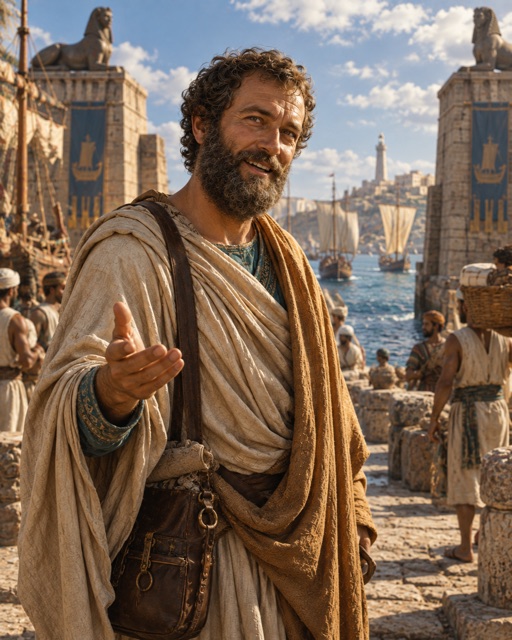
Historical Inquiry · History
The Histories
by Herodotus · The Keeper of Memory · Classical Greece, c. 484-c. 425 BC
A vast inquiry into empire, custom, memory, war, wonder, and the conflict between Persia and Greece.
- Brutal
- c. 430 BCE
- ~21 hr 15 min read
- 34 chapter guides
- Public domain
Start reading · Read the Book I guide free
Before the text
Editor's Prelude
Memory Against Oblivion
Herodotus begins with a promise: great deeds, whether done by Greeks or by peoples the Greeks called barbarians, must not be erased by time. Writing in the fifth century BCE, he asks how Greeks and Persians came into conflict. His answer grows into something far larger than a war chronicle: an inquiry into kings and rebels, rivers and roads, sacred customs, and the instability of human success.
His method is part investigation, part storytelling. Herodotus names competing accounts, explains why he doubts a report, and sometimes preserves a marvel because people say it happened. The long journeys away from the war bring whole societies into view. A river, a funeral, or a dispute about a god can reveal how differently people understand their place in the world. His own visits, other people’s testimony, and his judgments about both remain visible in the telling.
Power gives these stories their recurring tension. A ruler receives advice, hears an oracle, or meets a people whose customs he does not understand. Wealth and victory can make a warning harder to hear. Herodotus wants to remember great achievements, but he also asks how people act when success has taught them to expect too much.
The opening pages
Book I: Clio, Sections 1–20
This is the Showing forth of the Inquiry of Herodotus of Halicarnassos, to the end that neither the deeds of men may be forgotten by lapse of time, nor the works great and marvellous, which have been produced some by Hellenes and some by Barbarians, may lose their renown; and especially that the causes may be remembered for which these waged war with one another.
1. Those of the Persians who have knowledge of history declare that the Phenicians first began the quarrel. These, they say, came from that which is called the Erythraian Sea to this of ours; and having settled in the land where they continue even now to dwell, set themselves forthwith to make long voyages by sea. And conveying merchandise of Egypt and of Assyria they arrived at other places and also at Argos; now Argos was at that time in all points the first of the States within that land which is now called Hellas;—the Phenicians arrived then at this land of Argos, and began to dispose of their ship's cargo: and on the fifth or sixth day after they had arrived, when their goods had been almost all sold, there came down to the sea a great company of women, and among them the daughter of the king; and her name, as the Hellenes also agree, was Io the daughter of Inachos. These standing near to the stern of the ship were buying of the wares such as pleased them most, when of a sudden the Phenicians, passing the word from one to another, made a rush upon them; and the greater part of the women escaped by flight, but Io and certain others were carried off. So they put them on board their ship, and forthwith departed, sailing away to Egypt.
2. In this manner the Persians report that Io came to Egypt, not agreeing therein with the Hellenes, and this they say was the first beginning of wrongs. Then after this, they say, certain Hellenes (but the name of the people they are not able to report) put in to the city of Tyre in Phenicia and carried off the king's daughter Europa;—these would doubtless be Cretans;—and so they were quits for the former injury. After this however the Hellenes, they say, were the authors of the second wrong; for they sailed in to Aia of Colchis and to the river Phasis with a ship of war, and from thence, after they had done the other business for which they came, they carried off the king's daughter Medea: and the king of Colchis sent a herald to the land of Hellas and demanded satisfaction for the rape and to have his daughter back; but they answered that, as the Barbarians had given them no satisfaction for the rape of Io the Argive, so neither would they give satisfaction to the Barbarians for this.
Chapter guides · 34
Book I: Clio, Sections 36–56
Croesus Cannot Protect His Son
A warning does not give Croesus control over his family or his future. His efforts to protect his son help bring about the loss he fears.
What happens
Croesus allows Atys to join a boar hunt under the protection of Adrastos, the exile he has sheltered. Adrastos accidentally kills Atys and later kills himself at the grave. After mourning, Croesus tests several oracles before seeking advice about war with Persia. The account then turns to the origins of the Greek peoples whose help he might seek.
Book I: Clio, Sections 85–96
Advice After Defeat
Croesus learns to question his own judgment after losing his kingdom. The account of Deiokes then shows how trust can become a route to power.
What happens
Croesus reaches the pyre and recalls Solon. Cyrus hears his story and tries to save him; the Lydians say Croesus then prays to Apollo, and a sudden storm puts out the fire. Croesus later challenges the Delphic oracle and receives a defence of its words. After describing Lydia, Herodotus turns to the Medes. Deiokes, who wants power, becomes known as a just judge until the Medes bring all their disputes to him.
Book I: Clio, Sections 130–150
Persian Customs and Greek Claims
Herodotus explains Persian power through customs as well as conquest. He also questions Greek claims that shared ancestry makes one community purer than another.
Book I: Clio, Sections 171–186
A City Built Around Its River
Babylon’s river is both a practical problem and a source of royal power. Herodotus describes the work needed to make a vast city function.
Book I: Clio, Sections 203–216
Cyrus Loses to Tomyris
Cyrus’s success reaches a violent limit among the Massagetai. Their queen’s warning and her revenge frame the account of his death.
Book II: Euterpe, Sections 35–48
Customs That Reverse Greek Expectations
Practices that seem ordinary in one country can seem strange in another. Herodotus uses Egyptian daily life and worship to make that difference visible.
Book II: Euterpe, Sections 92–109
From Daily Life to Royal Memory
Herodotus changes the basis of his account when he turns from Egyptian life to the kings. He marks the shift from his own inquiries to priestly reports.
Book II: Euterpe, Sections 121–132
The Cost Behind Royal Wonders
Cleverness and royal wealth dominate these stories, but the pyramids also carry memories of forced work and suffering.
Book II: Euterpe, Sections 162–182
How Amasis Makes Himself King
Amasis has to turn low birth and an army revolt into accepted rule. His jokes and displays are part of his effort to win respect.
Book III: Thalia, Sections 32–47
Custom, Cruelty, and the Ring
Herodotus treats Cambyses’ contempt for other people’s customs as evidence of madness. The story of Polycrates then raises a different danger: success without a break.
Book III: Thalia, Sections 64–77
A Warning Believed Too Late
The Persian throne is at risk because the dead prince’s name conceals another ruler. Cambyses understands the deception only when he can no longer stop it.
Book III: Thalia, Sections 95–117
Riches at the Edges of Empire
The empire gathers wealth from many peoples, but knowledge of distant lands remains uneven. Herodotus mixes reports of valuable goods with doubts about their sources.
Book III: Thalia, Sections 152–160
Babylon Falls Through Trust
Zopyros makes the Babylonians trust him by giving them visible reasons to believe he hates Dareios. That trust becomes the means of their defeat.
Book IV: Melpomene, Sections 45–67
Rivers, Movement, and Scythian Worship
The Scythians’ way of life makes them hard to attack. Without fixed cities to defend, they can avoid the kind of battle an invader wants.
Book IV: Melpomene, Sections 85–108
Keeping a Way Back
Dareios depends on a bridge as he enters Scythia. Keeping it intact gives his army a route home even while he presses forward.
Book IV: Melpomene, Sections 150–167
Cyrene’s Quarrels Draw in Persia
Disputes within a colony can invite a much larger power to intervene. Cyrene’s rival royal claims give Persia a reason to send an army into Libya.
Book IV: Melpomene, Sections 192–205
Revenge at Barca
Pheretime gets the revenge she seeks, but Herodotus closes the book by judging its excess. Military success does not make her cruelty acceptable.
Book V: Terpsichore, Sections 23–41
A Failed Siege Leads to Revolt
Aristagoras turns against Persian rule when his own position becomes unsafe. His appeal to freedom grows out of the failure of an attack he helped arrange.
Book V: Terpsichore, Sections 63–81
Athens Defends Its New Political Order
Athens gains strength after tyranny, but its new arrangements face attacks from both inside and outside the city.
Book V: Terpsichore, Sections 104–126
The Revolt Loses Ground
Spreading rebellion does not give the rebels lasting control. Defections and separate defeats leave the Ionian revolt weaker.
Book VI: Erato, Sections 46–65
A Dispute Over Spartan Kingship
The demand for submission to Persia exposes an older struggle within Sparta. A quarrel over Aegina becomes entangled with the question of who is a lawful king.
Book VI: Erato, Sections 86–105
The Road to Marathon
Persian retaliation reaches the mainland through islands and divided cities. Athens must seek help while preparing to defend its own land.
Book VI: Erato, Sections 125–140
Miltiades Spends His Reputation
Miltiades uses the trust earned at Marathon to obtain a fleet for an expedition whose purpose he conceals. Failure turns that trust into a public charge.
Book VII: Polymnia, Sections 10–20
Counsel Gives Way to Dreams
Xerxes can reconsider a decision, but the threatening dreams in this account make retreat from war seem impossible.
Book VII: Polymnia, Sections 64–99
The Peoples in Xerxes’ Forces
Xerxes’ army and fleet bring together many peoples without making them alike. Their equipment and commanders show the variety within Persian rule.
Book VII: Polymnia, Sections 142–156
Allies Disagree About Command
Shared danger does not settle who will lead the Greek resistance. Appeals for help meet disputes about authority and competing accounts of past decisions.
Book VII: Polymnia, Sections 173–193
Choosing Narrow Ground
The Greek defenders choose positions meant to limit the advantage of Persian numbers. Weather also changes the forces they expect to face.
Book VII: Polymnia, Sections 215–239
The Last Stand and Its Memory
The fall of Thermopylai leaves competing stories about duty, courage, and compulsion. Herodotus preserves those differences while remembering the dead.
Book VIII: Urania, Sections 25–50
Evacuation and a Divided Fleet
The Greeks must decide where to fight while civilians leave their homes. Each city’s idea of safety puts pressure on the alliance.
Book VIII: Urania, Sections 71–91
Deception Forces the Battle
Themistocles uses a false message to make withdrawal impossible. His plan binds the quarrelling allies to a battle they have struggled to agree on.
Book VIII: Urania, Sections 129–144
Athens Refuses Persian Terms
Athens rejects an offer that promises safety at the cost of changing sides. Its answer also puts pressure on Sparta to turn promises into help.
Book IX: Calliope, Sections 37–53
Water and Supplies Break the Stalemate
The armies’ delay at Plataia becomes a struggle over food and water. The Greek withdrawal meant to solve those problems creates new confusion.
Book IX: Calliope, Sections 73–92
Judgment After Plataia
Victory leaves the Greeks to decide how to treat captives, enemies, and the dead. Pausanias draws a limit at abusing a corpse, but other punishments remain severe.
Book IX: Calliope, Sections 110–122
Sestos Falls; the Account Returns to Cyrus
The final victories remain bound up with revenge and cruelty. A closing story about Cyrus returns to the question of what conquest does to those who rule.
Questions readers ask
- How long does it take to read The Histories?
- About 21 hr 15 min in total.
- How difficult is The Histories?
- Brutal. A very long history; about 21 hours of reading.
- Which translation is this?
- The G. C. Macaulay translation from the Ancient Greek. The text follows The History of Herodotus, Macaulay translation: Volume I (Macmillan, 1890) and Volume II, third edition (Macmillan, 1914).
- Can I read The Histories for free?
- The Histories is part of Nexus Premium, so reading it needs an account and a Premium subscription. The opening above and two chapter guides on this page are free to read.
- How many chapter guides are there?
- 34 chapter guides, written by the Nexus editors. Two open in full here; the rest show their opening line.
About Herodotus
Herodotus was a Greek historian whose Histories investigate the causes and cultures surrounding the Greco-Persian Wars. His work mixes inquiry, travel, custom, storytelling, empire, and the fragility of human greatness.
“How should human greatness be remembered before it disappears?”
Herodotus expands the archive's sense of history beyond doctrine into memory, comparison, and the drama of civilizations meeting.
Source text: public domain. Chapter guides: original Nexus writing. The Histories is part of The Nexus Archive, guided Quests through the great works.