 The Nexus Archive
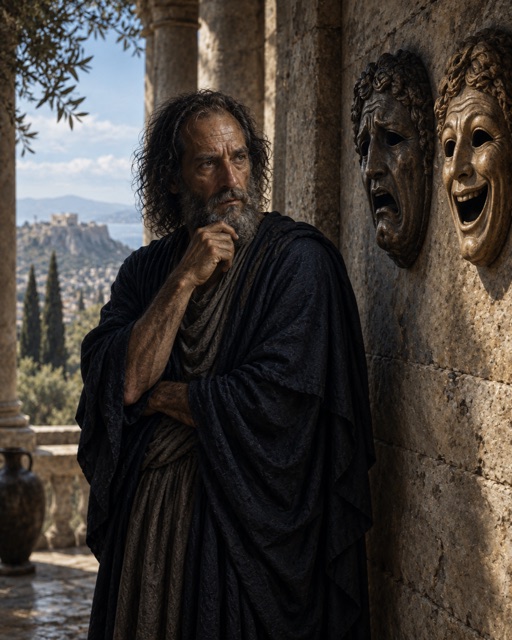
Greek Tragedy · Play
Medea
by Euripides · The Unsettler of the Stage · Classical Athens, c. 480-406 BCE
Euripides' fierce tragedy of betrayal, exile, revenge, intelligence, and the household turned into catastrophe.
- Intermediate
- 431 BCE
- ~1 hr read
- 8 chapter guides
- Public domain
Start reading · Read the The House Has Broken guide free
Before the text
Editor's Prelude
The House Becomes a Weapon
Jason’s voyage for the Golden Fleece is over when Medea begins. Medea, daughter of the king of Colchis on the distant Black Sea, helped him survive that adventure and left her father’s country with him. They reached Corinth after further violence made another home impossible. Now Jason has taken the Corinthian ruler’s daughter as his bride, abandoning the woman who helped him and the household they share with their two sons.
Medea’s loss is sharpened by her position as a foreigner. The relationship that brought her to Greece has also separated her from the family and country to which she might otherwise turn. Jason’s new marriage joins him to Creon, the man who rules Corinth; Medea’s grievance therefore reaches beyond the couple into the power that determines who may remain in the city.
Euripides staged the play in Athens in 431 BCE. Its first speaker is a nurse, whose long service gives her knowledge of the family’s history and fear for its children. An attendant and a chorus of Corinthian women bring other forms of knowledge and sympathy. Before the partners can argue face to face, the people around them are already weighing loyalty, danger, and the limits of what comfort can do.
The opening pages
The House Has Broken
Murray’s translator notes for this passage [14 notes]
CHARACTERS OF THE PLAY
MEDEA, daughter of Aietes, King of Colchis.
JASON, chief of the Argonauts; nephew of Pelias, King of Iolcos in
Thessaly.
CREON, ruler of Corinth.
AEGEUS, King of Athens.
NURSE of Medea.
TWO CHILDREN of Jason and Medea.
ATTENDANT on the children.
A MESSENGER.
CHORUS of Corinthian Women, with their LEADER.
Soldiers and Attendants.
The scene is laid in Corinth. The play was first acted when Pythodorus
was Archon, Olympiad 87, year 1 (B.C. 431). Euphorion was first,
Sophocles second, Euripides third, with Medea, Philoctetes, Dictys, and
the Harvesters, a Satyr-play.
MEDEA
The Scene represents the front of MEDEA'S House in Corinth. A road to
the right leads towards the royal castle, one on the left to the
harbour. The NURSE is discovered alone.
NURSE.
Would God no Argo e'er had winged the seas
To Colchis through the blue Symplegades:
No shaft of riven pine in Pelion's glen
Shaped that first oar-blade in the hands of men
Valiant, who won, to save King Pelias' vow,
The fleece All-golden! Never then, I trow,
Mine own princess, her spirit wounded sore
With love of Jason, to the encastled shore
Had sailed of old Iolcos: never wrought
The daughters of King Pelias, knowing not,
To spill their father's life: nor fled in fear,
Hunted for that fierce sin, to Corinth here
With Jason and her babes. This folk at need
Stood friend to her, and she in word and deed
Served alway Jason. Surely this doth bind,
Through all ill days, the hurts of humankind,
When man and woman in one music move.
But now, the world is angry, and true love
Sick as with poison. Jason doth forsake
My mistress and his own two sons, to make
His couch in a king's chamber. He must wed:
Wed with this Creon's child, who now is head
And chief of Corinth. Wherefore sore betrayed
Medea calleth up the oath they made,
They two, and wakes the clasped hands again,
The troth surpassing speech, and cries amain
On God in heaven to mark the end, and how
Jason hath paid his debt.
All fasting now
And cold, her body yielded up to pain,
Her days a waste of weeping, she hath lain,
Since first she knew that he was false. Her eyes
Are lifted not; and all her visage lies
In the dust. If friends will speak, she hears no more
Than some dead rock or wave that beats the shore:
Only the white throat in a sudden shame
May writhe, and all alone she moans the name
Of father, and land, and home, forsook that day
For this man's sake, who casteth her away.
Not to be quite shut out from home . . . alas,
She knoweth now how rare a thing that was!
Methinks she hath a dread, not joy, to see
Her children near. 'Tis this that maketh me
Most tremble, lest she do I know not what.
Her heart is no light thing, and useth not
To brook much wrong. I know that woman, aye,
And dread her! Will she creep alone to die
Bleeding in that old room, where still is laid
Lord Jason's bed? She hath for that a blade
Made keen. Or slay the bridegroom and the king,
And win herself God knows what direr thing?
'Tis a fell spirit. Few, I ween, shall stir
Her hate unscathed, or lightly humble her.
Ha! 'Tis the children from their games again,
Rested and gay; and all their mother's pain
Forgotten! Young lives ever turn from gloom!
Read it in a Quest
A descent into houses where law, blood, and vengeance turn private grief public.
Chapter guides · 8
The House Has Broken
The Wound Enters the House
Servants and neighbours hear danger before Medea makes her grievance public.
The household’s uncertain knowledge
The Nurse traces the family’s flight from Colchis and Iolcos to Jason’s new marriage in Corinth. She fears Medea’s anger and asks that the children be kept away from her. The Attendant adds a report of impending banishment, but explicitly says he does not know whether it is true. Their alarm grows from memories, overheard words, and Medea’s cries inside the house; neither possesses the whole account.
A claim the Corinthian women can hear
When Medea comes outside, she begins with the mistrust directed at strangers and speaks of women’s dependence within marriage. She then distinguishes her listeners’ situation from her own: they have a city and families, while she has no nearby kin or home to shelter her. The speech turns a personal injury into an appeal for solidarity without erasing that difference.
Sympathy becomes a promise
Medea asks the women not to expose any means she finds of requiting Jason. Their Leader agrees that he deserves punishment. The pledge follows offstage curses that already trouble the Nurse, including words against the children. The women promise secrecy in response to Medea’s appeal for revenge. Creon approaches as their exchange ends.
Creon's Decree
One Day Is Enough
A reprieve intended to ease exile gives Medea time to prepare revenge.
Fear makes the decree
Creon orders Medea and the children out because he fears for his daughter. He cites Medea’s knowledge and reported threats. Medea replies that a reputation for wisdom can breed suspicion, then denies hostility toward him. Her gentleness increases his distrust, but her appeal as a mother eventually wins one day. He calls the concession foolish even while judging that little danger can be accomplished so quickly.
The reprieve changes purpose
After Creon leaves, Medea says her pleading won time for revenge on the bride, Jason, and the king. She considers fire and a sword, then names poison as her preferred means. She wants to survive so that her enemies cannot laugh at her death. She will wait briefly for someone to offer refuge. If shelter appears, she will act secretly; if none does, she will take up the sword and fight though sure to die.
The chorus imagines another account
The women sing of a reversal in the stories told about women’s faithlessness. Men have controlled the songs, they argue, while women have lacked the means to answer. That hope of a changed reputation stands beside their account of Medea’s continuing homelessness and Jason’s broken oath. Their sympathy concerns both a woman’s claim to be heard and the immediate loss of a place to live.
Jason Answers
Jason Explains Betrayal
Jason calls the royal marriage a common advantage; Medea asks what such advantage means after a broken oath.
Aegeus and the Plan
The Plan Finds a Door
An oath promises shelter in Athens, and Medea tells the women how far her revenge will go.
Jason Is Deceived
Jason Believes the Lie
The pretence of agreement sends the gifts to the palace, while Medea struggles with what she has planned for the children.
The Poisoned Gifts
The Gifts Do Their Work
The messenger’s account turns the palace’s welcome into the deaths of its bride and king.
The Children Cry Out
The Children Cry Out
The women’s knowledge of the plan becomes an attempt to stop what they hear behind the barred door.
The Last Confrontation
Revenge Leaves No House Standing
Medea departs beyond Jason’s reach, retaining the bodies he begs to touch and bury.
Questions readers ask
- How long does it take to read Medea?
- About 1 hr in total.
- How difficult is Medea?
- Intermediate. A mid-length play; about an hour of reading.
- Can I read Medea for free?
- Medea is part of Nexus Premium, so reading it needs an account and a Premium subscription, and completing an earlier Quest's Mastery. The opening above and two chapter guides on this page are free to read.
- How many chapter guides are there?
- 8 chapter guides, written by the Nexus editors. Two open in full here; the rest show their opening line.
About Euripides
Euripides was one of classical Athens' great tragedians, younger than Aeschylus and Sophocles. His surviving plays often bring outsiders, women, captives, and wounded households to the center of the stage, giving ancient myth a severe psychological pressure.
“What happens when a person who has been used and discarded still has power?”
Euripides gives Nexus tragedy with an unstable charge: argument, humiliation, intelligence, and pain moving toward consequences no audience can comfortably admire.
Source text: public domain. Chapter guides: original Nexus writing. Medea is part of The Nexus Archive, guided Quests through the great works.