 The Nexus Archive
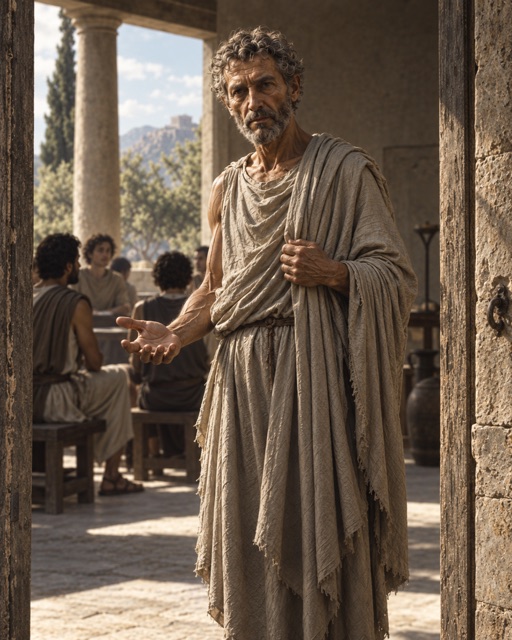
Stoicism · Aphorisms
Enchiridion
by Epictetus · The Slave Who Was Free · Roman Empire, c. 50-135
A short handbook of Stoic principles.
- Intermediate
- c. 125 CE
- ~45 min read
- 8 chapter guides
- Public domain
Start reading · Read the Sections I-VI guide free
Before the text
Editor's Prelude
A Manual For Freedom
The handbook begins by dividing a life in two: what belongs to choice and what can be withheld or taken away. Property, office and even the body fall on the uncertain side. The promise is a freedom that does not wait for fortune to become kind; its cost is a radical change in what counts as one’s own.
Arrian condensed the teaching of Epictetus into short instructions. Oldfather’s introduction warns that this compression can obscure the teacher’s more sympathetic qualities. That warning matters in a work where a broken cup and the death of a loved person can be brought under the same principle without being the same experience.
Baths, meals, family quarrels and public ambition give the philosophy its testing ground. A person remains among other people, with duties and attachments, even while being asked to relinquish command over outcomes. The tension between those bonds and inward freedom gives the small book its enduring difficulty.
The opening pages
Sections I-VI: What Is Yours
Section I
Some things are under our control, while others are not under our control. Under our control are conception, choice, desire, aversion, and, in a word, everything that is our own doing; not under our control are our body, our property, reputation, office, and, in a word, everything that is not our own doing. Furthermore, the things under our control are by nature free, unhindered, and unimpeded; while the things not under our control are weak, servile, subject to hindrance, and not our own. Remember, therefore, that if what is naturally slavish you think to be free, and what is not your own to be your own, you will be hampered, will grieve, will be in turmoil, and will blame both gods and men; while if you think only what is your own to be your own, and what is not your own to be, as it really is, not your own, then no one will ever be able to exert compulsion upon you, no one will hinder you, you will blame no one, will find fault with no one, will do absolutely nothing against your will, you will have no personal enemy, no one will harm you, for neither is there any harm that can touch you.
With such high aims, therefore, remember that you must bestir yourself with no slight effort to lay hold of them, but you will have to give up some things entirely, and defer others for the time being. But if you wish for these things also, and at the same time for both office and wealth, it may be that you will not get even these latter, because you aim also at the former, and certainly you will fail to get the former, which alone bring freedom and happiness.
Make it, therefore, your study at the very outset to say to every harsh external impression, "You are an external impression and not at all what you appear to be." After that examine it and test it by these rules which you have, the first and most important of which is this: Whether the impression has to do with the things which are under our control, or with those which are not under our control; and, if it has to do with some one of the things not under our control, have ready to hand the answer, "It is nothing to me."
Section II
Chapter guides · 8
Sections I-VI
What Belongs to Choice
Epictetus begins by drawing the line that controls the whole Manual.
Choice and externals
The opening sections make the basic Stoic distinction: some things belong to our own choice and judgment, while body, reputation, office, and other externals do not fully belong to us.
A difficult boundary
The bathhouse example gives this distinction a practical cost: getting a bath and preserving a settled purpose are different aims. The comparison of a breakable jug with a mortal loved one is deliberately severe. Oldfather’s note qualifies the suspension of desire as advice to a beginner; it is not a denial that the teaching asks for sustained effort.
Sections VII-XII
Desire and Temporary Possession
The Manual turns the first principle into daily training.
Loss as a return
The ship’s summons and the borrowed lodging recast possession as temporary custody. Epictetus extends that account to wife, child and property without making an exception for a wrongful taker. His distinction between an impediment to the leg and an impediment to moral purpose explains the freedom he claims; it does not say that the body suffers no injury. The spilled oil makes the same discipline begin at a smaller scale.
Sections XIII-XVIII
Philosophy Is Not A Performance
Epictetus keeps pulling attention away from display and back toward discipline.
Sections XIX-XXIV
Freedom From Status
Status and usefulness are tested against fidelity and self-respect.
Sections XXV-XXX
The Price of a Commitment
The Manual becomes practical about tradeoffs, duties, and preparation.
Sections XXXI-XXXVI
Rule The Day
Piety, signs, pleasure, and conduct become part of the same training.
Sections XXXVII-XLIV
Roles, Property and Judgment
Epictetus keeps connecting speech, social life, and self-command.
Sections XLV-LIII
Progress Gets Quiet
The Manual ends by making progress practical, inward, and immediate.
Questions readers ask
- How long does it take to read Enchiridion?
- About 45 min in total.
- How difficult is Enchiridion?
- Intermediate. A short book of aphorisms; about 45 minutes of reading.
- Which translation is this?
- The William Abbott Oldfather translation from the Greek. The text follows Epictetus: The Discourses as Reported by Arrian, the Manual, and Fragments, Volume II, translated by William Abbott Oldfather (1928).
- Can I read Enchiridion for free?
- Enchiridion is part of Nexus Premium, so reading it needs an account and a Premium subscription. The opening above and two chapter guides on this page are free to read.
- How many chapter guides are there?
- 8 chapter guides, written by the Nexus editors. Two open in full here; the rest show their opening line.
About Epictetus
Epictetus was born enslaved and later became one of Stoicism's most influential teachers. His teachings, recorded by Arrian, focus on judgment, discipline, freedom, and the sharp distinction between what is within our control and what is not.
“What is truly up to me?”
Epictetus gives one of the most practical moral systems ever written. His thought is direct, bracing, and built for people under pressure.
Source text: public domain. Chapter guides: original Nexus writing. Enchiridion is part of The Nexus Archive, guided Quests through the great works.