 The Nexus Archive
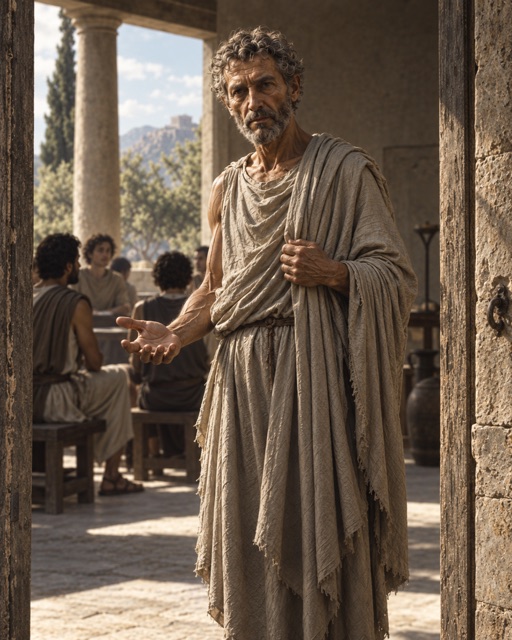
Stoicism · Dialogue
Discourses
by Epictetus · The Slave Who Was Free · Roman Empire, c. 50-135
The full surviving four-book classroom record on freedom, control, judgment, and Stoic discipline.
- Brutal
- c. 108 CE
- ~10 hr read
- 65 chapter guides
- Public domain
Start reading · Read the Book I.1 guide free
Before the text
Editor's Prelude
The Teacher In The Room
Epictetus left no polished treatise under his own name. The Discourses survive because Arrian, one of his students, wrote down the force of the teaching as it sounded in the schoolroom. Four books remain from a larger set known in antiquity. What reaches us is both intimate and incomplete: a living teacher preserved through a student's record.
The scale matters. The Enchiridion gives Stoicism as concentrated commands. The Discourses show those commands under pressure: ambition, fear, illness, anger, family loyalty, reputation, death, and the embarrassment of students who can recite doctrine before they can live it.
Oldfather's translation gives this world with unusual clarity. Epictetus is severe, funny, repetitive, impatient, and humane. He is trying to produce a person who can stand upright inside fortune, someone whose peace cannot be purchased by threat, praise, loss, or applause.
The opening pages
Book I.1: What Is In Our Control
Of the things which are under our control and not under our control
Among the arts and faculties in general you will find none that is self-contemplative, and therefore none that is either self-approving or self-disapproving. How far does the art of grammar possess the power of contemplation? Only so far as to pass judgement upon what is written. How far the art of music? Only so far as to pass judgement upon the melody. Does either of them, then, contemplate itself? Not at all. But if you are writing to a friend and are at a loss as to what to write, the art of grammar will tell you; yet whether or no you are to write to your friend at all, the art of grammar will not tell. The same holds true of the art of music with regard to melodies; but whether you are at this moment to sing and play on the lyre, or neither sing nor play, it will not tell. What art or faculty, then, will tell? That one which contemplates both itself and everything else. And what is this? The reasoning faculty; for this is the only one we have inherited which will take knowledge both of itself—what it is, and of what it is capable, and how valuable a gift it is to us—and likewise of all the other faculties. For what else is it that tells us gold is beautiful? For the gold itself does not tell us. Clearly it is the faculty which makes use of external impressions. What else judges with discernment the art of music, the art of grammar, the other arts and faculties, passing judgement upon their uses and pointing out the seasonable occasions for their use? Nothing else does.
As was fitting, therefore, the gods have put under our control only the most excellent faculty of all and that which dominates the rest, namely, the power to make correct use of external impressions, but all the others they have not put under our control. Was it indeed because they would not? I for one think that had they been able they would have entrusted us with the others also; but they were quite unable to do that. For since we are upon earth and trammelled by an earthy body and by earthy associates, how was it possible that, in respect of them, we should not be hampered by external things?
Read it in a Quest
A training ground for the power that remains yours when fortune refuses to obey.
Chapter guides · 65
Book I.1
The central divide
Freedom begins with the use of judgment.
What belongs to us
Epictetus places freedom in the ability to judge and choose. The body, possessions and public standing can be taken away. The use of an impression—our response to what seems true or threatening—is our own task.
Agrippinus at lunch
The examples put this distinction under pressure. When Agrippinus learns that he has been exiled rather than executed, he asks whether his property has been confiscated. It has not, so he proposes lunch at Aricia. His plans change without turning the sentence into a moral defeat.
Book I.2-I.3
Character needs a higher measure
Epictetus links personal character to the divine rational element in human beings.
Character under pressure
Epictetus asks how a person can preserve proper character in different circumstances, then raises the stakes by saying human beings share reason with the divine.
A standard beyond rank
Different people accept different costs to preserve who they are. Helvidius risks the emperor’s anger by speaking honestly in the senate. Epictetus then grounds human dignity in kinship with God through reason. The closing challenge is to act with the care that this kinship deserves.
Book I.4-I.5
Progress has to reach the life
Epictetus rejects philosophy as talk, posture, or clever refusal to be corrected.
Book I.6
Providence becomes practice
Human reason can understand the world and respond to difficulty.
Book I.7-I.8
Reason needs exercise
Epictetus connects logic to the practical work of judging impressions.
Book I.9-I.10
Rome keeps calling
Epictetus uses ambition to show how easily people forget their own resolutions.
Book I.11
Affection needs judgment
Epictetus treats family feeling as real, but not as permission to abandon reason.
Book I.12-I.14
Contentment is training
Epictetus connects contentment, piety, and ordinary conduct.
Book I.15-I.16
Philosophy works on a life
Philosophy concerns our own choices; providence gives reason for gratitude.
Book I.17
Reasoning is necessary
Epictetus defends logic because judgment needs tools.
Book I.18
Anger follows a false valuation
Epictetus turns anger into a problem of judgment.
Book I.19-I.20
Power and the faculty that judges
Tyrants can threaten externals, but reason can examine what fear is doing.
Book I.21-I.22
Admiration is a poor master
Epictetus attacks vanity and returns to the shared ideas people misapply.
Book I.23-I.25
Difficulty shows the person
Family affection, hardship and reasoning put character to the test.
Book I.26-I.27
Preparation for disturbing impressions
Training brings general principles to particular fears.
Book I.28
Error and human loss
False judgments drive actions that later appear terrible.
Book I.29-I.30
Steadfastness under judgment
The end of Book I tests principles against punishment and authority.
Book II.1
Confidence belongs in the right place
Book II opens by separating courage from carelessness.
Book II.2-II.4
Character recommends itself
Epictetus tests peace, reputation, and betrayal against the same standard of character.
Book II.5-II.6
Indifferent does not mean careless
Epictetus explains how daily choices can matter without ruling the soul.
Book II.7-II.8
Divination cannot decide duty
Foreknowledge and moral choice answer different questions.
Book II.9-II.11
Philosophy begins with conflict
Human duties and disagreements require a standard for judgment.
Book II.12
Argument needs a purpose
Epictetus keeps argument tied to training rather than display.
Book II.13
Anxiety points to dependence
Epictetus treats anxiety as evidence that something outside us has been given too much power.
Book II.14
Learning must become use
Epictetus pushes a student past admiration toward actual practice.
Book II.15
Stubbornness is not strength
Epictetus distinguishes steadiness from clinging to an untested judgment.
Book II.16
The vocabulary must reach the crisis
Epictetus says people know the words but fail when life applies pressure.
Book II.17
Knowing the word is not enough
Epictetus says shared moral words must be applied correctly in real cases.
Book II.18
Impressions become habits
Repeated actions make the next temptation stronger or weaker.
Book II.19
Talk can become evasion
Epictetus attacks the use of philosophy as performance.
Book II.20
The argument has moral stakes
Epictetus argues against schools he thinks weaken responsibility and truth.
Book II.21
Conduct reveals the real belief
Epictetus watches what people do when their stated principles become costly.
Book II.22
Friendship needs a stable good
Epictetus says friendship cannot rest on goods that can turn people against each other.
Book II.23
Expression serves thought
Epictetus gives language a real place, but not the highest place.
Book II.24-II.26
Listening, logic and error
The last chapters of Book II connect persuasion with the listener’s readiness.
Book III.1
Adornment exposes the aim
Book III opens by asking what kind of beauty a rational person should seek.
Book III.2-III.4
Training must aim at life
Epictetus separates progress in school from progress in character.
Book III.5-III.6
Training is tested in illness
Sickness and setbacks expose the difference between recitation and practice.
Book III.7-III.8
Claims of pleasure face a test
An official’s Epicurean beliefs meet questions about duty and judgment.
Book III.9-III.11
Ordinary pressure is the school
A lawsuit, illness, and brief sayings become tests of Stoic preparation.
Book III.12
Practice without performance
Epictetus warns that practicing hardship can become another form of vanity.
Book III.13-III.16
Company shapes the soul
Epictetus warns that loneliness, ambition, and social contact can all retrain judgment.
Book III.17-III.20
News and the judgment added to it
Advantage, loss and reports of trouble test what a person counts as good.
Book III.21
Teaching has a cost
Epictetus warns against entering public teaching lightly.
Book III.22: The Cynic's Calling and Discipline
The Cynic is not a costume
Epictetus treats the Cynic calling as a divine assignment, not a rough cloak and staff.
Book III.22: Friendship, Public Witness, and Endurance
A calling with public duties
The Cynic’s mission places exceptional demands on relationships and conduct.
Book III.23
Discussion can become vanity
Epictetus attacks readers and speakers who use philosophy for applause.
Book III.24: Not Yearning for What Is Absent
Affection amid separation
Epictetus treats movement and parting as features of a shared mortal life.
Book III.24: Duty Without Dependence
Duty without dependence
A fitting action need not purchase another person’s approval.
Book III.24-III.25
Loss and the return to practice
Awareness of mortality leads into the problem of beginning again.
Book III.26
The fear beneath the fear of want
Epictetus tests whether anxiety about poverty hides dependence on comfort.
Book IV.1: False Freedom and Hidden Slavery
Freedom is not status
Epictetus opens Book IV by attacking the idea that legal or social power makes a person free.
Book IV.1: What Is Truly Our Own
The part that remains our own
Epictetus locates freedom in judgment, choice, assent, and the use of impressions.
Book IV.1: Attachment, God, and Giving Back
Gifts held on mortal terms
Epictetus brings divine order into possessions, family and the use of power.
Book IV.1: Socrates and the Price of Freedom
The price of freedom
Epictetus measures philosophy against Socrates and fearless truth.
Book IV.2-IV.3
The exchange made by a changed life
Social approval and self-respect can carry different prices.
Book IV.4
Peace amid interruption
Even a love of study can become dependence on external conditions.
Book IV.5
Kindness under pressure
Contention threatens the character that a person means to defend.
Book IV.6
The wish to escape other people’s pity
An unwanted reputation can become another form of dependence.
Book IV.7
Fear and the reach of power
Epictetus returns to fear by asking what can actually harm moral purpose.
Book IV.8
The life before the costume
Philosophical training must precede a public claim to wisdom.
Book IV.9
The recovery of self-respect
A moral lapse calls for correction without surrender to despair.
Book IV.10
What deserves the effort
Epictetus asks what a person is willing to trade for calm and freedom.
Book IV.11
Cleanliness and consideration
Care for the body has a place within care for character.
Book IV.12-IV.13
Attention and trustworthy speech
The surviving Discourses end with habits of attention and the terms of confidence.
Questions readers ask
- How long does it take to read Discourses?
- About 10 hr in total.
- How difficult is Discourses?
- Brutal. A long dialogue; about 10 hours of reading.
- Which translation is this?
- The William Abbott Oldfather translation from the Greek. The text follows Loeb Classical Library, Oldfather translation, Volumes I-II (1956).
- Can I read Discourses for free?
- Discourses is part of Nexus Premium, so reading it needs an account and a Premium subscription. The opening above and two chapter guides on this page are free to read.
- How many chapter guides are there?
- 65 chapter guides, written by the Nexus editors. Two open in full here; the rest show their opening line.
About Epictetus
Epictetus was born enslaved and later became one of Stoicism's most influential teachers. His teachings, recorded by Arrian, focus on judgment, discipline, freedom, and the sharp distinction between what is within our control and what is not.
“What is truly up to me?”
Epictetus gives one of the most practical moral systems ever written. His thought is direct, bracing, and built for people under pressure.
Source text: public domain. Chapter guides: original Nexus writing. Discourses is part of The Nexus Archive, guided Quests through the great works.