 The Nexus Archive
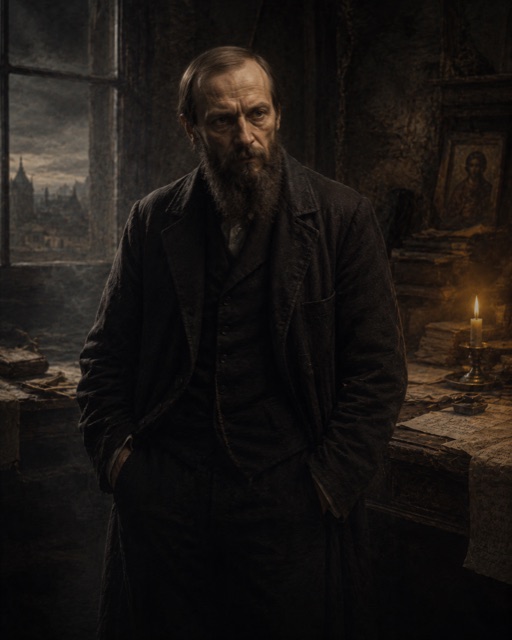
Existential Literature · Novel
White Nights
by Dostoevsky · The Underground Prophet · Russian Existentialism, 1821-1881
A solitary dreamer meets Nastenka across four Petersburg nights, and intimacy collides with fantasy, waiting, and loss.
- Intermediate
- ~1 hr 30 min read
- 2 chapter guides
- Public domain
Start reading · Read the SECOND NIGHT guide free
Before the text
Editor's Prelude
Four Nights in the White City
St. Petersburg's summer light makes night feel suspended, and Dostoevsky gives that suspension to a narrator who has lived more vividly in imagination than among other people. A chance meeting with Nastenka opens a future faster than experience can discipline it.
Their conversation is tender because both are waiting for a life to begin. It is also dangerous because confession, rescue, friendship, and love do not mean the same thing to each speaker.
The narrator speaks directly to a reader as readily as to Nastenka. His speech pours through jokes, imagined romances, and sudden fears, giving a few hours of companionship the weight of a whole life.
The opening pages
FIRST NIGHT
WHITE NIGHTS
A Sentimental Story from the Diary of a Dreamer
FIRST NIGHT
It was a wonderful night, such a night as is only possible when we are young, dear reader. The sky was so starry, so bright that, looking at it, one could not help asking oneself whether ill-humoured and capricious people could live under such a sky. That is a youthful question too, dear reader, very youthful, but may the Lord put it more frequently into your heart!... Speaking of capricious and ill-humoured people, I cannot help recalling my moral condition all that day. From early morning I had been oppressed by a strange despondency. It suddenly seemed to me that I was lonely, that every one was forsaking me and going away from me. Of course, any one is entitled to ask who “every one” was. For though I had been living almost eight years in Petersburg I had hardly an acquaintance. But what did I want with acquaintances? I was acquainted with all Petersburg as it was; that was why I felt as though they were all deserting me when all Petersburg packed up and went to its summer villa. I felt afraid of being left alone, and for three whole days I wandered about the town in profound dejection, not knowing what to do with myself. Whether I walked in the Nevsky, went to the Gardens or sauntered on the embankment, there was not one face of those I had been accustomed to meet at the same time and place all the year. They, of course, do not know me, but I know them. I know them intimately, I have almost made a study of their faces, and am delighted when they are gay, and downcast when they are under a cloud. I have almost struck up a friendship with one old man whom I meet every blessed day, at the same hour in Fontanka. Such a grave, pensive countenance; he is always whispering to himself and brandishing his left arm, while in his right hand he holds a long gnarled stick with a gold knob. He even notices me and takes a warm interest in me. If I happen not to be at a certain time in the same spot in Fontanka, I am certain he feels disappointed. That is how it is that we almost bow to each other, especially when we are both in good humour. The other day, when we had not seen each other for two days and met on the third, we were actually touching our hats, but, realizing in time, dropped our hands and passed each other with a look of interest.
Chapter guides · 2
SECOND NIGHT
From Chance Meeting to Confidence
A chance encounter by the canal leads to a second meeting where the dreamer and Nastenka exchange histories, and she asks him to carry a letter to the man she loves.
A friendship with terms
The dreamer finds Nastenka crying by a canal, intervenes when a staggering man pursues her, and walks her home. She agrees to meet again because she needs a confidant, but only after he promises not to fall in love with her. He makes that promise at once.
The dreamer's real and imagined lives
On the second night he calls himself a dreamer and describes years spent in fantasies so vivid that ordinary life feels thin. The confession ends in fear that he has lost his best years without living them. Nastenka responds with sympathy, says they must not part, and asks him for warm, brotherly advice.
Why Nastenka was crying
Nastenka explains that she lives with her blind grandmother, who pins their dresses together to keep her from slipping away. She fell in love with their young lodger; when he left for Moscow, he said poverty prevented marriage and would not bind her, but swore that if he established himself and she still loved him, they would be happy. Nastenka says he has now been back for three days without visiting. The dreamer proposes a letter, and Nastenka asks him to deliver it through acquaintances and bring back any answer.
THIRD NIGHT
Eleven O'Clock Without an Answer
Nastenka gives the dreamer her sealed letter; after he delivers it, they wait together until eleven without the lodger appearing.
Questions readers ask
- How long does it take to read White Nights?
- About 1 hr 30 min in total.
- How difficult is White Nights?
- Intermediate. A mid-length novel; about 2 hours of reading.
- Which translation is this?
- The Constance Garnett translation from the Russian, first published in 1848. The text follows White Nights and Other Stories, The Novels of Fyodor Dostoevsky, Volume X (1918).
- Can I read White Nights for free?
- White Nights is part of Nexus Premium, so reading it needs an account and a Premium subscription. The opening above and one chapter guide on this page are free to read.
- How many chapter guides are there?
- 2 chapter guides, written by the Nexus editors. One opens in full here; the rest show their opening line.
About Dostoevsky
Fyodor Dostoevsky survived a staged execution, years in a Siberian prison camp, financial ruin, epilepsy, and political repression. His novels turned those experiences into intense examinations of freedom, guilt, faith, violence, and the divided human mind.
“What if human beings do not actually want what is good for them?”
Dostoevsky exposes the psychological and spiritual chaos beneath modern theories of progress.
Source text: public domain. Chapter guides: original Nexus writing. White Nights is part of The Nexus Archive, guided Quests through the great works.