 The Nexus Archive
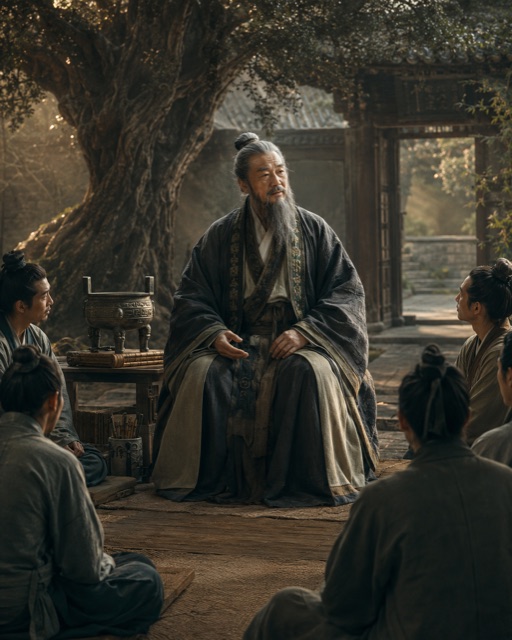
Confucianism · Aphorisms
The Analects
by Confucius · The Teacher of Ritual · Ancient China, 551-479 BC
A foundational collection on virtue, ritual, filial duty, education, and humane government.
- Intermediate
- c. 400 BCE
- ~1 hr 30 min read
- 10 chapter guides
- Public domain
Start reading · Read the Book II guide free
Before the text
Editor's Prelude
The Master and the Shape of a Life
Confucius was a teacher from Lu, in what is now eastern China, traditionally dated to 551–479 BCE. The Zhou kings' authority had weakened; regional rulers and powerful families competed for control. The sayings gathered here return to a practical question in that divided world: what makes someone fit to teach, to serve, or to rule?
The Analects is a collection of remembered conversations, judgments, and scenes, assembled through later transmission. It is neither a continuous biography nor a treatise written by Confucius. The speaker called the Master answers disciples who differ in temperament and ability; elsewhere, the disciples speak for themselves. A rebuke, a hesitation, and a word of praise often reveal more than a general maxim could.
Learning must become practice. Ritual must carry reverence. Family duty reaches into public life, where a ruler's conduct can teach more effectively than threats. These obligations also assume unequal roles: parents and children, rulers and subjects, elders and juniors. Confucius's concern for others does not erase those distinctions, and loyalty sometimes pulls against other duties.
Leonard A. Lyall's translation gives this compressed language a spare English voice. His ‘love’ often names the virtue also translated as humaneness; his ‘gentleman’ is an ethical ideal as well as a term shaped by rank. The twenty books preserve a school thinking through conduct, with disagreements and difficult cases still visible.
The opening pages
Book I: Learning and Practice
1. The Master said, To learn and then do, is not that a pleasure? When friends come from afar do we not rejoice? To live unknown and not fret, is not that to be a gentleman?
2. Yu-tzu said. Few men that are good sons and good brothers are fond of withstanding those over them. A man that is not fond of withstanding those over him and is yet fond of broils is nowhere found. A gentleman heeds the roots. When the root has taken, the Way is born. And to be a good son and a good brother, is not that the root of love?
3. The Master said, Smooth words and fawning looks are seldom found with love.
4. Tseng-tzu said, Thrice daily I ask myself: In dealing for others, have I been unfaithful? Have I been untrue to friends? Do I practise what I preach?
5. The Master said, To guide a land of a thousand chariots, honour business and be true; spend little and love men; time thy calls on the people.
6. The Master said, The young should be dutiful at home, modest abroad, careful and true, overflowing in kindness for all, but in brotherhood with love. And if they have strength to spare they should spend it on the arts.
7. Tzu-hsia said, If a man eschews beauty and honours worth, if he serves his father and mother with all his strength, if he is ready to give his life for his lord, and keeps faith with his friends, though others may say he has no learning, I must call him learned.
8. The Master said, A gentleman will not be looked up to unless he is staid, nor will his learning be sound. Put faithfulness and truth first; have no friends unlike thyself; be not ashamed to mend thy faults.
9. Tseng-tzu said, Heed the dead, follow up the past, and the soul of the people will again grow great.
10. Tzu-ch'in said to Tzu-kung, When he comes to a country the Master always hears how it is governed; does he ask, or is it told him?
Tzu-kung said, The Master gets it by his warmth and honesty, by politeness, modesty and yielding. The way the Master asks is unlike other men's asking.
11. The Master said, Whilst thy father lives look for his purpose; when he is gone, look how he walked. To change nothing in thy father's ways for three years may be called pious.
Read it in a Quest
A crossing through sacred discipline, duty, moral formation, mercy, and judgment.
Chapter guides · 10
Book II
Practice Before Display
Books I–II join the practice of learning to family duty and the conduct of rulers.
Learning that changes conduct
The opening sayings measure learning by what a person does: keeping promises, treating parents with respect, and remaining steady without recognition. The disciples Yu and Tseng also speak here. Their words belong to the school alongside the Master's.
Authority and example
Book II compares a virtuous ruler to the north star, around which other stars turn. Punishment may secure avoidance of penalties; virtue and courtesy are meant to awaken shame and a wish to act rightly. The same demand reaches the household: supporting one's parents is insufficient without respect. Public order and family duty both depend on the quality of the relationship.
Knowing one's limits
The gentleman acts before making claims, studies without abandoning thought, and acknowledges what he does not know. Confucius's account of his own life presents understanding as something acquired over decades. Book II closes by calling worship of unrelated spirits flattery, and failing to do what is right a lack of courage.
Book IV
Ritual Must Reach the Heart
Books III–IV connect the misuse of ceremony with the demands of love and right conduct.
Ceremony as a claim to power
The Chi family uses rows of dancers reserved for a higher rank, and the Three Clans sing a royal hymn. Confucius objects to the authority they claim through these forms. Ritual is political here: copying a ruler's ceremony helps powerful families exceed their proper place.
Grief, reverence, and love
A funeral's grief matters more than its display. Ceremony and music cannot compensate for a lack of love. Book IV carries that demand into choices about poverty, wealth, profit, and obligation: right conduct must survive circumstances that make a profitable excuse attractive.
The thread explained
After the Master says that one thread runs through his teaching and leaves, Tseng-tzu explains it as faithfulness and fellow-feeling. That explanation is Tseng-tzu's. The surrounding sayings bring the principle close to home, including respectful remonstrance with parents and examination of one's own faults. Book IV closes with Tzu-yu’s warning that nagging kings brings disgrace and nagging friends drives them away.
Book VI
Ability Is Not the Whole Judgment
Books V–VI distinguish useful talents from the harder achievement of love.
Book VIII
The Teacher and the Inheritance
Books VII–VIII portray teaching as active learning and responsibility as a burden.
Book X
Character in Motion
Books IX–X move from learning and judgment to closely observed conduct.
Book XII
Humaneness Enters Public Life
Books XI–XII place grief, teaching, and government within particular relationships.
Book XIV
The Risk of Serving
Books XIII–XIV test names, loyalty, and judgment within compromised public life.
Book XVI
One Thread Under Pressure
Books XV–XVI bring reciprocity into contact with ambition and responsibility for war.
Book XVIII
Serve or Withdraw
Books XVII–XVIII preserve a dispute about taking part in a damaged political world.
Book XX
The School Carries the Way
Books XIX–XX close with the disciples’ arguments and models of accountable rule.
Questions readers ask
- How long does it take to read The Analects?
- About 1 hr 30 min in total.
- How difficult is The Analects?
- Intermediate. A mid-length book of aphorisms; about 2 hours of reading.
- Which translation is this?
- The Leonard A. Lyall translation from the Classical Chinese. The text follows The Sayings of Confucius.
- Can I read The Analects for free?
- The Analects is part of Nexus Premium, so reading it needs an account and a Premium subscription, and completing an earlier Quest's Mastery. The opening above and two chapter guides on this page are free to read.
- How many chapter guides are there?
- 10 chapter guides, written by the Nexus editors. Two open in full here; the rest show their opening line.
About Confucius
Confucius was a Chinese teacher, editor, and moral thinker whose sayings shaped East Asian ethics, education, family life, and statecraft. The Analects preserve a vision of humane conduct, ritual seriousness, self-cultivation, and government by moral example.
“What kind of person can sustain a humane society?”
Confucius gives Nexus a major non-Western foundation for character, education, hierarchy, duty, and public virtue.
Source text: public domain. Chapter guides: original Nexus writing. The Analects is part of The Nexus Archive, guided Quests through the great works.