 The Nexus Archive
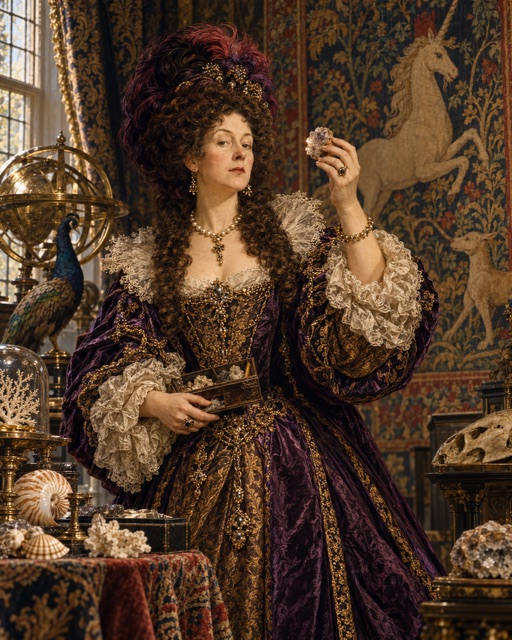
Natural Philosophy and Early Feminism · Treatise
Observations upon Experimental Philosophy
by Margaret Cavendish, Duchess of Newcastle
Featuring Margaret Cavendish
Cavendish challenges mechanical and experimental philosophy with a vitalist account of self-moving matter and natural knowledge.
- Brutal
- ~8 hr 45 min read
- 7 chapter guides
- Public domain
Start reading · Read the 1. Of Humane Sense and Perception. guide free
Before the text
Editor's Prelude
A Duchess against the Microscope
In 1666 Margaret Cavendish entered the new experimental philosophy as both critic and rival system-builder. She admired curiosity but doubted that instruments, detached observations, or mechanical particles could bear the certainty their advocates claimed. The 1666 volume also contained The Description of a New Blazing World, printed with its own title page; it appears in the Archive as a separate work.
Her answer is a world of matter that moves and perceives for itself. She calls its directing activity rational, its working activity sensitive, and its passive material inanimate. These are inseparable degrees of one nature. An eye, a plant and a stone belong to that nature, though she gives each a different way of knowing.
The book proceeds through questions, objections and replies, sometimes staging an argument between thoughts in her own mind. Cavendish also defends her right to take part in philosophy when women are excluded from schools and universities. Her doubts about the microscope open a larger dispute: how much can any limited creature know, and what authority should an ingenious instrument command?
The opening pages
1666 title and imprint leaf
OBSERVATIONS UPON EXPERIMENTAL PHILOSOPHY. To which is added, THE DESCRIPTION OF A New Blazing World.
WRITTEN By the Thrice Noble, Illustrious, and Excellent PRINCESSE, THE Duchess of Newcastle.
LONDON, Printed by A. Maxwell, in the Year, 1666.
TO HER GRACE THE Duchess of Newcastle, On her OBSERVATIONS upon EXPERIMENTAL PHILOSOPHY.
THis Book is Book of Books, and onely fits
Great searching Brains, and Quintessence of Wits;
For this will give you an Eternal Fame,
And last to all Posterity your Name:
You conquer Death, in a perpetual Life;
And make me famous too in such a Wife.
So I will Prophesie in spight of Fools,
When dead, then honour'd, and be read in Schools,
And Ipse dixit lost, not He, but She
Still cited in your strong Philosophy.
William Newcastle.
TO HIS GRACE THE Duke of Newcastle.
My Noble Lord,
IN this present Treatise, I have ventured to make some observations upon Experimental Philosophy, and to examine the Opinions of some of our Modern Microscopical or Dioptrical Writers; and though your Grace is not onely a lover of Vertuosoes, but a Vertuoso your self, and have as good, and as many sorts of Optick Glasses as any one else; yet you do not busie your self much with this brittle Art, but employ most part of your time in the more noble and heroick Art of Horsemanship and Weapons, as also in the sweet and delightful Art of Poetry, and in the useful Art of Architecture, &c. which shews that you do not believe much in the Informations of those Optick glasses, at least think them not so useful as others do that spend most of their time in Dioptrical inspections. The truth is, My Lord, That most men in these latter times, busie themselves more with other Worlds, then with this they live in, which to me seems strange, unless they could find out some Art that would carry them into those Gelestial Worlds, which I doubt will never be; nay, if they did, it would be no better then Lucian's, or the French-mans Art, with Bottles, Bladders, &c. or like the mans that would scrue himself up into the Moon: And therefore I confess, I have but little faith in such Arts, and as little in Telescopical, Microscopical, and the like inspections, and prefer rational and judicious Observations before deluding Glasses and Experiments; which, as I have more at large declared in this following work, so I leave it to your Graces perusal and judgment, which I know is so just, so exact, and so wise, that I may more safely rely upon it, then all others besides; and if your Grace do but approve of it, I care not if all the world condemn it; for your Graces Approbation is all that can be desired from,
Chapter guides · 7
1. Of Humane Sense and Perception.
Knowing Only a Part
Each sense has its own kind of knowledge. Cavendish uses this difference to explain how nature can be full of knowledge while its individual creatures remain limited.
Different senses, different knowledge
The eye does not know what the ear hears. Even different parts of the body have their own sense of touch. A person may perceive one kind of object better than another, and a poorly presented object can mislead the senses.
Reason corrects sense
Cavendish calls reason a finer activity of matter. It can consider things beyond the reach of the outward senses and correct their mistakes. She gives this role to sound, orderly reasoning, rather than to confused reasoning or to art, which can mislead the senses.
One nature, many limited parts
She argues that nature as a whole has infinite knowledge. Its parts have separate, limited knowledge and are ignorant of much that other parts know. No part can leave nature or find an empty space outside it. She closes with nature ordering its own endless variety, which no single creature can fully know.
Whether it be possible to make Man and other Animal Creatures that naturally have no Wings, flie as Birds do.
The Case Against Human Flight
Cavendish recounts her husband's argument that flight depends on the way wings join a bird's body. She draws from it a limit on what art can change in a creature.
An argument she reports
Cavendish recounts a conversation in Paris between her husband and a man she calls Mr. H. Her husband argues that a bird's wing joins the body in a posture opposite to a human arm. Birds push air with that wing motion; human arms cannot move in the same way.
Feathers and weight
On this account, feathers are not the decisive feature: bats fly with fleshy wings. Nor does size alone prevent flight, since large birds fly too. The issue, he says, is how limbs are shaped and attached.
What art cannot give
Cavendish allows that a four-legged animal might stand upright and that art can mend some defects. But she denies that art can give a part motions foreign to its natural form. Humans are not defective because they cannot fly; she calls a flying human 'monstrous' because flight does not belong to the human form.
22. Of Wood Petrified.
What Petrified Wood Can Prove
That wood can become stone does not show that every creature can change in the same way. Cavendish challenges a large claim drawn from a limited example.
32. Of the Celestial Parts of this World; and whether they be alterable?
An Enduring Sky with Changing Parts
The stars can keep their familiar appearance while their parts change. Cavendish argues that distance limits what people can observe of them.
4. Nature cannot be known by any of her Parts.
Useful Arts Have Limits
An art can be useful without revealing all of nature. Cavendish argues that a small creature cannot give a finite observer complete knowledge of an infinite world.
15. Of the Rational Soul of Man.
Reason beyond the Human
Cavendish gives every part of nature its own kind of sense and reason. Sharing material nature does not make a stone perceive as a person does.
25. Of the Plague.
Cavendish’s Account of Plague
Cavendish rejects a report that plague consists of tiny animals seen through a microscope. She explains infection through her theory that bodies imitate the motions of other bodies.
Questions readers ask
- How long does it take to read Observations upon Experimental Philosophy?
- About 8 hr 45 min in total.
- How difficult is Observations upon Experimental Philosophy?
- Brutal. A long treatise; about 9 hours of reading.
- Can I read Observations upon Experimental Philosophy for free?
- Observations upon Experimental Philosophy is part of Nexus Premium, so reading it needs an account and a Premium subscription. The opening above and two chapter guides on this page are free to read.
- How many chapter guides are there?
- 7 chapter guides, written by the Nexus editors. Two open in full here; the rest show their opening line.
About Margaret Cavendish
Margaret Cavendish, Duchess of Newcastle, was a seventeenth-century writer of philosophy, science, poetry, drama, and speculative fiction. Her work challenged assumptions about nature, knowledge, gender, and intellectual authority.
“Who gets permission to think in public?”
Cavendish gives Nexus a rare early modern voice where natural philosophy, literary invention, and women's intellectual authority meet.
Source text: public domain. Chapter guides: original Nexus writing. Observations upon Experimental Philosophy is part of The Nexus Archive, guided Quests through the great works.