 The Nexus Archive
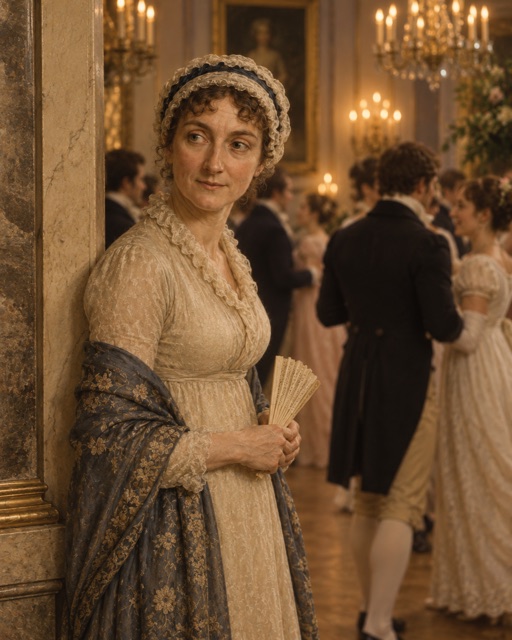
English Novel · Novel
Sense and Sensibility
by Austen · The Anatomist of Manners · Regency England, 1775-1817
The Dashwood sisters test feeling, judgment, money, secrecy, and constancy under social pressure.
- Intermediate
- ~8 hr 45 min read
- 4 chapter guides
- Public domain
Start reading · Read the CHAPTER X. guide free
Before the text
Editor's Prelude
Two Sisters, Unequal Risks
A promise of generosity can shrink to nothing without the person who made it feeling ungenerous. After their father’s death, Elinor and Marianne Dashwood depend on a half-brother who inherits their home. Austen begins inside the comfortable reasoning that lets him keep his money. Love will have to find its way through a world where income, houses and family approval carry that kind of power.
Published in 1811 as the work of “A Lady,” Austen’s first novel gives the sisters different ways of meeting that pressure. Elinor feels deeply and tries to spare other people the burden of her distress. Marianne trusts the force and sincerity of feeling. Their closeness makes the difference intimate: each can love her sister while misunderstanding what she suffers.
The narrator moves between their hopes and the social comedy surrounding them. A tactless hostess may offer real kindness; an agreeable manner may win trust too quickly. Conversations, letters and silences leave people piecing together lives they only partly know. A judgment can feel perfectly certain while resting on a guess, and the cost of correcting it may fall on someone else.
The opening pages
CHAPTER I.
The family of Dashwood had long been settled in Sussex. Their estate was large, and their residence was at Norland Park, in the centre of their property, where, for many generations, they had lived in so respectable a manner as to engage the general good opinion of their surrounding acquaintance. The late owner of this estate was a single man, who lived to a very advanced age, and who for many years of his life, had a constant companion and housekeeper in his sister. But her death, which happened ten years before his own, produced a great alteration in his home; for to supply her loss, he invited and received into his house the family of his nephew Mr. Henry Dashwood, the legal inheritor of the Norland estate, and the person to whom he intended to bequeath it. In the society of his nephew and niece, and their children, the old Gentleman’s days were comfortably spent. His attachment to them all increased. The constant attention of Mr. and Mrs. Henry Dashwood to his wishes, which proceeded not merely from interest, but from goodness of heart, gave him every degree of solid comfort which his age could receive; and the cheerfulness of the children added a relish to his existence.
By a former marriage, Mr. Henry Dashwood had one son: by his present lady, three daughters. The son, a steady respectable young man, was amply provided for by the fortune of his mother, which had been large, and half of which devolved on him on his coming of age. By his own marriage, likewise, which happened soon afterwards, he added to his wealth. To him therefore the succession to the Norland estate was not so really important as to his sisters; for their fortune, independent of what might arise to them from their father’s inheriting that property, could be but small. Their mother had nothing, and their father only seven thousand pounds in his own disposal; for the remaining moiety of his first wife’s fortune was also secured to her child, and he had only a life-interest in it.
The old gentleman died: his will was read, and like almost every other will, gave as much disappointment as pleasure. He was neither so unjust, nor so ungrateful, as to leave his estate from his nephew;—but he left it to him on such terms as destroyed half the value of the bequest. Mr. Dashwood had wished for it more for the sake of his wife and daughters than for himself or his son;—but to his son, and his son’s son, a child of four years old, it was secured, in such a way, as to leave to himself no power of providing for those who were most dear to him, and who most needed a provision by any charge on the estate, or by any sale of its valuable woods. The whole was tied up for the benefit of this child, who, in occasional visits with his father and mother at Norland, had so far gained on the affections of his uncle, by such attractions as are by no means unusual in children of two or three years old; an imperfect articulation, an earnest desire of having his own way, many cunning tricks, and a great deal of noise, as to outweigh all the value of all the attention which, for years, he had received from his niece and her daughters. He meant not to be unkind, however, and, as a mark of his affection for the three girls, he left them a thousand pounds a-piece.
Chapter guides · 4
CHAPTER X.
An Apparent Match
Willoughby shares Marianne’s enthusiasms, while Elinor notices how freely they judge everyone else.
Agreement comes easily
At Barton, Willoughby’s help after Marianne sprained her ankle has led to daily visits. Their conversation supplies everything she hoped to find in a companion: the same books, music and opinions. When they differ, he readily adopts her views. Her mother welcomes the growing attachment and begins to imagine their future together.
The people left outside
Elinor objects to the pair’s unguarded manner of speaking about others. Colonel Brandon has listened attentively to Marianne’s music, but she treats his reserve and age as signs that he is dull. Elinor finds his judgment and kindness worth knowing. Willoughby ends by offering three playful reasons to dislike him: Brandon threatened rain when Willoughby wanted fine weather, found fault with the hanging of Willoughby’s curricle and will not be persuaded to buy his brown mare. To Marianne, their shared amusement confirms the bond; to Elinor, it also exposes how little their verdicts require.
CHAPTER XX.
Charlotte Palmer’s Certainties
Charlotte’s cheerful account of Willoughby tells Elinor more about the speaker than about the supposed engagement.
Affection supplied by rumor
Willoughby has abruptly left Devon, and Edward’s visit has ended without explaining his reserve. The Palmers now bring fresh company to Barton. Charlotte Palmer assures Elinor that she knows Willoughby extremely well, although she has never spoken to him. She is equally confident that he and Marianne are engaged: Mrs. Jennings has told her so, and when she asked Colonel Brandon, he said little but looked as if he knew it to be true.
A happy interpretation
Mr. Palmer cultivates a manner of contempt for almost everyone around him. Charlotte finds his rudeness delightful, and Elinor sees how determined she is to give every slight a pleasing explanation. By the end, Charlotte is saying that Brandon would have liked to marry her, though he never asked and she had scarcely seen him. Her good humor makes her agreeable company, but it turns imagined intentions into settled facts.
CHAPTER XXX.
Kindness After the Letter
Mrs. Jennings cares for Marianne, and Brandon receives the news of Willoughby’s marriage with sorrow.
CHAPTER XL.
A Living and a Mistaken Wedding
Elinor brings Edward an offer of a rectory while Mrs. Jennings imagines a wedding of her own invention.
Questions readers ask
- How long does it take to read Sense and Sensibility?
- About 8 hr 45 min in total.
- How difficult is Sense and Sensibility?
- Intermediate. A long novel; about 9 hours of reading.
- Can I read Sense and Sensibility for free?
- Sense and Sensibility is part of Nexus Premium, so reading it needs an account and a Premium subscription. The opening above and two chapter guides on this page are free to read.
- How many chapter guides are there?
- 4 chapter guides, written by the Nexus editors. Two open in full here; the rest show their opening line.
About Austen
Jane Austen was an English novelist whose fiction examines marriage, status, family, perception, and moral judgment.
“How do people learn to see one another clearly?”
Austen remains one of the central novelists of social perception and moral intelligence.
Source text: public domain. Chapter guides: original Nexus writing. Sense and Sensibility is part of The Nexus Archive, guided Quests through the great works.