 The Nexus Archive
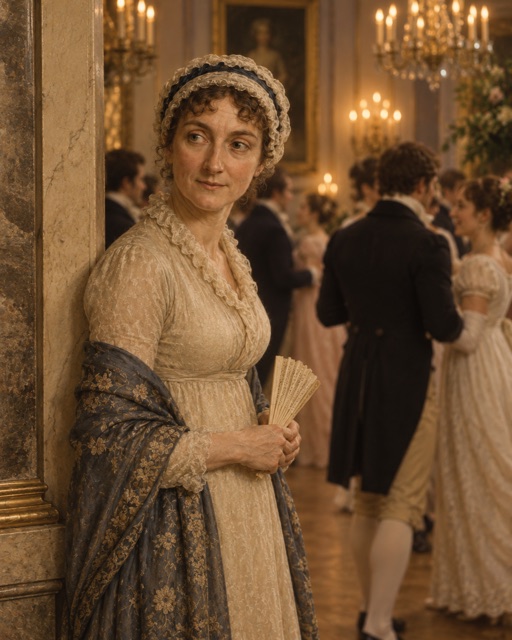
English Novel · Novel
Pride and Prejudice
by Austen · The Anatomist of Manners · Regency England, 1775-1817
Austen's full Pride and Prejudice from Project Gutenberg #1342.
- Advanced
- 1813
- ~9 hr 15 min read
- 15 chapter guides
- Public domain
Start reading · Read the Chapter VI guide free
Before the text
Editor's Prelude
Pride and Prejudice
Jane Austen published Pride and Prejudice anonymously in 1813, signed only as the author of Sense and Sensibility. But the book had been living with her for years before that. Its first shape was called First Impressions, drafted when Austen was still young, rejected by a publisher, and later revised into one of the sharpest social comedies ever written in English.
The plot begins lightly: a rich young man rents a house, a mother starts calculating marriages, and a village begins to watch him. Under that sparkle is a hard world. The Bennet daughters have no secure inheritance, reputation can be damaged in a single evening, and marriage is not only romance but shelter, money, rank, family survival, and the danger of being trapped for life by a bad choice.
Conversation drives the action. Austen makes drawing rooms feel like arenas because everyone is reading everyone else: a glance, a silence, a dance, a letter, a joke. Elizabeth Bennet is brilliant partly because she sees quickly; the novel becomes great because she must learn that quickness is not the same as truth.
The opening pages
Chapter I

It is a truth universally acknowledged, that a single man in possession of a good fortune must be in want of a wife.
However little known the feelings or views of such a man may be on his first entering a neighbourhood, this truth is so well fixed in the minds of the surrounding families, that he is considered as the rightful property of some one or other of their daughters.
“My dear Mr. Bennet,” said his lady to him one day, “have you heard that Netherfield Park is let at last?”
Mr. Bennet replied that he had not.
“But it is,” returned she; “for Mrs. Long has just been here, and she told me all about it.”
Mr. Bennet made no answer.
“Do not you want to know who has taken it?” cried his wife, impatiently.
“You want to tell me, and I have no objection to hearing it.”

This was invitation enough.
“Why, my dear, you must know, Mrs. Long says that Netherfield is taken by a young man of large fortune from the north of England; that he came down on Monday in a chaise and four to see the place, and was so much delighted with it that he agreed with Mr. Morris immediately; that he is to take possession before Michaelmas, and some of his servants are to be in the house by the end of next week.”
“What is his name?”
“Bingley.”
“Is he married or single?”
“Oh, single, my dear, to be sure! A single man of large fortune; four or five thousand a year. What a fine thing for our girls!”
“How so? how can it affect them?”
“My dear Mr. Bennet,” replied his wife, “how can you be so tiresome? You must know that I am thinking of his marrying one of them.”
“Is that his design in settling here?”
“Design? Nonsense, how can you talk so! But it is very likely that he may fall in love with one of them, and therefore you must visit him as soon as he comes.”
“I see no occasion for that. You and the girls may go--or you may send them by themselves, which perhaps will be still better; for as you are as handsome as any of them, Mr. Bingley might like you the best of the party.”
“My dear, you flatter me. I certainly have had my share of beauty, but I do not pretend to be anything extraordinary now. When a woman has five grown-up daughters, she ought to give over thinking of her own beauty.”
Read it in a Quest
A mirror held to manners, class, conscience, and the societies fiction exposes.
Chapter guides · 15
Chapter VI
Three Ways To Read Affection
Jane conceals feeling, Charlotte recommends display, and Darcy discovers attraction while Elizabeth sees only criticism.
Jane and Charlotte's wager
Charlotte warns that Jane's composure may hide her attachment from Bingley and argues that a woman should use every limited half-hour strategically. Elizabeth refuses to confuse securing a rich husband with learning a person's character after only two weeks.
The watcher being watched
Darcy revises his first judgment as he studies Elizabeth's eyes and playfulness; she reads his attention as a satirical threat and refuses his offered dance. He then tells Miss Bingley that he has been admiring Elizabeth's fine eyes. Miss Bingley teases him about marriage and Mrs. Bennet as his mother-in-law; he lets her talk without losing his composure.
Chapter XII
Departure In Disguise
As Jane and Elizabeth leave Netherfield, nearly everyone says one thing and wants another.
A visit nobody names honestly
Mrs. Bennet withholds the carriage to prolong Jane's stay. Caroline asks the sisters to remain, then regrets the success of her own invitation as jealousy outweighs affection; Bingley alone speaks his concern for Jane without disguise.
Leaving Netherfield
Darcy welcomes Elizabeth's departure because she attracts him more than he likes. Left alone with her for half an hour, he fixes himself on his book and will not look up. When the sisters return home on Sunday, Mrs. Bennet resents their early departure, while their father is glad to have them back. Mary has moral observations to share; Kitty and Lydia have news of the officers.
Chapter XVI
Wickham Controls The Frame
He presents an accusation as reluctant confidence, and Elizabeth supplies the verdict he avoids stating outright.
Chapter XVIII
The Dance Is An Argument
Elizabeth enters convinced by Wickham's absence; Darcy answers without supplying a full counter-story.
Chapter XXIII
Charlotte Enters The Entail
News of her engagement to Collins turns Longbourn's legal future into the Bennet family's present crisis.
Chapter XXXIV
A Proposal Built To Offend
Darcy declares love while detailing Elizabeth's inferiority—and speaks as if acceptance should follow.
Chapter XXXVI
A Letter Forces A Second Reading
Elizabeth rereads Darcy's letter and tests its claims against memories that no longer fit Wickham's version.
Chapter XLII
A Marriage Seen From Inside
Elizabeth measures her parents' failed partnership just as a curtailed journey turns toward Derbyshire.
Chapter XLIII
Pemberley Supplies Other Witnesses
An estate, a servant's testimony, and Darcy's conduct widen the evidence available to Elizabeth.
Chapter XLVI
Two Letters Collapse The Visit
One letter imagines a marriage in Scotland; the next traces Lydia and Wickham only as far as London.
Chapter XLVII
The Search Begins At Home
On the road and at Longbourn, the family tries to separate possibility, evidence, and blame.
Chapter LII
The Cost Hidden In The Settlement
Mrs. Gardiner reveals who found Wickham, negotiated the marriage, and made the arrangement possible.
Chapter LVI
The Promise Elizabeth Will Not Give
Lady Catherine turns rank, family, and Lydia's scandal into a demand for obedience.
Chapter LVIII
A Second Answer With An Exit
Darcy asks whether Elizabeth's feelings remain as they were in April and gives one word the power to end the subject.
Chapter LXI
The Ending Tests Every Household
The final chapter distributes its characters by whether marriage changes their habits, relations, and boundaries.
Questions readers ask
- How long does it take to read Pride and Prejudice?
- About 9 hr 15 min in total.
- How difficult is Pride and Prejudice?
- Advanced. A long novel; about 9 hours of reading.
- Which edition is this?
- The original English text, first published in 1813. The text follows Project Gutenberg #1342 text produced from Internet Archive images; print witness not named.
- Can I read Pride and Prejudice for free?
- Pride and Prejudice is part of Nexus Premium, so reading it needs an account and a Premium subscription. The opening above and two chapter guides on this page are free to read.
- How many chapter guides are there?
- 15 chapter guides, written by the Nexus editors. Two open in full here; the rest show their opening line.
About Austen
Jane Austen was an English novelist whose fiction examines marriage, status, family, perception, and moral judgment.
“How do people learn to see one another clearly?”
Austen remains one of the central novelists of social perception and moral intelligence.
Source text: public domain. Chapter guides: original Nexus writing. Pride and Prejudice is part of The Nexus Archive, guided Quests through the great works.