 The Nexus Archive
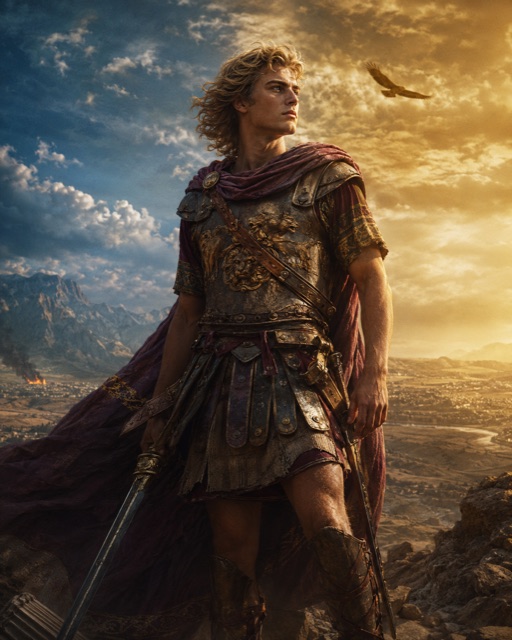
Macedonian Conquest · History
Anabasis of Alexander
by Arrian
Featuring Alexander the Great
The strongest ancient narrative source for Alexander's campaigns.
- Advanced
- c. 145 CE
- ~10 hr 30 min read
- 45 chapter guides
- Public domain
Start reading · Read the Preface and Book I, Chapters I-IV: Northern Frontiers guide free
Before the text
Editor's Prelude
The Campaign That Became a World
Prepared by the NEXUS Editors
Anabasis of Alexander is an ancient campaign history: a march narrative, a war record, and a test of what happens when one man’s ambition keeps outrunning the known map. Arrian wrote more than four centuries after Alexander’s death, but he was not writing from loose legend. He was a Greek-speaking Roman soldier and statesman, and he leaned especially on Ptolemy and Aristobulus, men who had known the expedition from inside its world.
That matters because Alexander is easy to flatten into a symbol: genius, conqueror, monster, youth, myth. Arrian gives him back to movement. Rivers have to be crossed. Cities have to be taken or spared. Armies mutiny, wounds deepen, advisers vanish, and victory keeps creating new borders that demand still more victory. The book’s power is in that pressure: the sense that every triumph widens the field and makes the next decision more dangerous.
Discipline runs beneath the grandeur. Arrian admires Alexander, but he also judges him; he wants the record to survive the intoxication of fame. What follows is not a clean hero tale. It is a long campaign through courage, calculation, endurance, cruelty, loyalty, exhaustion, and the strange loneliness of command when the world has begun to open and there is no obvious place to stop.
The opening pages
Book I, Chapters V-VII: Illyria and Thebes
CHAPTER V.
Revolt of Clitus and Glaucias.
He then advanced into the land of the Agrianians and Paeonians, where messengers reached him, who reported that Clitus, son of Bardylis, had revolted, and that Glaucias, king of the Taulantians, had gone over to him. They also reported that the Autariatians intended to attack him on his way. He accordingly resolved to commence his march without delay. But Langarus, king of the Agrianians, who, in the lifetime of Philip, had been an open and avowed friend of Alexander, and had gone on an embassy to him in his private capacity, at that time also came to him with the finest and best armed of the shield-bearing troops, which he kept as a body-guard. When this man heard that Alexander was inquiring who the Autariatians were, and what was the number of their men, he said that he need take no account of them, since they were the least warlike of the tribes of that district; and that he would himself make an inroad into their land, so that they might have too much occupation about their own affairs to attack others. Accordingly, at Alexander’s order, he made an attack upon them; and not only did he attack them, but he swept their land clean of captives and booty. Thus the Autariatians were indeed occupied with their own affairs. Langarus was rewarded by Alexander with the greatest honours, and received from him the gifts which were considered most valuable in the eyes of the king of the Macedonians. Alexander also promised to give him his sister Cyna in marriage when he arrived at Pella. But Langarus fell ill and died on his return home.
After this, Alexander marched along the river Erigon, and proceeded to the city of Pelium; for Clitus had seized this city, as it was the strongest in the country. When Alexander arrived at this place, and had encamped near the river Eordaicus, he resolved to make an assault upon the wall the next day. But Clitus held the mountains which encircled the city, and commanded it from their height; moreover, they were covered with dense thickets. His intention was to fall upon the Macedonians from all sides, if they assaulted the city. But Glaucias, king of the Taulantians, had not yet joined him. Alexander, however, led his forces towards the city; and the enemy, after sacrificing three boys, an equal number of girls, and three black rams, sallied forth for the purpose of receiving the Macedonians in a hand-to-hand conflict. But as soon as they came to close quarters, they left the positions which they had occupied, strong as they were, in such haste that even their sacrificial victims were captured still lying on the ground.
Read it in a Quest
A study of command at the scale where brilliance, glory, and ruin begin to merge.
Chapter guides · 45
Preface and Book I, Chapters I-IV: Northern Frontiers
Arrian Sets His Standard
Arrian starts by explaining his witnesses, then shows Alexander securing power before Asia.
Reading checkpoint
Arrian prefers the eyewitness accounts of Ptolemy and Aristobulus and explains how he handles their disagreements. The narrative then turns to Alexander's first task: securing Macedonia's northern frontier before the Persian expedition.
Why it matters
Alexander's speed is already the point. Rivers, mountains, and distant tribes become tests of command before he ever meets the Persians.
The ending
The Celtic envoys say that they fear the sky falling, rather than Alexander. He makes them friends and allies, but calls them braggarts: their answer denies him the personal awe he had expected.
Book I, Chapters V-VII
Revolt Tests The Young King
Alexander has to prevent frontier rebellion and Greek revolt from joining into one crisis.
What just happened
The Illyrian rulers Clitus and Glaucias, followed by the revolt at Thebes, test whether Alexander's new power is stable. Arrian makes the danger cumulative: enemies are watching to see whether youth means weakness.
Why it matters
Before Asia, Alexander must prove that Macedonia cannot be pulled apart behind him. Thebes becomes the most serious Greek test of that authority.
The ending
The movement ends with Alexander still holding back from an assault on Thebes. He waits near the Cadmea in hope of a settlement, while the exiles most committed to revolt resist reconciliation.
Book I, Chapters VIII-XI
Terror Opens The Road East
The destruction of Thebes shocks Greece, then Alexander turns the campaign toward Asia.
Book I, Chapters XII-XV
Heroic Memory Meets Real Battle
Alexander frames himself through Achilles, then accepts the first major tactical risk in Asia.
Book I, Chapters XVI-XIX
Victory Becomes Control
After Granicus, Alexander turns battlefield success into administration and coastal strategy.
Book I, Chapters XX-XXIII
The Siege Becomes A Different Kind Of War
Halicarnassus tests engineering, patience, and control under pressure.
Book I, Chapters XXIV-XXIX
The Campaign Becomes A Chain Of Local Decisions
Alexander moves through southern Asia Minor by bargaining, punishing delay, and managing routes.
Book II, Chapters I-IV
Signs, Illness, And The Route South
Book II opens with Persian pressure at sea, Gordium, and Alexander moving toward the clash with Darius.
Book II, Chapters V-VIII
Darius Steps Onto The Field
Alexander and Darius maneuver toward Issus, where geography and morale will decide the opening shape of battle.
Book II, Chapters IX-XII
Issus Breaks Royal Confidence
The battle of Issus defeats Darius and lets Arrian contrast victory with restraint.
Book II, Chapters XIII-XVII
Tyre Turns Strategy Into A Test Of Will
Alexander answers letters, takes Phoenician cities, and reaches the city that refuses him entry.
Book II, Chapters XVIII-XXI
Tyre Becomes Engineering War
The siege of Tyre turns sea power, stone, timber, ships, and endurance into one problem.
Book II, Chapters XXII-XXVII
The Coast Is Forced Open
Tyre falls, Gaza resists, and Alexander clears the route toward Egypt.
Book III, Chapters I-VI
Egypt Expands The Meaning Of Rule
Alexander founds Alexandria, visits Ammon, and returns from sacred geography to military movement.
Book III, Chapters VII-XI
The Armies Prepare For The Decisive Field
Alexander crosses major rivers, studies Darius's army, and prepares for battle near Gaugamela.
Book III, Chapters XII-XVI
Victory Opens The Persian Capitals
Arbela breaks Darius’s field power and opens the road to Babylon and Susa.
Book III, Chapters XVII-XX
Empire Becomes Possession And Chase
Alexander takes hard routes toward Persepolis, then turns back to the unfinished problem of Darius.
Book III, Chapters XXI-XXIV
Darius Falls, But The War Continues
The old king is murdered, and Alexander inherits both opportunity and unfinished resistance.
Book III, Chapters XXV-XXVII
Suspicion Enters The Macedonian Core
The campaign turns inward as Philotas and Parmenio are killed.
Book III, Chapters XXVIII-XXX: Hindu-Koosh, Bactria, and Bessus
The Campaign Moves Beyond The Familiar Map
Alexander crosses the mountains, pursues Bessus, and enters the difficult eastern war.
Book IV, Chapters I-IV
The Eastern War Refuses To Stay Still
Book IV opens with revolt, fast city-taking, and conflict beyond the Tanais.
Book IV, Chapters V-VIII
External Revolt And Internal Violence Meet
Spitamenes keeps the war unsettled, while the murder of Clitus exposes danger at court.
Book IV, Chapters IX-XII
Court Ritual Becomes Political Crisis
After Clitus, the dispute over prostration turns Macedonian identity into an open question.
Book IV, Chapters XIII-XVII
Conspiracy And Revolt Keep Returning
The pages’ plot and Spitamenes’s resistance keep Alexander’s rule under pressure.
Book IV, Chapters XVIII-XXII
Audacity Wins The Rock
The capture of the Sogdian Rock leads into marriage, alliance, and the road toward India.
Book IV, Chapters XXIII-XXVII: Aspasians, Assacenians, and Massaga
India Begins In Hard Fighting
The entry toward India is not a clean march, but a series of assaults, wounds, and sieges.
Book IV, Chapters XXVIII-XXX
Aornus Opens The Indus
Alexander takes the legendary rock and reaches the practical work of ships, elephants, and the Indus.
Book V, Chapters I-VI
India Expands The World Of The Campaign
Book V opens with Nysa, Indian geography, and the effort to understand a new land.
Book V, Chapters VII-XII
Porus Forces A Strategic Crossing
Alexander has to solve the Hydaspes before he can fight Porus directly.
Book V, Chapters XIII-XVII
The Elephants Change The Fight
Porus brings a different battlefield, with elephants, cavalry, rain, and pressure on both wings.
Book V, Chapters XVIII-XXII
Victory Turns Into Alliance And Loss
After Porus is defeated, Alexander honors him, loses Bucephalus, and keeps moving east.
Book V, Chapters XXIII-XXVI
The Army Reaches Its Limit
After Sangala, Alexander asks for more, but his exhausted army resists further advance.
Book V, Chapters XXVII-XXIX
Coenus Says What The Army Cannot
Coenus gives the refusal a loyal voice, and Alexander finally turns back.
Book VI, Chapters I-VI
The Return Becomes A New Expedition
Book VI turns retreat into organized river movement, shipbuilding, sacrifice, and command.
Book VI, Chapters VII-XI
The Mallian Wound Nearly Ends Everything
The campaign against the Mallians leads to Alexander’s most dangerous personal crisis.
Book VI, Chapters XII-XVII
The Army Needs To See Him Alive
Alexander’s recovery restores the army before the descent continues through the lower Indus.
Book VI, Chapters XVIII-XXII
River Expedition Turns Toward Desert
Alexander reaches the sea, organizes Nearchus, and begins the punishing march through Gadrosia.
Book VI, Chapters XXIII-XXVII: The Desert and Carmania
Gadrosia Reveals The Cost
The desert march exposes suffering, scarcity, and Alexander’s attempt to share the army’s hardship.
Book VI, Chapters XXVIII-XXX
The Empire Reorganizes Itself
Alexander punishes officials, revisits Persis, and rewards Peucestas’s Persian adaptation.
Book VII, Chapters I-VI
The Late Empire Becomes A Cultural Problem
Book VII opens with sages, marriages, debts, Persian dress, and Asian troops trained as Macedonians.
Book VII, Chapters VII-X
Opis Turns Resentment Into Revolt
The discharge of veterans becomes an argument over loyalty, honor, and replacement.
Book VII, Chapters XI-XIV
Reconciliation Gives Way To Grief
Alexander wins back the Macedonians, sends veterans home, and then loses Hephaestion.
Book VII, Chapters XV-XIX
Expansion Continues Under A Shadow
Alexander receives embassies and prepares new campaigns while omens gather around Babylon.
Book VII, Chapters XX-XXIII
The Last Projects Still Look Forward
Arabia, waterways, new troops, and honors for Hephaestion show Alexander still building the future.
Book VII, Chapters XXIV-XXX
Arrian Weighs The Whole Life
The final omens, illness, death, rumor, and judgment bring the campaign history to a close.
Questions readers ask
- How long does it take to read Anabasis of Alexander?
- About 10 hr 30 min in total.
- How difficult is Anabasis of Alexander?
- Advanced. A long history; about 10 hours of reading.
- Can I read Anabasis of Alexander for free?
- Anabasis of Alexander is part of Nexus Premium, so reading it needs an account and a Premium subscription, and completing an earlier Quest's Mastery. The opening above and two chapter guides on this page are free to read.
- How many chapter guides are there?
- 45 chapter guides, written by the Nexus editors. Two open in full here; the rest show their opening line.
About Alexander the Great
Alexander III of Macedon conquered the Persian Empire and created one of the largest empires of the ancient world before his death at thirty-two. He left no major writings of his own, so Nexus treats him through ancient sources such as Arrian and Plutarch.
“What happens when ambition outruns every boundary?”
Alexander becomes one of history's great tests of ambition. He changes war, empire, culture, and the imagination of greatness.
Source text: public domain. Chapter guides: original Nexus writing. Anabasis of Alexander is part of The Nexus Archive, guided Quests through the great works.